Indonesia’s July HBA benchmark is set to rise again, and that matters because the world’s largest thermal coal exporter is effectively telling buyers that near-term supply remains tight even as global energy markets look calmer on the surface.
Indonesia HBA Rise Signals Firmer Coal Pricing
The implied move is not trivial. The benchmark period II average for July is forecast at 295.8433, up 3.14% from the prior reading, extending a sharp rebound from April’s 282.779 and May’s 290.489 before June’s modest pullback. For an export market that feeds power plants across Asia, higher reference prices immediately translate into firmer contract pricing, stronger cash generation for producers and tougher fuel bills for utilities and industrial users.
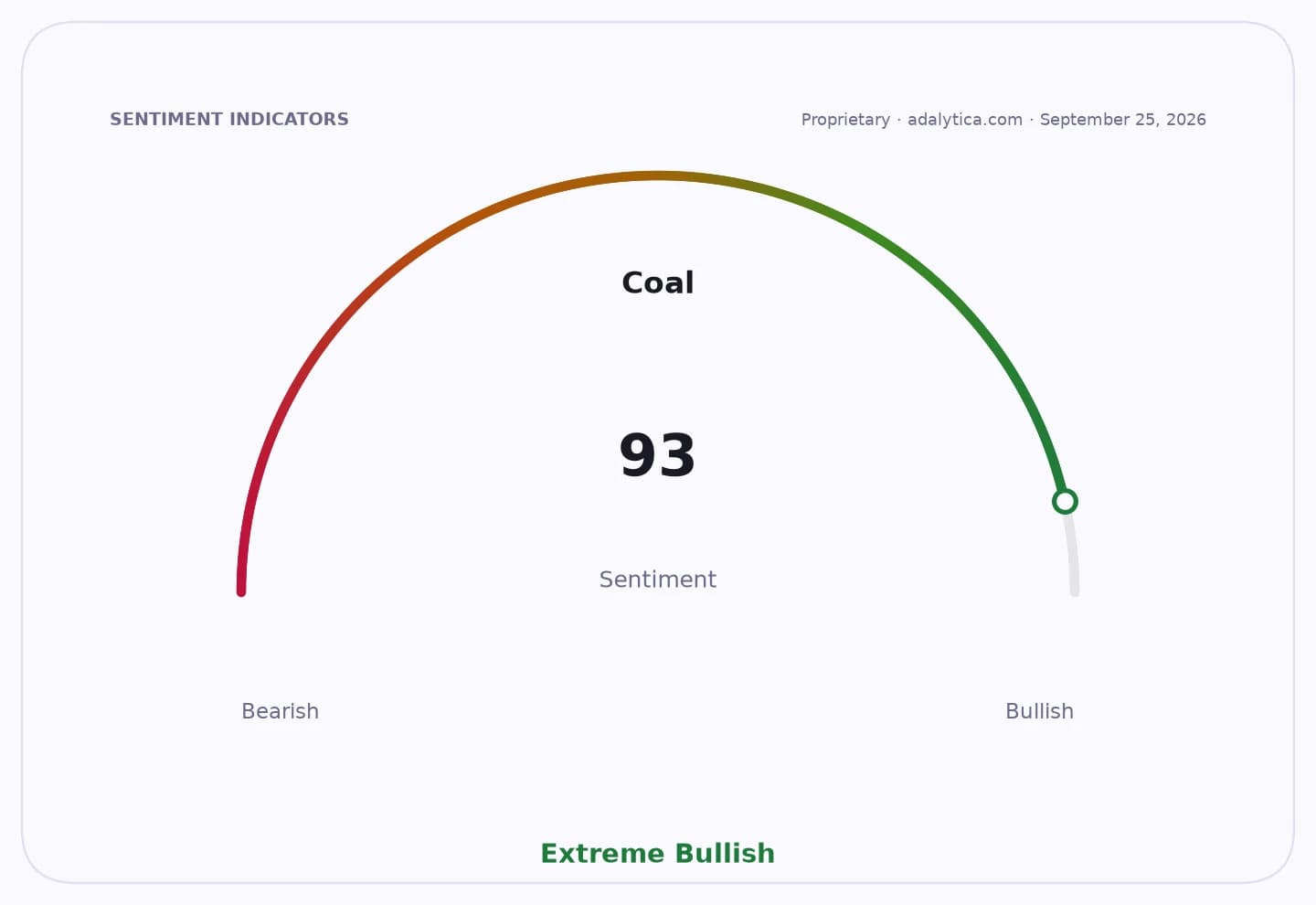
Sentiment IndicatorsⓘProprietary · adalytica.com · July 20, 2026
This is a snapshot — live sentiment, awareness and momentum for 130+ markets update continuously in the dashboard.Open AlphaPulse

That is the economic point investors should focus on: coal is still behaving like a supply-constrained energy commodity, not a sunset asset trading on a straight-line decline. Even with WTI crude volatile and the 10-year Treasury back above 4.5%, the coal tape is being driven more by regional supply disruptions and import demand than by broader risk appetite. The latest evidence fits that script. China’s coal imports surged 29% in June after a mine accident tightened domestic supply, while geopolitical tension across energy markets continues to keep a floor under hard commodities.
For miners exposed to seaborne pricing, the setup is constructive. Peabody Energy has already been whipsawed by the move in thermal coal, with BTU still trading well below its 200-day moving average after a sharp run-up and subsequent correction. That kind of volatility is exactly what creates opportunity when the underlying benchmark is still rising. Alliance Resource Partners, by contrast, has held up better relative to its longer-term trend, reflecting the market’s preference for cash-generative producers with steadier distributions and less dependence on spot sentiment.
The market is missing a second-order effect: higher reference prices do not just lift today’s selling price, they improve negotiating leverage for the next round of contracts. That is especially important in Asia, where utilities may accept short-term pain to secure reliable supply after disruptions. The result is a favorable backdrop for miners with export exposure and a negative one for buyers that lack flexible fuel alternatives.
Adalytica’s proprietary sentiment data on global stability is flashing extreme fear, while oil trade signals sit at neutral after a violent reset. That combination usually supports hard-asset pricing rather than compressing it. In plain terms, investors are still underestimating how quickly geopolitical stress can reprice fuel markets.
The trade here is straightforward: stay constructive on high-quality coal exporters and ancillary freight, port and commodity logistics names that benefit from elevated benchmark pricing, while being cautious on power producers and industrial consumers with limited pass-through. If the July HBA increase holds, it confirms that the coal cycle is not over — it is simply becoming more selective. The best opportunity remains in the names that turn a higher benchmark into free cash flow fastest.
| Entity | Gains | Losses |
|---|---|---|
| Indonesian coal miners | ▲Higher benchmark pricing | ▼None immediately |
| Export-oriented coal producers | ▲Stronger cash flow | ▼Greater scrutiny |
| Utilities and industrial buyers | ▲None | ▼Higher fuel costs |
| Coal bears / short sellers | ▲None | ▼Short squeeze risk |