Indonesia’s employers are pressing for a higher provincial minimum wage for 2026, but only within limits they say the private sector can absorb without cutting hiring or squeezing smaller firms.
Indonesia Employers Seek Limited Minimum Wage Hike
The call from the Indonesian Employers Association, or APINDO, lands at a sensitive point for Southeast Asia’s biggest economy, where wage policy has become a direct test of whether consumer demand can be supported without undermining employment. For investors, the debate matters because minimum wage decisions feed straight into labor costs, household spending power and the earnings outlook for domestically focused sectors from retail to consumer staples to labor-intensive manufacturing.
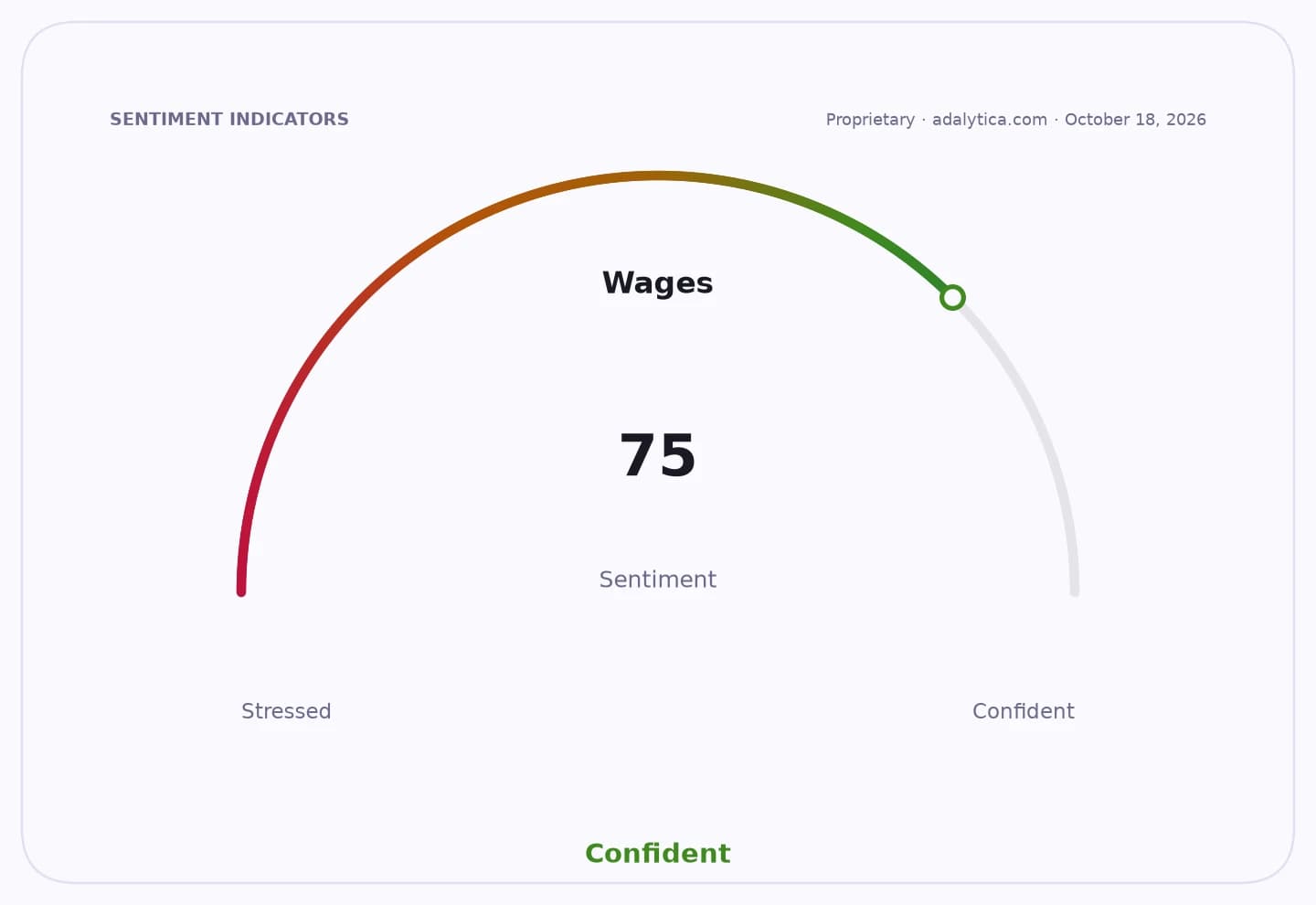
Sentiment Indicators
APINDO’s argument is not that wages should stand still, but that any increase in the UMP, Indonesia’s provincial minimum wage, has to reflect business conditions rather than political pressure alone. That framing reflects a broader policy balancing act seen across other economies facing elevated living costs: raise pay too slowly and households remain under strain; raise it too quickly and firms may delay hiring, trim shifts or pass through costs.
The stakes are particularly high in Indonesia because wage changes are felt unevenly across the economy. Large listed groups may be able to absorb higher payrolls or offset them with pricing power, but smaller employers and export-oriented manufacturers operate with tighter margins. A sharper-than-expected increase would therefore be a positive for lower-income consumers and wage-linked spending, but a negative for employers already dealing with weak productivity and softer global demand.
That tension helps explain why the market is watching labor policy as more than a social issue. The local equity market has already been bruised by broad risk aversion this year, and any sign that wage costs will rise faster than productivity could add to pressure on profits in sectors with heavy headcount exposure. By contrast, a measured increase could support domestic demand and reduce some of the recent strain on consumer purchasing power, which is important for companies selling food, beverages, household goods and discretionary items inside the country.
The broader narrative is one of Indonesia trying to keep wage growth aligned with economic reality. APINDO is effectively asking policymakers to preserve labor market stability while acknowledging the pressure on workers’ incomes. The outcome will matter for inflation, consumption and corporate margins, and it will also serve as a signal of how far the government is willing to lean toward households versus employers as it sets the tone for 2026.
For investors, the key question is not whether wages rise, but how much and how fast. A moderate increase would likely be digestible and supportive for consumer demand; a larger move would lift near-term spending power but raise the risk of margin compression and slower job creation in the most labor-intensive parts of the economy.
| Entity | Gains | Losses |
|---|---|---|
| Workers | ▲Higher take-home pay | ▼If hikes are delayed |
| Employers | ▲Predictable cost setting | ▼Larger payroll burden |
| Consumer stocks | ▲Stronger household spending | ▼Margin pressure if wages jump |
| Indonesia economy | ▲Better wage support | ▼Risk of weaker hiring |