Indonesia is turning to China’s yuan bond market in a bid to plug part of its budget financing gap while reducing reliance on the U.S. dollar, a move that could broaden its funding options and support the rupiah over time.
Indonesia Eyes Panda Bond to Diversify Funding
Finance officials have been signaling that the planned Panda Bond could raise as much as $1 billion, with the proceeds helping partly cover the state budget deficit. That matters because every new source of funding gives Jakarta more flexibility at a time when global borrowing costs remain elevated and investors are demanding more compensation to hold longer-dated debt. The 10-year U.S. Treasury yield is around 4.64%, while the 2-year sits near 4.28%, a reminder that the global cost of money is still far from cheap.
Sentiment IndicatorsⓘProprietary · adalytica.com · July 23, 2026
This is a snapshot — live sentiment, awareness and momentum for 130+ markets update continuously in the dashboard.Open AlphaPulse
For Indonesia, the appeal is straightforward: borrow in yuan, tap a deeper pool of Chinese capital, and lessen the currency mismatch that comes with issuing too much debt in dollars. That is especially relevant for a government trying to defend fiscal stability without leaning too hard on foreign-exchange reserves. If the bond is well received, it would also reinforce the view that Indonesia can diversify its funding base rather than depending on a single market or currency cycle.
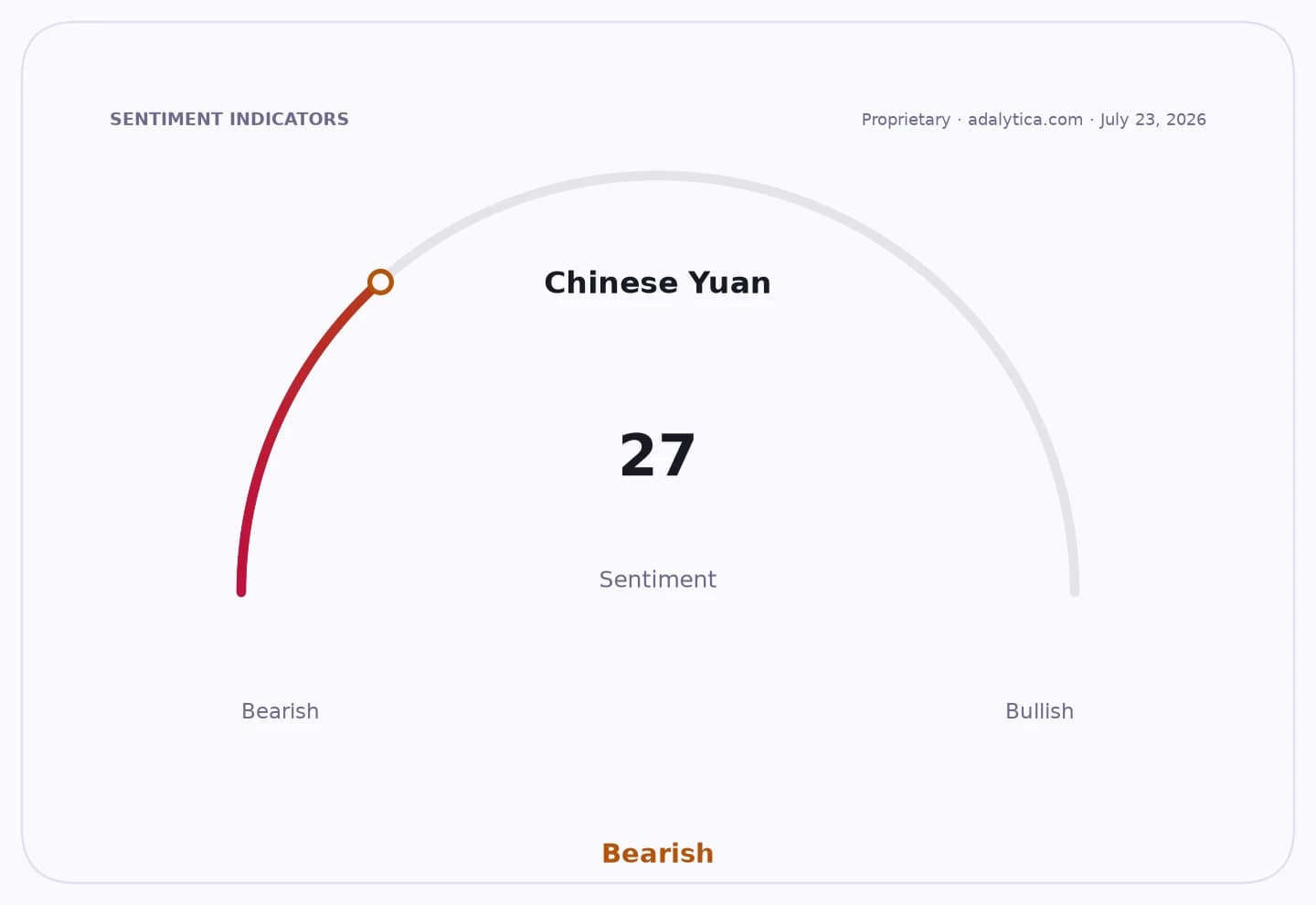
The trade in currencies and sovereign credit tells the same story. The rupiah has been relatively firm around 17,910 per dollar, holding above its 50-day moving average, even as technical indicators show the rally is losing some momentum. That is not a disaster, but it suggests investors are still waiting for a cleaner catalyst before pricing in a lasting currency tailwind. On the China side, sentiment around the yuan has weakened sharply, according to Adalytica.com’s Chinese Yuan Trade Signals, which show “Fear” and “Extreme Fear” readings. That makes a Panda Bond more interesting as a strategic financing tool: Indonesia is trying to raise yuan even as broader market sentiment toward the currency is cautious.
The bigger investment lesson is that sovereign issuers are increasingly acting like portfolio managers. They are not just choosing how much to borrow; they are choosing which currency, which investor base and which refinancing path will keep costs manageable over years, not quarters. Indonesia’s credit standing in China has given it a window to do that now, before regulatory changes tighten the market further.
China’s decision to tighten oversight of rating agencies by Aug. 1 adds another layer of urgency. If that rule change raises the bar for future Panda Bond issues, issuers that move early may benefit from better access and less friction. For Indonesia, the timing could prove useful: it has a chance to secure funding while the channel is open and before compliance becomes more complicated.
Investors should view this as a modest but meaningful shift in Indonesia’s financing playbook. It is not a growth story by itself, but it is the kind of balance-sheet decision that can compound over time by lowering funding risk and improving resilience. For long-term investors in emerging-market debt and Southeast Asian assets, the Panda Bond is worth watching as a sign that Jakarta is trying to make its capital structure more durable, not just cheaper.
| Entity | Gains | Losses |
|---|---|---|
| Indonesia | ▲More funding options | ▼Less dollar dependence |
| Rupiah | ▲Potential support | ▼Less immediate boost |
| Chinese investors | ▲New sovereign access | ▼More exposure to foreign credit |
| Dollar funding markets | ▲Lower share of demand | ▼Slightly reduced borrowing need |