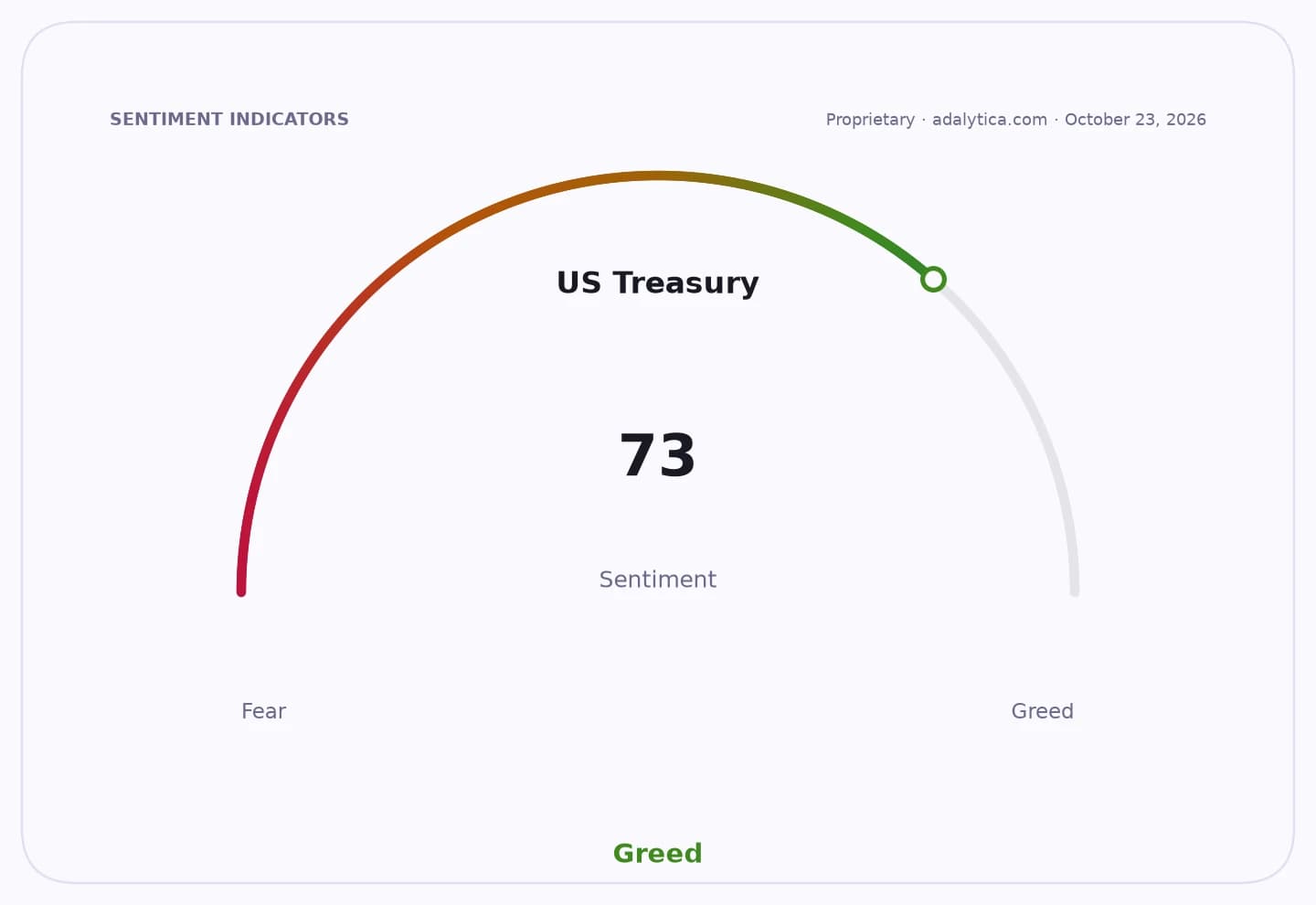
Inflation-resistant income funds are sliding to attractive valuations just as Treasury yields stay above 5% and markets brace for another bout of price pressure.
Inflation-resistant income funds near attractive valuations
That combination matters because it tightens the squeeze on income investors: inflation erodes real payouts while higher rates make leveraged funds, dividend stocks and rate-sensitive assets harder to own. The benchmark 10-year Treasury yield was last at 5.01% in a forecast update after touching 5.13%, while the high-yield spread widened to 3.368 percentage points, underscoring that investors are still demanding more compensation for credit risk.
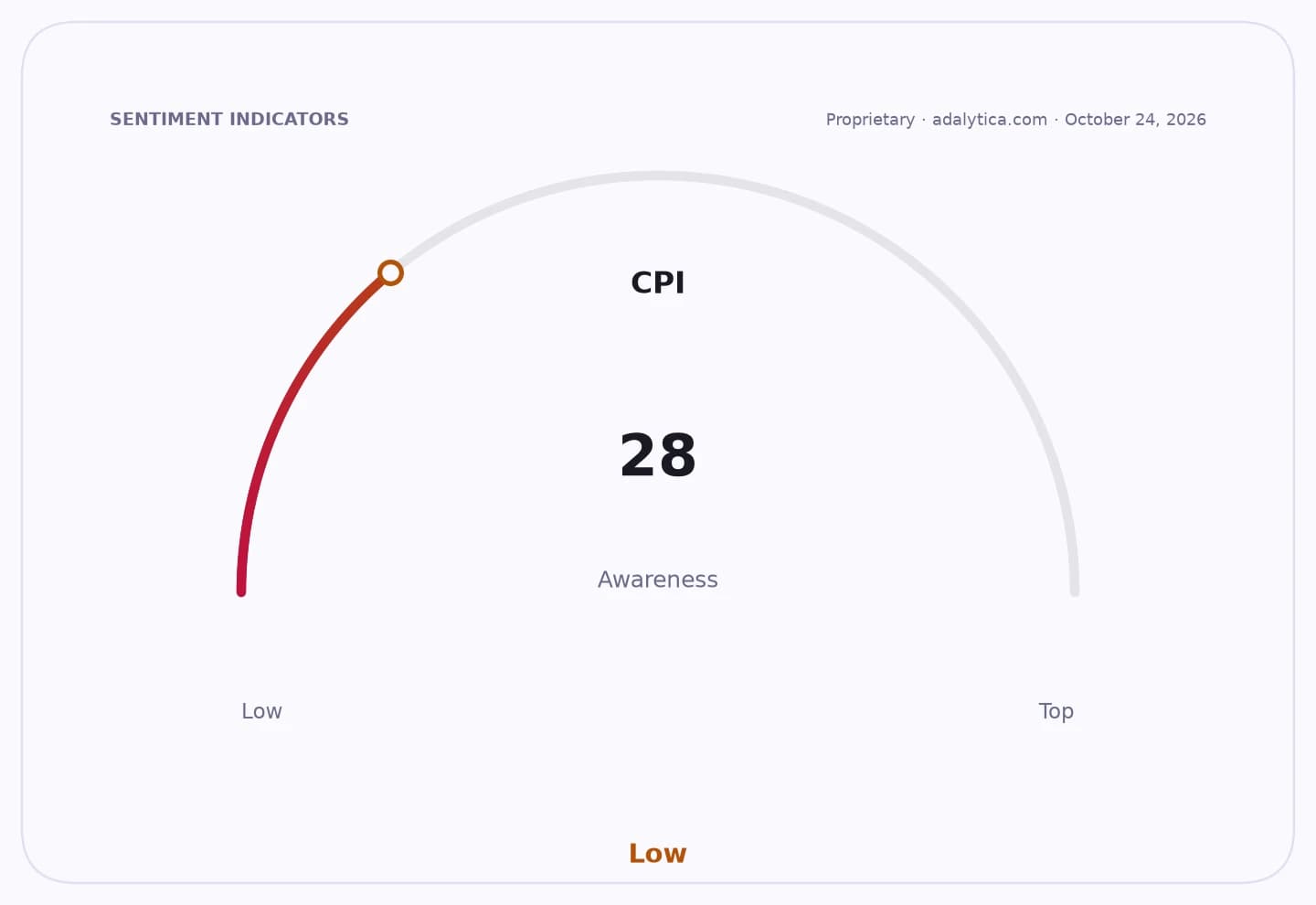
Sentiment IndicatorsⓘProprietary · adalytica.com · October 24, 2026
This is a snapshot — live sentiment, awareness and momentum for 130+ markets update continuously in the dashboard.Open AlphaPulse
At the same time, inflation anxiety is flashing hard to ignore. Adalytica’s CPI sentiment gauge shows “Extreme Fear” at 3, while confidence in the Federal Reserve’s 2% inflation target has swung sharply and the broader S&P 500 trade-signal snapshot sits at extreme fear. That backdrop helps explain why inflation-linked and real-asset income strategies are drawing attention even as they trade with discount-to-recent-high price action.
Exchange-traded funds tied to real assets and municipal income are holding up better than the market’s fear reading suggests. The Vanguard Real Estate ETF, VNQ, was last at $92.69, roughly back near its 50-day moving average of $93.27 after a volatile pullback from a recent high above $97, while the Utilities Select Sector SPDR Fund, XLU, ended at $42.56, above its 50-day average of $41.71 but still below its 200-day average of $43.77. The iShares National Muni Bond ETF, MUB, closed at $103.43, edging above its 50-day average and just under its upper Bollinger Band, reflecting steady demand for tax-exempt income despite rate pressure.
For investors, the setup matters because inflation-resistant cash-flow businesses can preserve distributions better than conventional yield plays when borrowing costs remain elevated. That is especially true for real-asset strategies, utilities and municipal bonds, which tend to benefit when investors want income with some defense against inflation volatility rather than chasing the highest nominal yield.
The near-term catalyst is the next leg of inflation data and Treasury-market moves. If yields stay elevated and CPI fears remain pinned near current levels, income investors are likely to keep rotating toward real-asset and inflation-linked vehicles even as broader equity sentiment stays fragile.
| Entity | Gains | Losses |
|---|---|---|
| Inflation-resistant income funds | ▲Higher relative demand | ▼Less attractive entry prices if fear fades |
| Income investors | ▲Better real-yield protection | ▼Traditional dividend and leveraged yield plays |
| Utilities and REIT ETFs | ▲Defensive cash-flow appeal | ▼Rate sensitivity and yield competition |
| Treasury yields | ▲Higher investor compensation | ▼Bond prices and rate-sensitive assets |