Intel has landed two long-sought validation points in one day, with Microsoft choosing its packaging technology for Azure chips and Chief Executive Lip-Bu Tan saying the foundry unit has signed its first external customer for the company’s most advanced 18A process.
Intel wins Microsoft packaging deal, 18A customer
The twin announcements matter because Intel has spent years trying to prove it can compete not just as a chip designer, but as a manufacturer for other companies. That push is central to the turnaround investors are betting on after the stock has swung sharply and the company has warned of weaker near-term revenue amid soft PC demand and supply constraints.
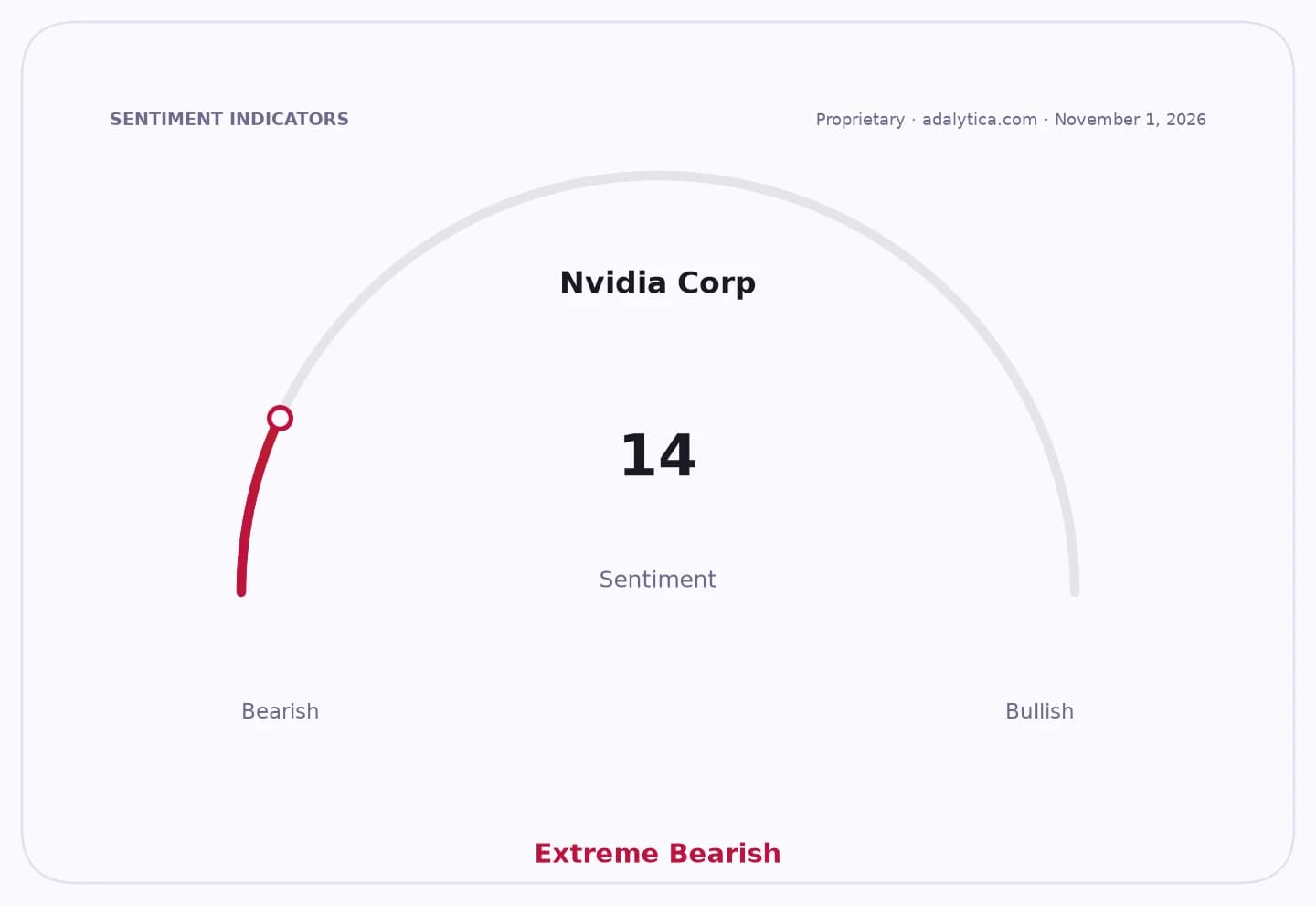
Sentiment Indicators
Microsoft will use Intel Foundry’s EMIB advanced packaging for custom chips tied to its Azure cloud business, making it the first company to publicly commit to the technology. The agreement also extends Intel Xeon server supply for several years, including next-generation “Diamond Rapids” processors, while the two companies will collaborate on memory, database and security work.
Packaging has become a strategic bottleneck in AI and data center computing as more powerful chips are assembled from multiple chiplets rather than a single die. Most of that work still runs through Taiwan Semiconductor Manufacturing, whose packaging capacity is under pressure, so a credible second source gives large cloud providers more flexibility and gives Intel a foothold in a higher-value part of the supply chain.
Tan said the first customer for 18A has already been signed, though he did not name the buyer. Intel later said the customer will use 18A-P, a refined version of the node that entered pilot production in June, reinforcing the case that the process is moving beyond internal use.
The disclosure is important because 18A is Intel’s most advanced manufacturing technology and the company had yet to publicly win a major outside customer for it. Intel said yields on 18A have now reached 70%, a level that industry experts generally consider workable for an early-stage process and one that improves the economics of making chips for others.
For investors, the combination of a Microsoft deal and a first 18A customer does not solve Intel’s execution problems, but it does address the market’s biggest question: whether the company can attract serious external demand. Intel shares had fallen more than half from late-September levels before the latest burst of optimism, even after the U.S. government bought a 10% stake and Nvidia invested $5 billion.
The stock and the broader chip sector remain sensitive to whether Intel can turn these proof points into volume orders, better utilization and firmer margins. Next focus points will be how quickly the company can scale 18A, whether Microsoft’s agreement leads to more cloud customers and if the foundry business can convert technical progress into repeatable revenue.
| Entity | Gains | Losses |
|---|---|---|
| Intel | ▲Foundry credibility | ▼TSMC share of packaging demand |
| Microsoft | ▲More supply optionality | ▼Reliance on a single packaging hub |
| Big cloud customers | ▲Alternative to TSMC | ▼Capacity constraints at incumbents |
| Intel rivals | ▲None immediately | ▼Pressure from Intel’s validation |