A warmer Tehran-Baghdad relationship could matter far beyond diplomacy: it may reshape security risk, cross-border trade and the valuation of Middle East assets at a moment when investors are already pricing in a dangerous escalation cycle.
Iran-Iraq Thaw May Ease Regional Risk Premium
Iranian President Masoud Bazeshkian’s description of Al-Zaidi’s visit to Iran as a “turning point” in ties with Iraq matters because Iraq remains one of Tehran’s most important economic and geopolitical buffers. Any reduction in friction with Baghdad can help stabilize a frontier that has repeatedly been pulled into wider conflict with the United States and Israel, lowering the odds of fresh sanctions pressure, militia flare-ups or disruptions to regional commerce.
Sentiment IndicatorsⓘProprietary · adalytica.com · July 22, 2026
This is a snapshot — live sentiment, awareness and momentum for 130+ markets update continuously in the dashboard.Open AlphaPulse
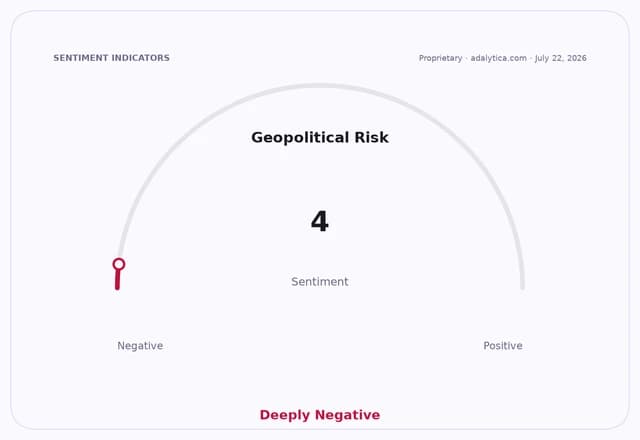
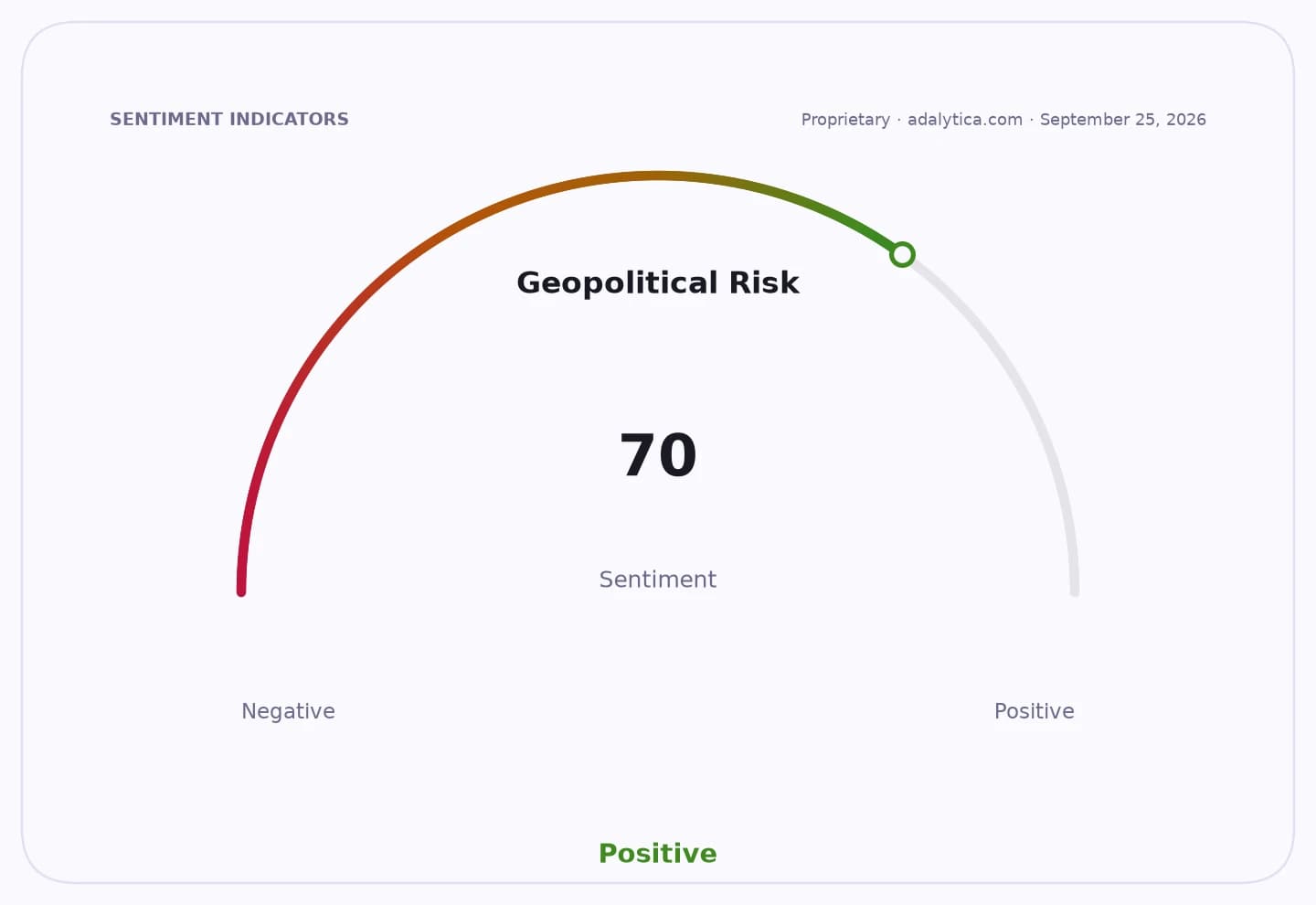
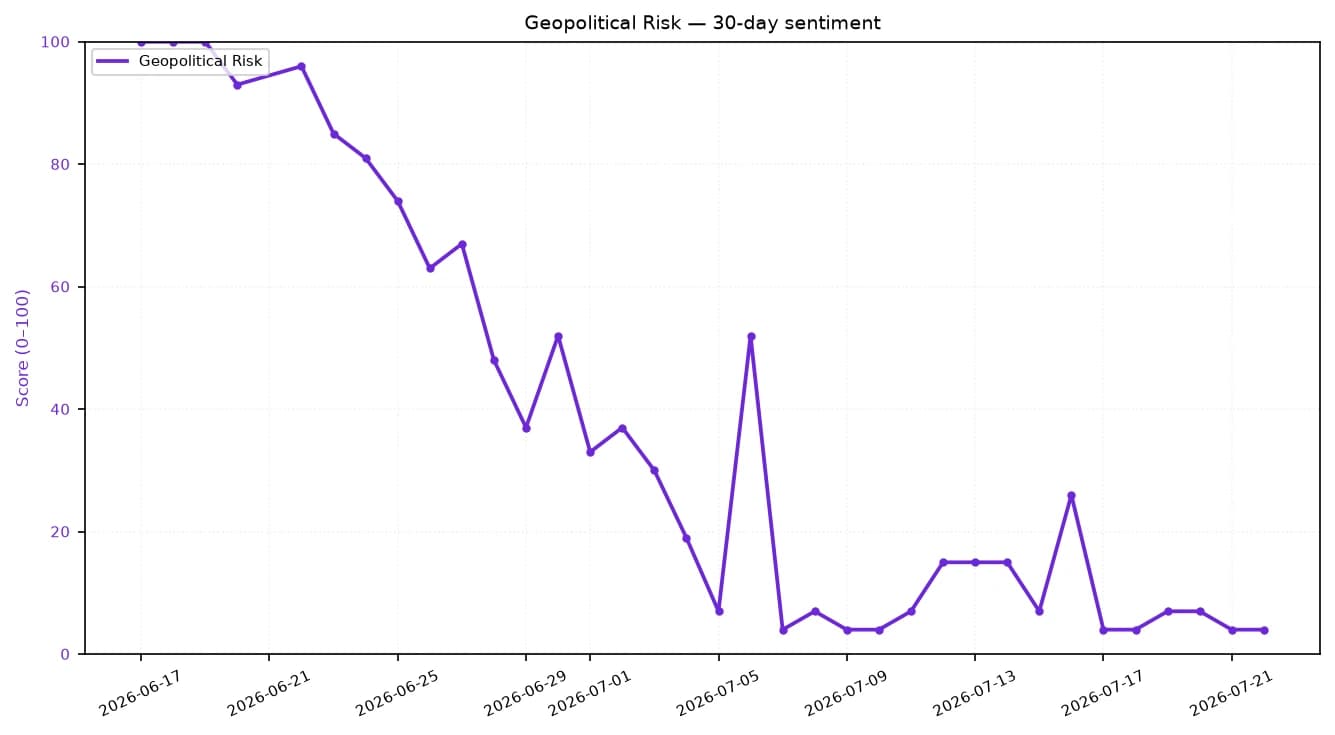
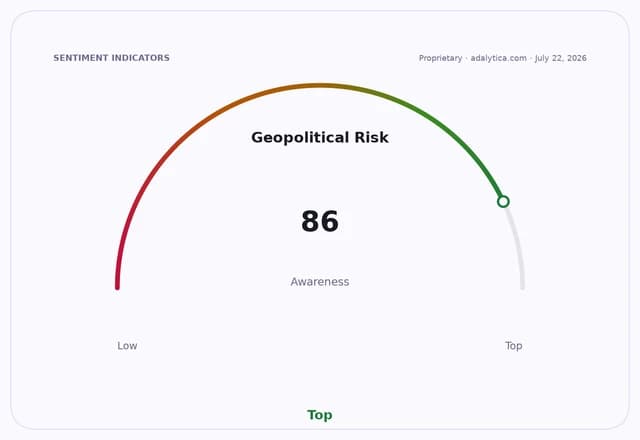
That is especially relevant now, after the killing of a U.S. service member in northern Iraq and a series of retaliatory strikes that have intensified fears of spillover. The market backdrop is already flashing stress: Adalytica’s Global Stability Sentiment is at 4, labeled “Extreme Fear,” while awareness is at 86, or “Extreme Greed,” a combination that usually signals a crowded, anxious market obsessed with geopolitics but not yet positioned for a de-escalation trade.
Investors should care because Iraq is not just a political proxy theater; it is a corridor for energy, logistics and influence. Any improvement in Iran-Iraq relations can support Iranian trade flows, help Tehran secure political depth west of its border and reduce the immediate probability of a miscalculation that drags in U.S. assets again. That would be a tailwind for regional stability trades and a headwind for defense-risk hedges built around a widening conflict premium.
The ETF and market tape reinforce the idea that this is a risk-sensitive story, not a purely diplomatic one. EIRL, which tracks Middle East equities, has pushed above both its 50-day and 200-day moving averages and closed at 79.43 on July 22, a sign that investors are willing to pay up for the region’s broad equity exposure even as the geopolitical backdrop remains fragile. KSA, by contrast, has been more restrained, hovering around 37.13 and essentially flat versus its moving averages, suggesting Saudi-linked exposure is still being treated as a steadier hold than a momentum trade. UAE has also stabilized near 18.78, with price action clustering around its moving averages, underscoring how quickly capital can rotate inside the Gulf when geopolitical risk is repriced.
Our thesis is that the market underestimates the second-order effect of a Tehran-Baghdad thaw: not a dramatic peace dividend, but a gradual compression of the regional risk premium if cross-border coordination deepens and militia spillovers are contained. That matters for everything from Gulf listed equities to energy logistics, sovereign spreads and defense names trading on headline risk.
The asymmetric opportunity is to stay invested where stability would unlock multiple expansion, while avoiding the parts of the market most vulnerable to a renewed Iraq-Iran-U.S. escalation. If Bazeshkian is right and this is a genuine turning point, the beneficiaries will be regional incumbents that live on trade, transit and investment flows. The losers will be the conflict hedges that depend on a permanently elevated war premium.
| Entity | Gains | Losses |
|---|---|---|
| Iran-Iraq trade corridor | ▲Lower friction, more flow | ▼Disruption premium |
| Gulf equities, including EIRL | ▲Multiple expansion | ▼Fear-driven discounts |
| Defense and risk-hedge trades | ▲Less urgency | ▼Escalation upside |
| Saudi and UAE regional stability plays | ▲Safer capital flows | ▼Higher volatility if talks fail |