Iran’s nuclear dispute has entered a sharper phase after the International Atomic Energy Agency reported Tehran to the UN Security Council for the first time in 20 years, raising the odds of a broader diplomatic and economic confrontation even if immediate punitive action remains unlikely.
Iran Nuclear Dispute Raises Oil Risk Premium

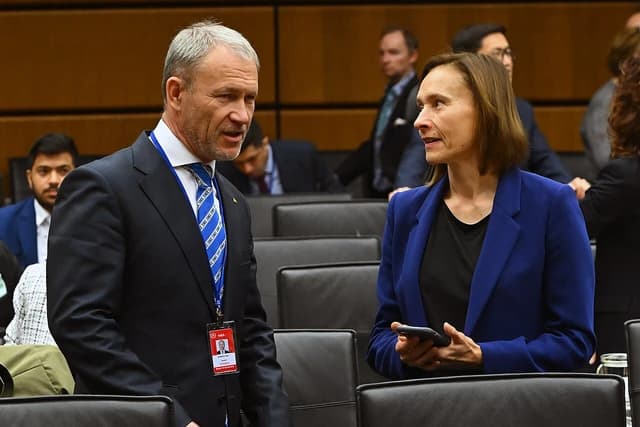
The move matters because it signals that Western powers are increasingly willing to escalate pressure on Iran after years of strained monitoring and incomplete cooperation over its nuclear program. The IAEA board’s resolution, backed by 23 of 35 members and sponsored by the US, Britain, France and Germany, cited Iran’s failure to meet its obligations. China, Russia and Niger voted against it, while eight countries abstained, underscoring the split that will limit any quick consensus at the Security Council.
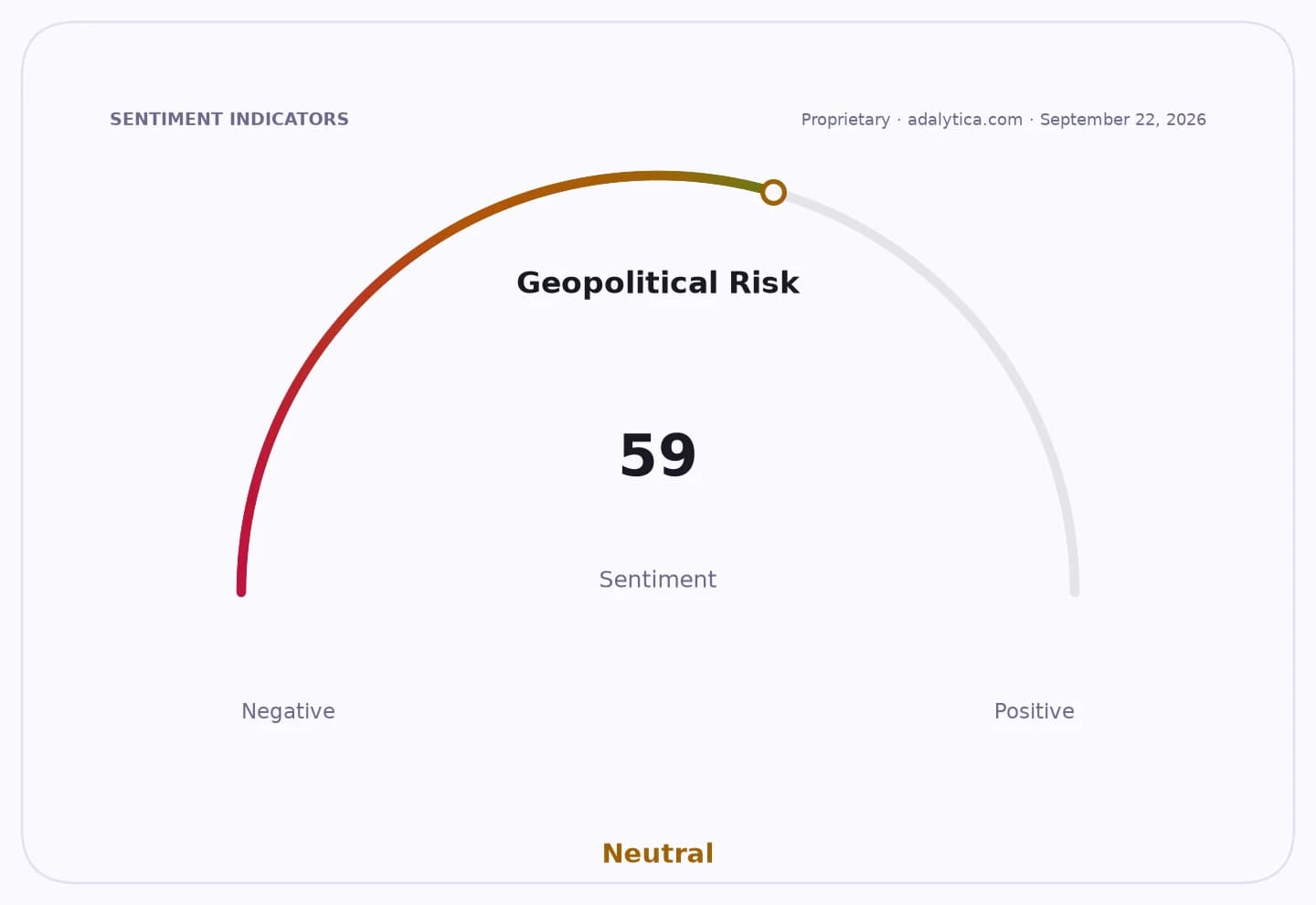
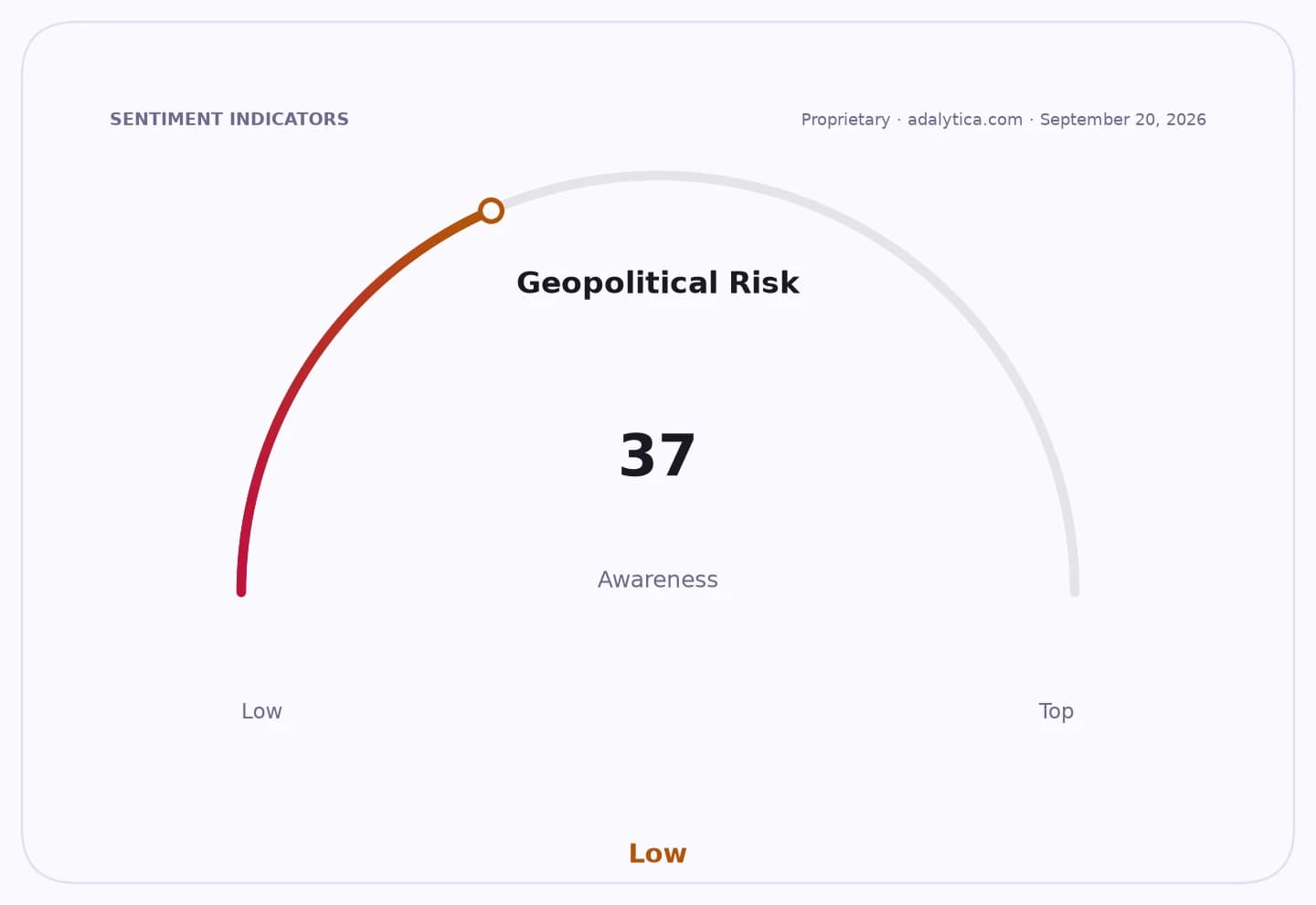
Sentiment IndicatorsⓘProprietary · adalytica.com · September 11, 2026
This is a snapshot — live sentiment, awareness and momentum for 130+ markets update continuously in the dashboard.Open AlphaPulse
For markets, the immediate issue is not a rapid UN sanctions package — Reuters noted that Russia and China can block meaningful action — but the growing risk of geopolitical spillover in a region that matters to oil flows, shipping and risk sentiment. Tehran warned earlier this week it would retaliate if the resolution passed, and its mission in Vienna said the vote would further weaken the nuclear nonproliferation system. That raises the chance of countermeasures around the Strait of Hormuz, where even the threat of disruption can push up energy volatility and support crude-linked assets.
The market backdrop already reflects that tension. Adalytica’s Global Stability Sentiment gauge shows “Fear” at 30, down 19 points on the day and 70 points over 30 days. Oil-trade signals also show “Extreme Fear” in WTI, while USO, the United States Oil Fund, has surged to 158.38, far above its 50-day moving average of 126.59 and 200-day average of 108.70. That kind of price momentum suggests investors are already paying for geopolitical risk rather than waiting for formal sanctions to tighten.
Geopolitical Risk vs USOadalytica.com
Explore this data interactively — full history, time series and cross-market comparisons.Open AlphaPulse

Gold has not broken out in the same way, but the metal remains elevated relative to its long-run trend. GLD closed at 396.36, above its 200-day moving average of 415.81 but still in a range that shows investors are keeping a hedge on, even as the dollar index ETF UUP has held near 28.03. The mix points to a market that is wary, but not yet in full crisis mode.
The bull case for oil and havens is straightforward: a Security Council referral deepens diplomatic isolation, increases the chance of Iranian retaliation and keeps supply-risk premiums embedded in energy prices. The bear case is that the council remains largely symbolic, with no new binding action and no immediate disruption to exports or shipping.
For investors, the key near-term watchpoints are Iranian response, any follow-through from the US and European powers, and whether rhetoric around the Strait of Hormuz turns into operational disruption. Until then, the main impact is likely to be a higher geopolitical risk premium across energy, shipping and defense exposures rather than a clean policy shock.
| Entity | Gains | Losses |
|---|---|---|
| Oil producers | ▲Higher risk premium | ▼Demand-sensitive refiners |
| Gold holders | ▲Safe-haven demand | ▼Cash-heavy risk assets |
| Iran hawks | ▲Diplomatic leverage | ▼Nuclear diplomacy |
| Importers/shipping users | ▲Lower costs if tensions ease | ▼Higher freight and fuel costs |