Iran’s president rejected attempts to impose demands through force just as Washington and Tehran’s confrontation over military threats and stalled diplomacy is putting the Strait of Hormuz, oil supplies and broader Middle East stability back at the center of global markets.
Iran Oil Risk Lifts USO, XLE and Gold
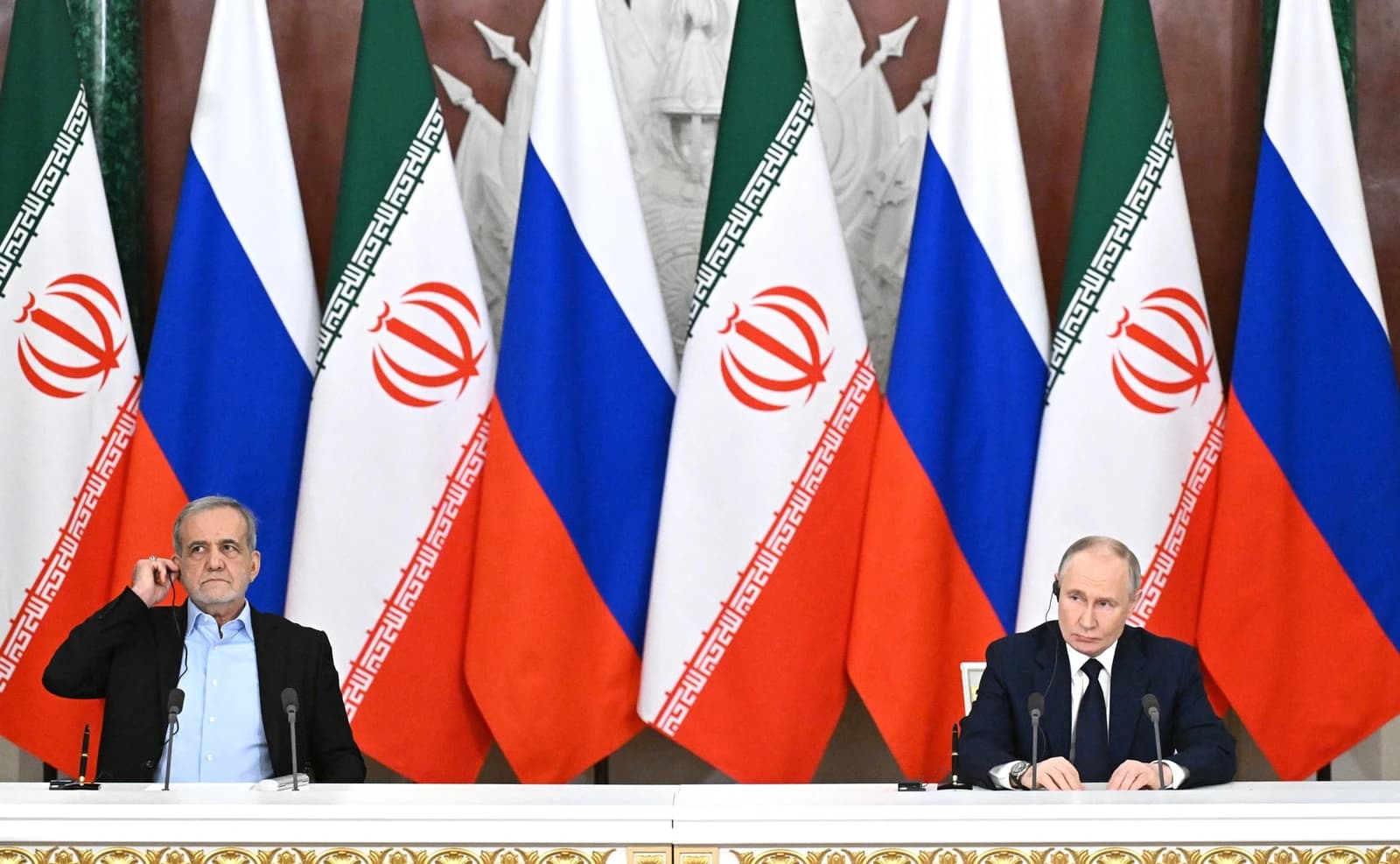
Masoud Pezeshkian said Tehran would not accept coercion or pressure, and accused the US and Israel of attacks that he said killed military leaders, nuclear scientists and students and struck infrastructure while Iran was still negotiating with Washington. The comments underscore how little room remains for a diplomatic off-ramp even as the conflict risk is already feeding through to energy and defensive assets.
The market reaction has been immediate. USO, a proxy for crude, has surged to 169.53, up sharply from 144.08 on Sept. 22 and far above its 50-day average of 146.47, with RSI readings at 90.6 pointing to an overbought market. The move reflects not just higher near-term risk premiums but the possibility of supply disruption in one of the world’s most important energy chokepoints. XLE, the energy sector ETF, climbed to 69.33, its highest level in the data provided, as investors continued to price in firmer upstream earnings and stronger cash generation for producers if crude stays elevated.
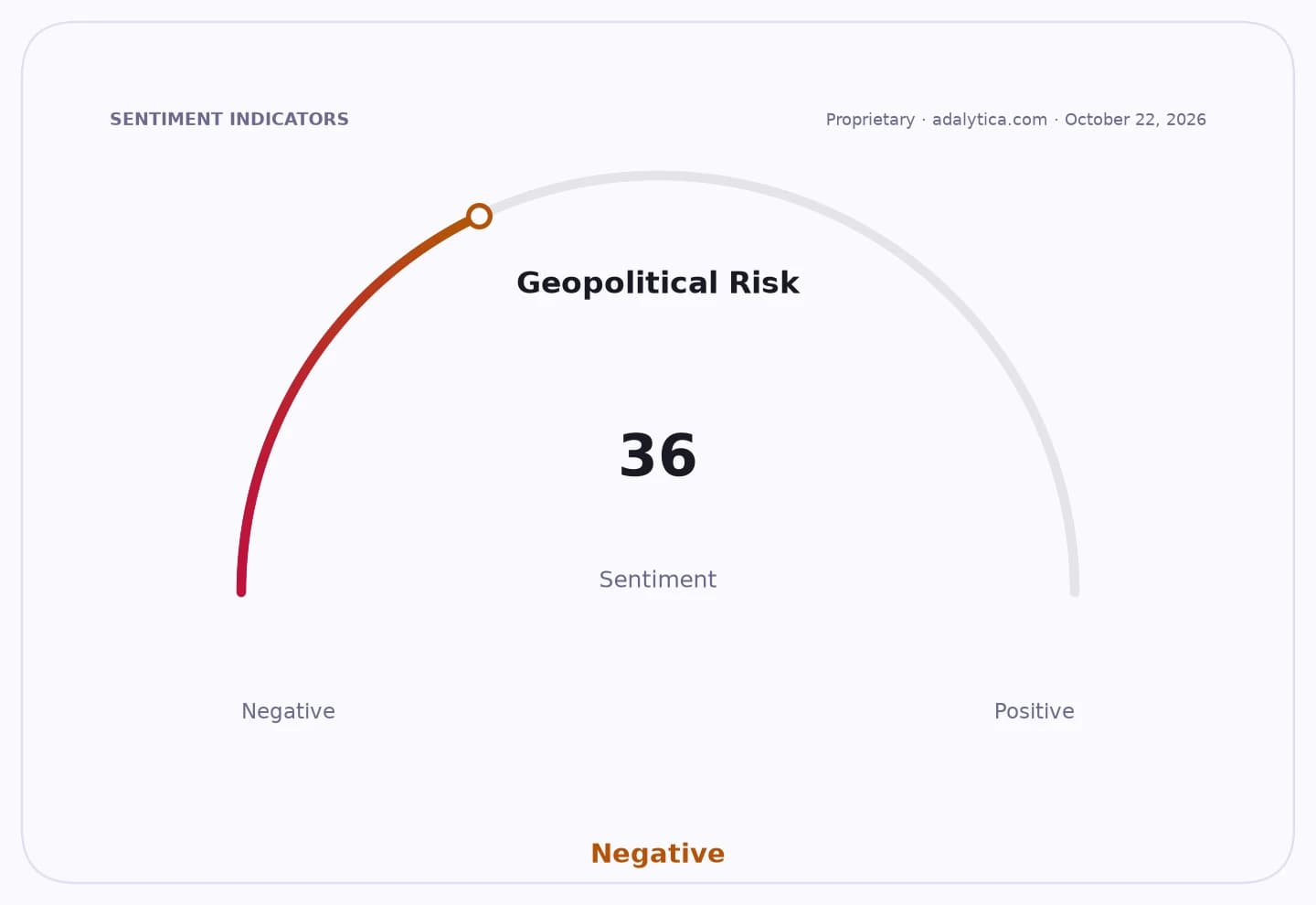
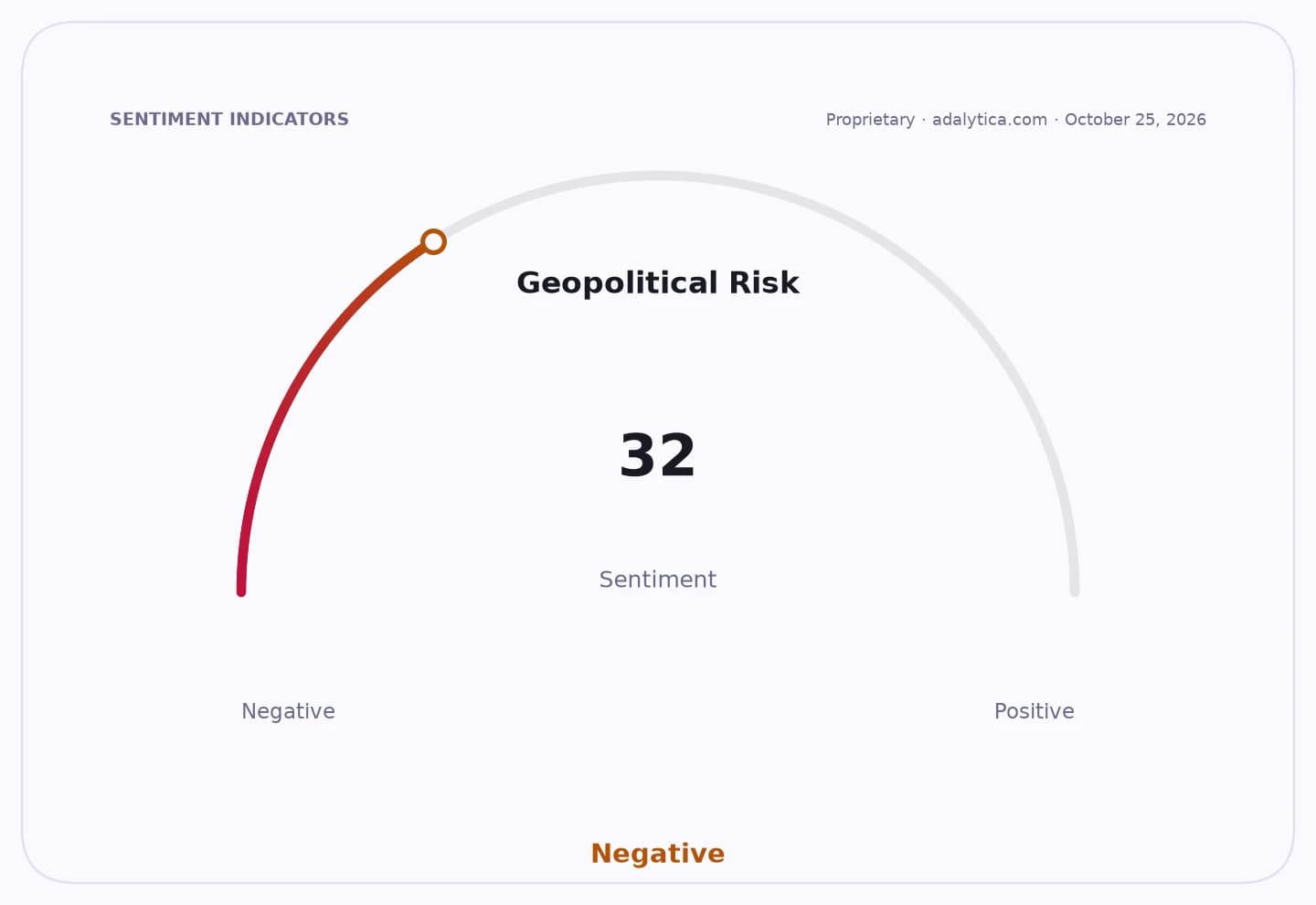
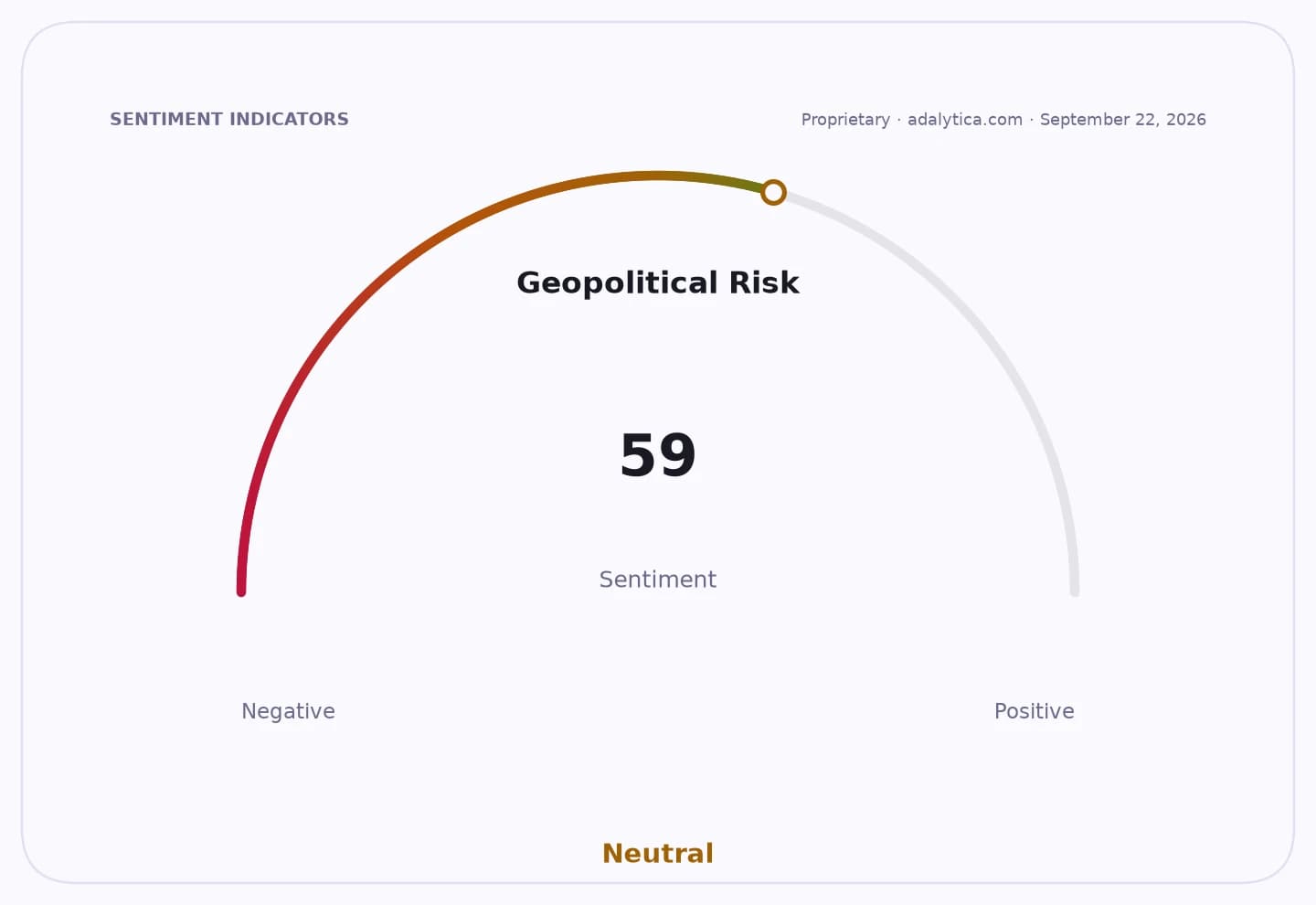
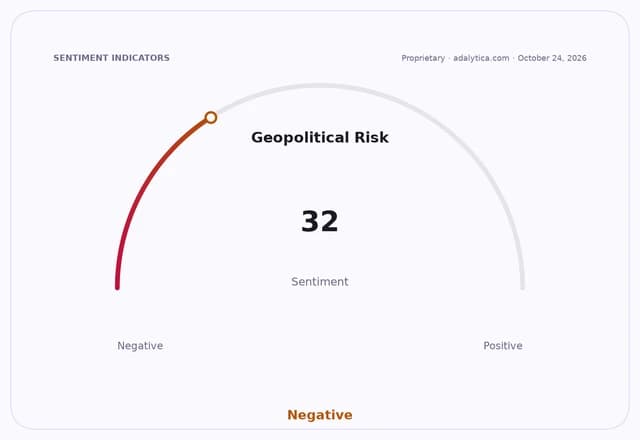
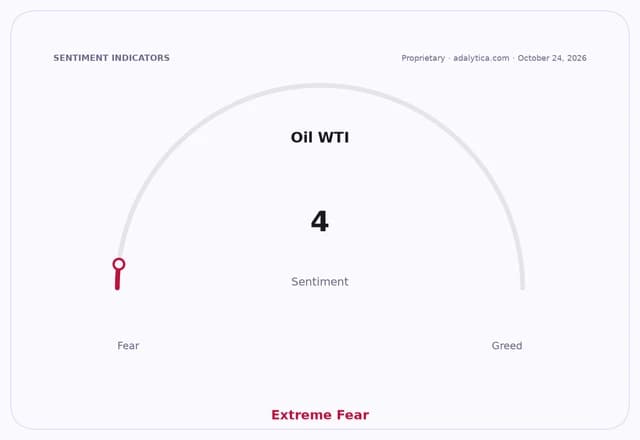
Gold has also been bid as investors seek protection against a wider geopolitical shock. GLD, after falling earlier this year, has been consolidating near 366.61, with the metal still well below its 50-day moving average but supported by renewed demand for havens as the regional risk premium rises. Adalytica’s Global Stability Sentiment gauge has fallen to 32, with “awareness” at 18 and labeled fear, while its WTI oil trade signal shows extreme fear despite elevated awareness, a combination that suggests the market is alert to the threat even if positioning remains skewed.
Geopolitical Risk — 30-day sentimentadalytica.com
Explore this data interactively — full history, time series and cross-market comparisons.Open AlphaPulse
Pezeshkian’s remarks matter economically because a direct confrontation around Iran could ripple through oil, shipping, insurance and broader risk assets almost immediately. A closure, even partial disruption, of Hormuz would threaten a critical share of seaborne crude and refined products flows, lift freight and insurance costs, and force importers to hedge higher energy prices. That would support producers and energy equities, but it would hit consumer purchasing power, transport costs and margins for energy-intensive industries if prices stay elevated.
Lavrov’s visit to Tehran adds another layer to the story. Iran and Russia have deepened political and economic ties under US sanctions, and both governments have incentives to present a united front against Western pressure. For investors, that raises the odds that Tehran will continue leaning on alternative diplomatic and commercial channels rather than easing tensions with Washington. But it also means the crisis is now entangled with a broader sanctions architecture involving Russia, complicating any quick de-escalation.
The bull case for markets is that the rhetoric remains a negotiation tactic and both sides still have incentives to avoid a direct clash that could damage oil infrastructure and global growth. The bear case is that mutual threats, intelligence warnings and military posturing create a high-risk environment where one miscalculation could trigger strikes, retaliation and a sustained energy shock.
For now, traders are treating the situation as a geopolitical inflation risk as much as a security story. The next catalysts are any signal from Washington on sanctions or military posture, any Iranian move around Hormuz, and whether diplomatic contact with Moscow or third-party intermediaries can slow the escalation before it becomes a market-moving supply crisis.
| Entity | Gains | Losses |
|---|---|---|
| Oil producers | ▲Higher crude prices | ▼Consumers and refiners |
| Energy ETFs | ▲Sector inflows | ▼Rate-sensitive sectors |
| Gold holders | ▲Safe-haven demand | ▼Risk assets |
| Iran and US diplomats | ▲Leverage in talks | ▼Credibility if talks fail |