Iran and Russia say they share a view on Afghanistan’s most pressing problems, a sign the two regional powers are trying to shape the post-withdrawal order around security cooperation and pressure on the Taliban over cross-border tensions and militant threats.
Iran and Russia Align on Afghanistan Security Concerns
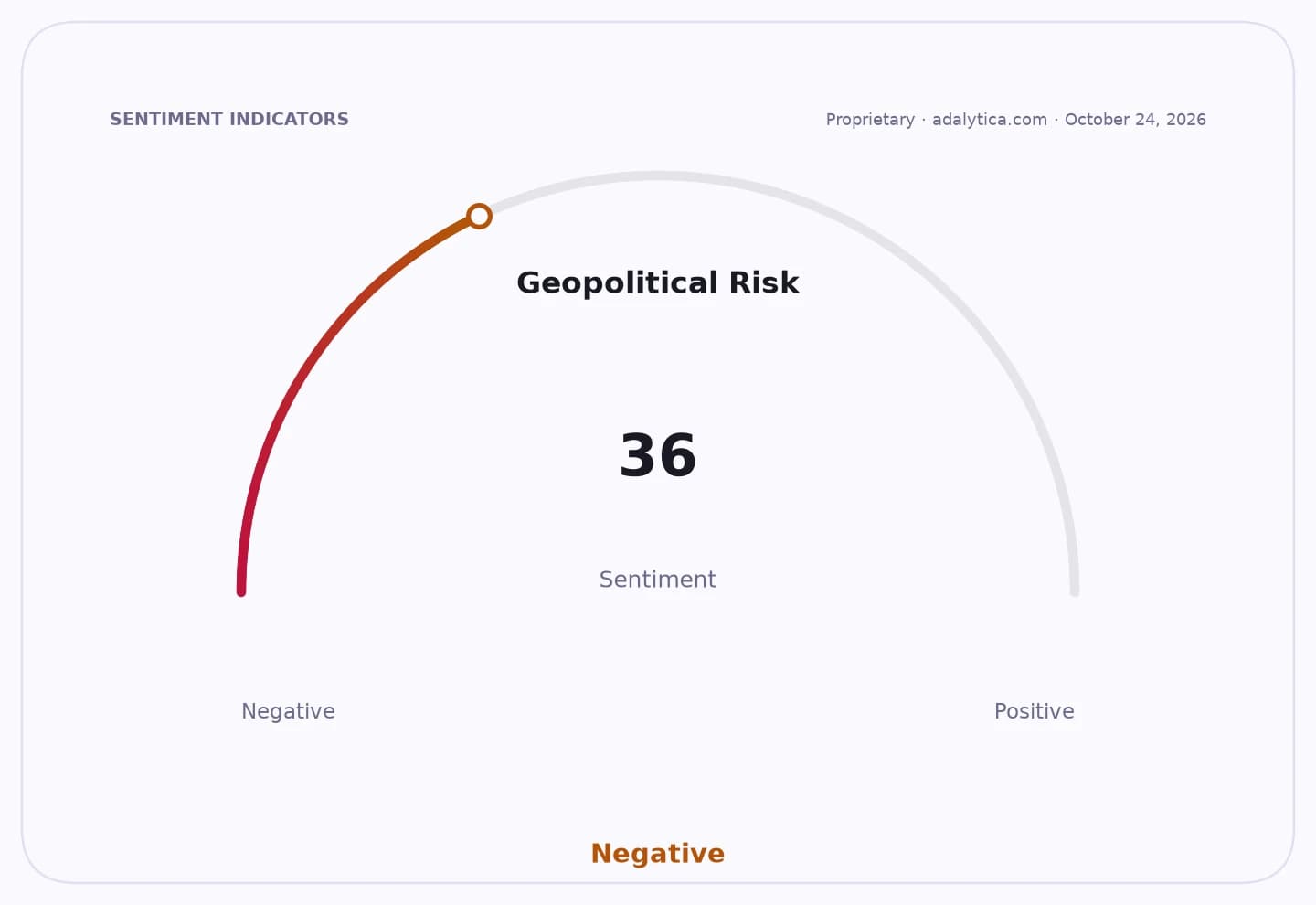
The most economically and geopolitically important part of the message is not the diplomatic language itself, but the alignment it implies between Tehran and Moscow on preventing Afghanistan from becoming a wider source of instability. Iranian Foreign Minister Abbas Araghchi said after meeting Sergei Lavrov in Tehran that the two countries agreed on Afghanistan, including reducing tensions between Kabul and Islamabad and countering terrorist threats.
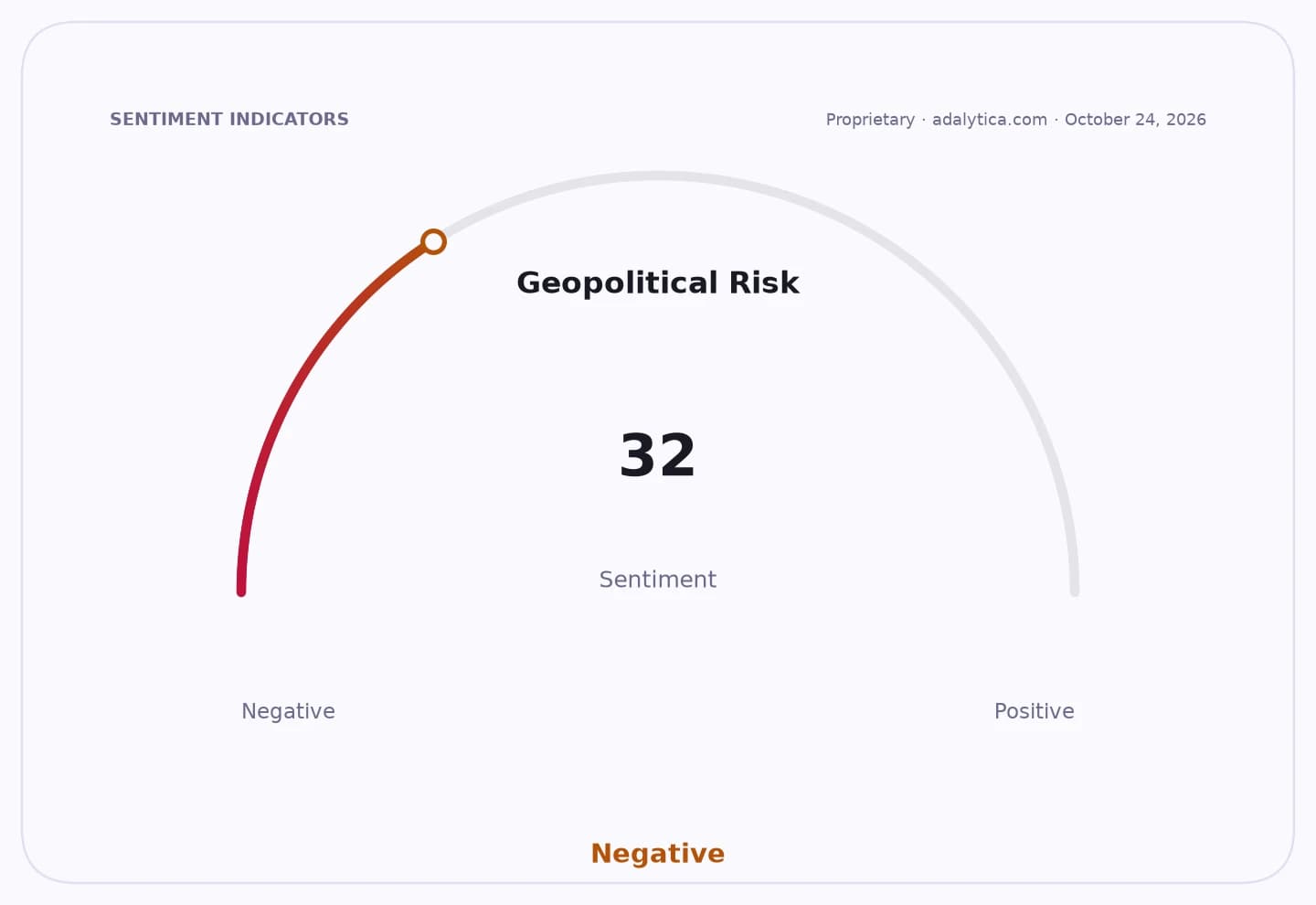
Sentiment IndicatorsⓘProprietary · adalytica.com · October 24, 2026
This is a snapshot — live sentiment, awareness and momentum for 130+ markets update continuously in the dashboard.Open AlphaPulse
That matters because instability in Afghanistan can quickly spill across borders into trade routes, migration flows and security spending across a wider region already strained by sanctions, war and weak growth. For investors, the key issue is not direct exposure to Afghanistan — which remains limited — but the knock-on risk to energy corridors, transport links, border commerce and sovereign risk premiums in neighboring markets. Any sign that Moscow and Tehran are coordinating more closely on Afghanistan also reinforces a broader Eurasian diplomatic axis at a time when both countries are seeking to offset Western pressure.
Russia’s role is especially consequential. Moscow is currently the only country to have formally recognized the Taliban government, while Iran has kept broader political and economic ties without extending recognition. That difference suggests room for coordination without full convergence: Russia may be willing to deepen security engagement to contain Islamic State Khorasan and other militant groups, while Iran keeps leverage over the Taliban without taking the political step of recognition. For the Taliban, outside backing from two major neighbors can help reduce isolation, but it also increases pressure to show it can police its borders and curb militant activity.
The statement also comes against the backdrop of renewed conflict between Afghanistan and Pakistan, which has raised the risk of further regional destabilization. Any escalation along that frontier could complicate logistics, strain border economies and increase the likelihood of refugee movements, especially if militant violence rises. That is why repeated warnings from Moscow and Tehran about terrorism inside Afghanistan carry weight beyond rhetoric: they point to a shared concern that disorder in Afghanistan could widen into a broader security problem.
For markets, the immediate impact is modest, but the medium-term implications are more meaningful for countries and sectors tied to regional transit, commodity flows and border security. A more coordinated Russian-Iranian line could support a limited stabilization narrative if it helps dampen Afghan-Pakistani tensions. But if it fails to restrain militant activity or if relations between Kabul and Islamabad deteriorate further, the region could see higher security costs, greater political risk and more pressure on already fragile trade links.
Investors will be watching whether this diplomatic convergence turns into practical cooperation — intelligence sharing, border controls or economic engagement — or remains a political signal. The former would point to a gradual effort to contain Afghanistan’s spillover risk; the latter would leave the region exposed to the same recurring instability, only with more actors now invested in managing it.
| Entity | Gains | Losses |
|---|---|---|
| Iran and Russia | ▲Regional influence | ▼Diplomatic friction with Taliban |
| Taliban authorities | ▲External engagement | ▼Pressure to curb militants |
| Pakistan | ▲Potential de-escalation | ▼Continued border insecurity |
| Regional trade and logistics | ▲Lower security risk | ▼Disruption from conflict |