The most important thing happening in the Iran story is not that pressure on the Islamic Republic is rising — it is that the opposition still looks too fractured, too constrained and too premature to turn that pressure into an orderly handoff of power.
Iran turmoil favors volatility over regime change
That matters because regime change in a country of 50 million people would not just redraw the political map of the Middle East. It would reshape oil supply expectations, risk premia across emerging markets, defense spending, sanctions policy and the outlook for global inflation. Investors do not need a neat answer on who governs Tehran to care. They only need to understand that every fresh strike, sanction or crackdown raises the odds of a disorderly transition, and disorderly transitions tend to be bad for growth, bad for confidence and good for volatility.
Sentiment IndicatorsⓘProprietary · adalytica.com · July 29, 2026
This is a snapshot — live sentiment, awareness and momentum for 130+ markets update continuously in the dashboard.Open AlphaPulse
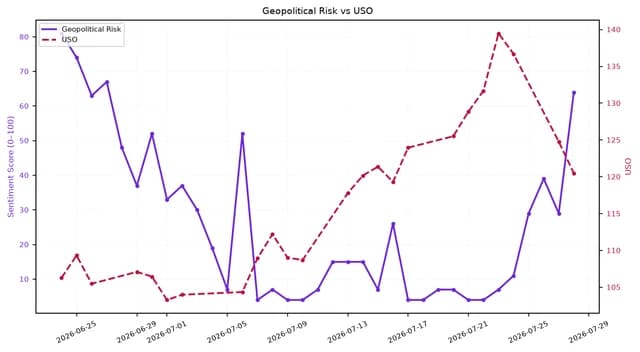
Reza Pahlavi, the exiled son of Iran’s last shah, remains the best-known face of the anti-regime camp in Western capitals. But name recognition is not the same thing as a governing coalition. The latest wave of repression, including a new death sentence for a political prisoner, underscores how effectively the regime is still using fear to suppress dissent at home. At the same time, the opposition remains split between exiles, dissidents inside Iran and organized groups that many Iranians view with suspicion. That is a hard foundation on which to build a credible alternative government.
The economic backdrop only deepens the problem for the regime and for anyone trying to predict what comes next. Years of sanctions, currency weakness and war risk have already battered investment and living standards. U.S. airstrikes and the broader military confrontation with Israel add another layer of uncertainty, keeping energy markets on edge and making it harder for businesses and governments to plan around Iranian supply or Iranian retaliation. Even if the current leadership is weakened, weakness alone does not create a successor.
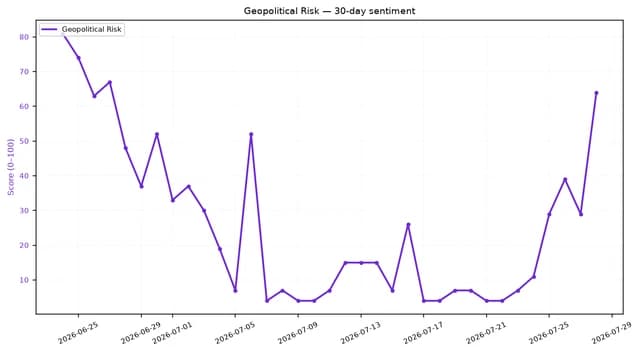
For investors, the key takeaway is that this is less a clean “regime change trade” than a volatility trade. Oil remains the obvious transmission channel: any hint that fighting could spread or that Iran’s command structure could fracture raises the chance of supply disruption and higher crude prices. That is why U.S. oil fund USO has been so sensitive to the geopolitical headlines, while gold has also found support as a haven. Broad equity markets have been more resilient, but as Adalytica’s Global Stability Sentiment shows, the world is still reading this as a fear event, not a settled political transition.
That distinction matters. A stable post-regime Iran could, in theory, eventually mean fewer sanctions, more foreign investment and a better long-term outlook for energy exports and regional trade. But investors should not confuse that optimistic end state with the present reality. Right now the more likely outcome is continued repression, continued confrontation and continued uncertainty over whether the opposition can organize itself before the situation on the ground deteriorates further.
In other words, the big story is not that regime change is imminent. It is that the regime is under real strain, yet the alternative is not yet ready. For long-term investors, that is a reminder to stay diversified, keep an eye on energy and defense exposure, and treat Iran headlines as a source of risk premia rather than a reliable catalyst for a quick political reset. Worth watching, but not a time to bet on a clean outcome.
| Entity | Gains | Losses |
|---|---|---|
| Oil bulls | ▲Higher crude risk premium | ▼Falling geopolitics premium |
| Gold holders | ▲Safe-haven demand | ▼Calm markets |
| Iranian regime hardliners | ▲More justification for crackdowns | ▼Loss of legitimacy |
| Iranian opposition / Pahlavi camp | ▲Global attention | ▼Credibility gaps and division |




