Ireland’s trade with the AI economy is emerging as one of the few bright spots in an otherwise jittery transatlantic relationship, giving the country a growth buffer just as Donald Trump’s tariff threats threaten to jolt European exporters and capital plans.
Ireland Emerges as AI Trade Buffer Amid Tariff Risk

That matters because Ireland is unusually exposed to global trade flows, corporate tax-sensitive investment and U.S. multinationals, making it a bellwether for how tariff disruption is reshaping the map of winners and losers in Europe. Ibec’s warning about a “whiplash effect” captures the market’s central problem: companies can still invest and ship into the AI buildout, but policy volatility is forcing them to hedge, delay and reprice.
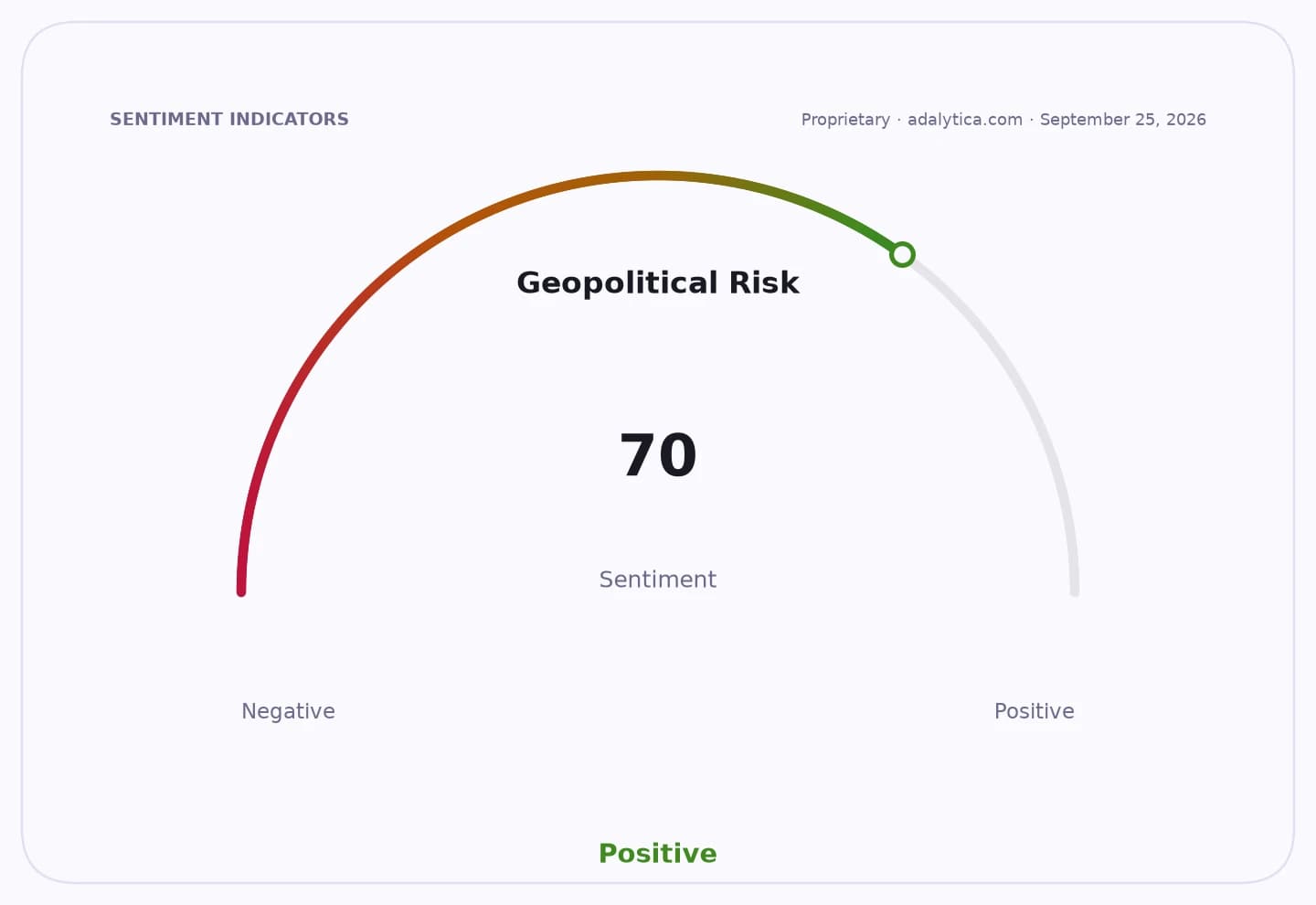
Sentiment IndicatorsⓘProprietary · adalytica.com · July 16, 2026
This is a snapshot — live sentiment, awareness and momentum for 130+ markets update continuously in the dashboard.Open AlphaPulse
The economic significance is bigger than one country’s export mix. AI infrastructure has become a multi-trillion-dollar capex cycle, and Ireland has positioned itself as a node in that chain through data centers, cloud services, advanced manufacturing and cross-border trade in high-value technology goods. In a world where trade policy can turn on a social media post, the market is underestimating how much this kind of AI-linked demand can offset slower traditional exports.
The numbers back up the shift. European equity investors have already rotated toward AI-linked names, and the broader sector remains a magnet for capital even as inflation fears and geopolitical tension rise. The message from the market is clear: investors are willing to pay for exposure to compute, power and digital infrastructure, while tariff-sensitive industrial and consumer supply chains are being discounted for policy risk.
That is where Ireland becomes interesting. If the AI cycle keeps pulling in semiconductors, servers, networking equipment and cloud infrastructure, the country’s trade profile can stay resilient even if tariffs sap other categories. For multinationals operating there, the issue is not whether AI demand exists — it clearly does — but whether the next tariff headline changes sourcing, routing or investment timing. That uncertainty is exactly what hurts planning and can widen the gap between firms with pricing power and those without it.
Macro conditions are adding to the tension. The U.S. 10-year Treasury yield around 4.6% and volatile oil prices underscore a market still wrestling with inflation and growth risks at the same time. Add a softer U.S. dollar, and cross-border trade flows can reprice quickly. For investors, that combination makes AI infrastructure and export hubs more attractive than cyclical sectors that rely on stable tariff regimes and predictable margins.
The investable takeaway is straightforward: the market should treat Ireland as a high-quality proxy for the AI supply chain rather than just a tax jurisdiction vulnerable to U.S. policy shocks. The opportunity sits in the picks-and-shovels names — data-center infrastructure, power, networking and industrial suppliers with AI exposure — while the losers are the tariff-sensitive exporters and import-dependent manufacturers caught in the whiplash. If Trump’s tariff rhetoric keeps driving volatility, the AI trade may prove not just a growth theme, but a defensive one.
| Entity | Gains | Losses |
|---|---|---|
| Ireland’s AI-linked exporters | ▲Higher trade volumes | ▼Policy uncertainty |
| Data-center and cloud suppliers | ▲Secular capex tailwind | ▼Margin pressure from tariffs |
| U.S./EU tariff-sensitive manufacturers | ▲Pricing power if insulated | ▼Sourcing disruption |
| Investors in AI infrastructure ETFs | ▲Exposure to structural growth | ▼Cyclical trade names |