Iron ore prices are under renewed pressure after a brief mid-July surge, with the market now struggling to hold gains as supply recovery outpaces demand in China.
Iron Ore Faces Supply-Driven Pressure as China Softens
That matters because iron ore is still one of the clearest barometers of industrial activity in the world’s biggest metals market, and a softer price tone points to a more cautious outlook for Chinese steel output, construction and manufacturing. The benchmark used in the supplied data has jumped from 256.978 in April to a forecast 295.8433 for July, but the recent pullback in spot prices suggests the rally is already running into a familiar constraint: abundant supply and only patchy end-user demand.
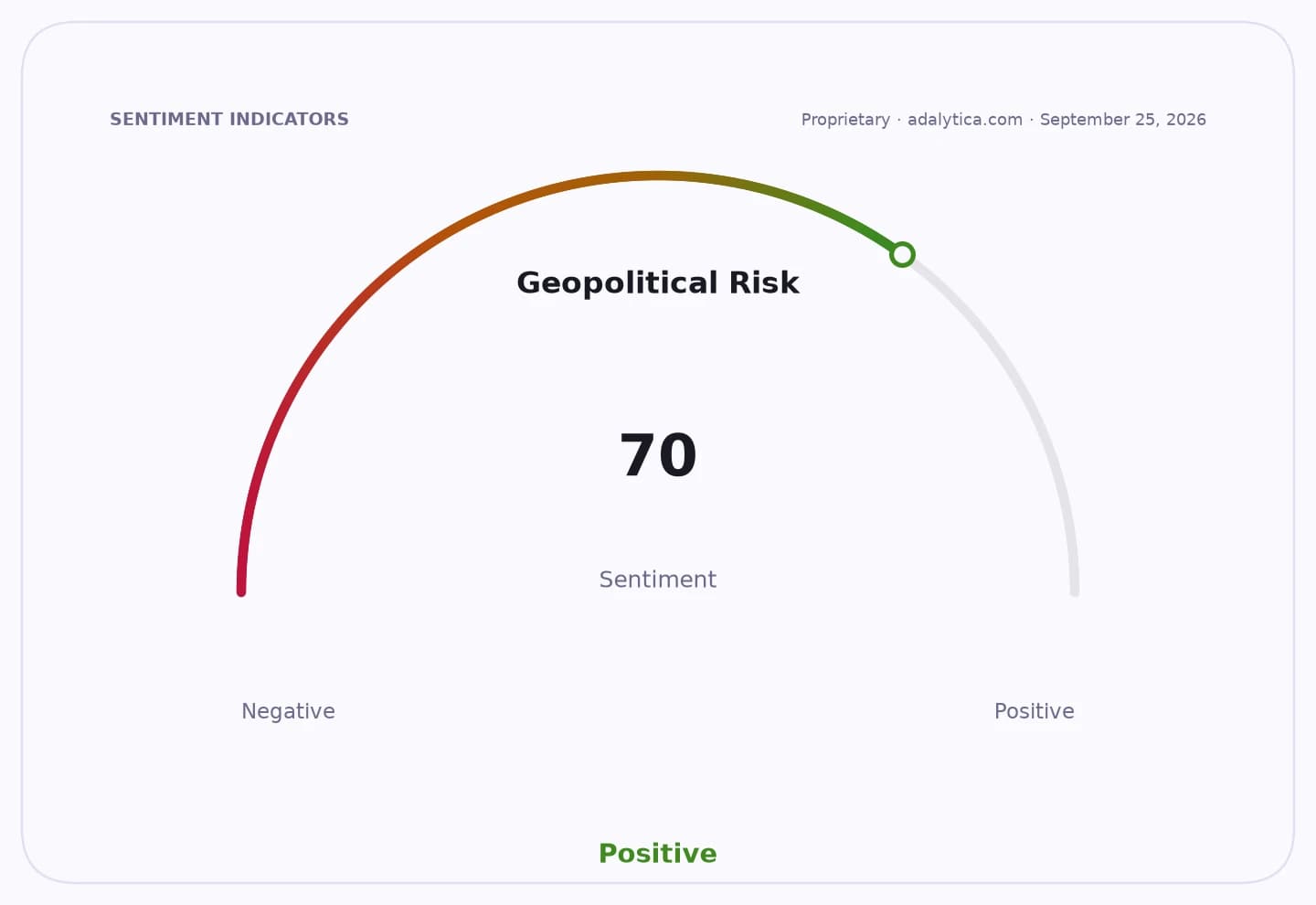
Sentiment IndicatorsⓘProprietary · adalytica.com · July 23, 2026
This is a snapshot — live sentiment, awareness and momentum for 130+ markets update continuously in the dashboard.Open AlphaPulse
The supply side looks better than it has in months. Vale reported its strongest second-quarter iron ore production since 2018, a sign that disruptions have eased and the seaborne market is getting well supplied again. BHP also said it delivered record iron ore production in the year ended June 30, while Rio Tinto’s stock has remained far below its early-year highs despite a strong first-half run. Together, the miners’ operating updates point to a market that is no longer short of tonnes.
China remains the swing factor. Earlier gains were helped by falling inventories at Chinese ports, but that support has faded as consumer demand stayed subdued and supply resumed after storm-related disruptions. The latest industrial production data in the context show only modest momentum, underscoring why the commodity has been vulnerable to sharp moves on sentiment rather than a clean improvement in fundamentals.
For miners, the message is mixed. Higher output helps unit costs, keeps fixed assets running and supports volumes, but it also raises the risk that prices weaken faster than revenue can grow. That is especially relevant for Vale, whose shares have slipped back to around 14.85 from a January peak above 17.30, and for Rio Tinto and BHP, which have both seen shares come off earlier highs as the market rethinks the durability of the iron ore cycle.
Investors are watching the tension between healthy production and soft pricing. Bullish traders can argue that any fresh draw in Chinese inventories or policy support from Beijing could stabilize the market quickly. The bear case is that current output from Australia and Brazil, combined with lackluster Chinese demand, keeps iron ore capped and leaves the sector exposed if steel margins narrow.
The next catalyst is whether the July price forecast translates into firmer physical buying or proves to be another short-lived rebound. If Chinese demand does not improve, the market looks more likely to reward low-cost producers and punish anyone expecting a sustained price recovery.
| Entity | Gains | Losses |
|---|---|---|
| Vale | ▲Higher volumes | ▼Softer iron ore prices |
| Rio Tinto | ▲Seaborne supply leverage | ▼Near-term price upside |
| BHP | ▲Record output scale | ▼Margin compression risk |
| Chinese steelmakers | ▲Lower input costs | ▼Weak downstream demand |