Israel’s average monthly salary rose 3.4% in July to 14,534 shekels gross, but after inflation the real gain was only 1.8%, underscoring that paychecks are still being eroded even as the labor market stays tight.
Israel average salary rises 3.4% in July
The Central Bureau of Statistics data show a labor market with sharply uneven gains. Wage growth is being supported by high-paying tech, finance and energy jobs, while lower-paid service industries remain far behind, leaving overall income growth concentrated in a narrow slice of the economy.
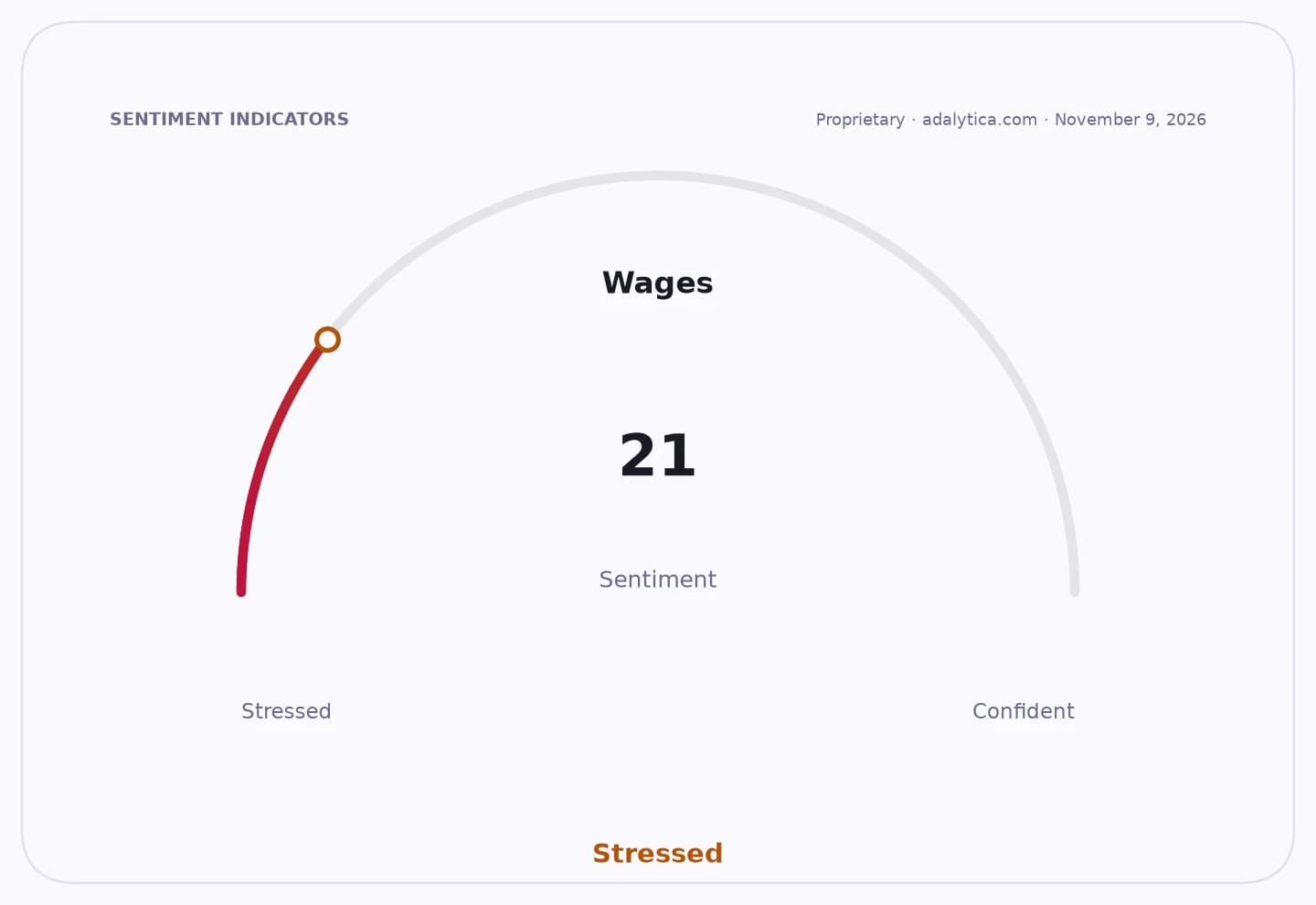
Sentiment Indicators
The gap is stark: workers in information technology and telecom earned an average 33,689 shekels a month, more than five times the 6,695 shekels in hospitality and food service. In finance and insurance, average pay was 23,706 shekels; in industry, 21,289 shekels.
At the top of the occupational ladder, administrative executives earned 38,699 shekels and company chief executives 35,402 shekels. IT specialists averaged 32,404 shekels, while engineers and scientists made 24,087 shekels. At the bottom, traders earned 6,179 shekels and caregivers 5,322 shekels.
The median salary, which better captures what most Israelis actually take home, was 9,644 shekels compared with the average of 13,685 shekels, highlighting how a small group of very high earners pulls the headline figure upward. Longer hours also matter: tech workers averaged 44.7 hours a week, versus 29.5 hours for caregivers and social workers.
For investors, the data reinforce a two-speed economy. Higher wages in tech and finance support consumer spending among affluent households, but modest real wage growth suggests broad-based demand remains constrained, a key issue for retailers, lenders and the Bank of Israel as it weighs inflation against growth.
The August preliminary reading of 14,448 shekels points to continued nominal wage gains, but the next question is whether inflation cools fast enough to turn that into stronger real income growth. If not, the squeeze on households will continue to cap domestic demand.
| Entity | Gains | Losses |
|---|---|---|
| High-wage tech and finance workers | ▲Faster pay growth | ▼Narrower wage premium over inflation |
| Israeli households overall | ▲Higher nominal salaries | ▼Weak real income growth |
| Retailers and consumer-facing firms | ▲Affluent spending holds up | ▼Mass-market demand stays soft |
| Bank of Israel | ▲Signs of resilient labor market | ▼Persistent inflation pressure |