Italian households are being pushed out of cash and into government bonds, deposit accounts and ETFs as investors look for yields around 3% a year to protect savings from inflation and avoid leaving money idle.
Italian Savers Shift Toward Bonds and ETFs
That shift matters because it reflects a wider reallocation of household wealth in Europe’s third-largest economy, where the gap between deposit rates and inflation is forcing savers to rethink the old habit of keeping liquidity parked in low-return accounts. For investors, it is a sign that demand for plain-vanilla income products — from BTPs to money market funds and bond ETFs — should stay firm as long as real returns on cash remain negative or thin.
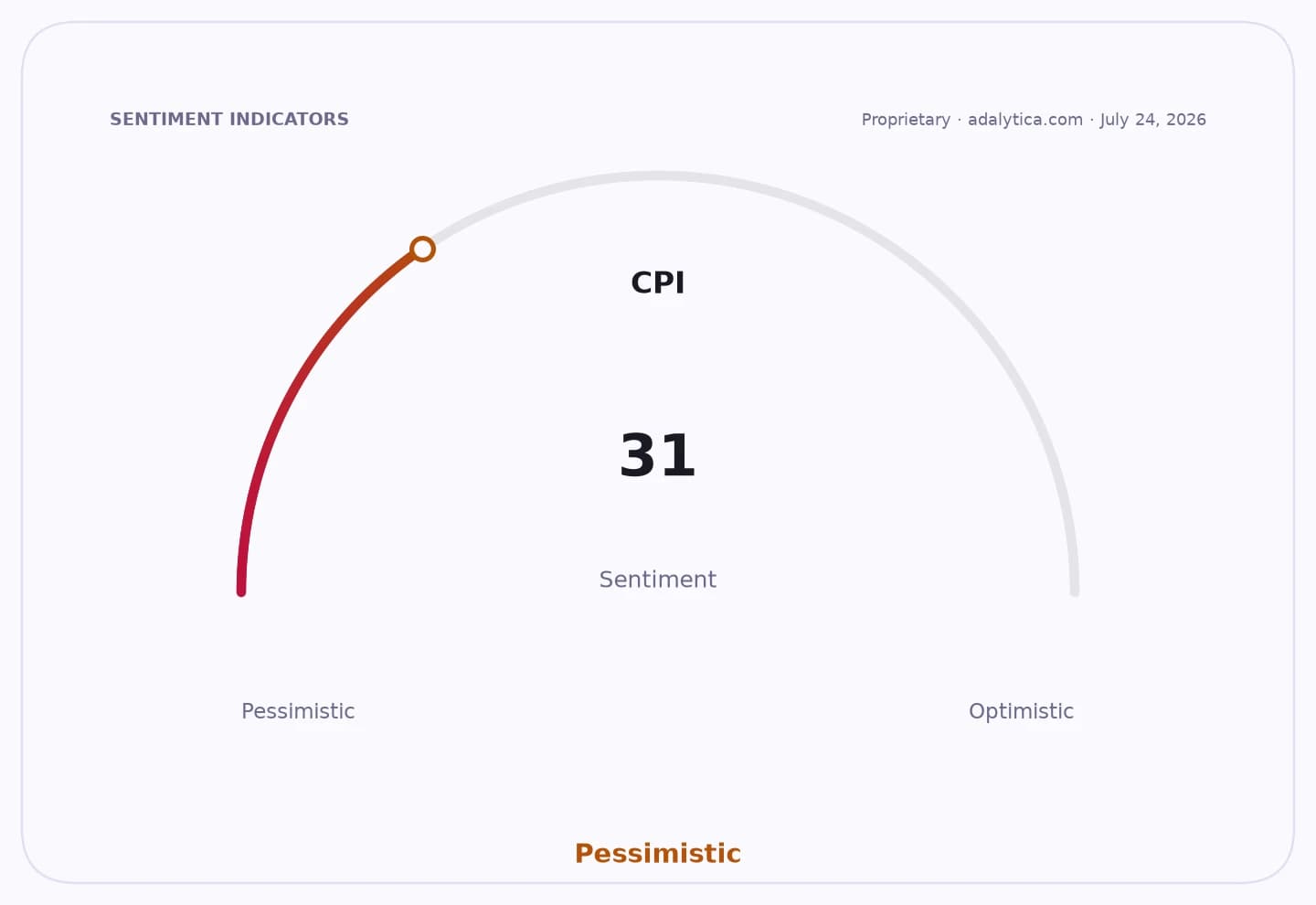
Sentiment IndicatorsⓘProprietary · adalytica.com · July 24, 2026
This is a snapshot — live sentiment, awareness and momentum for 130+ markets update continuously in the dashboard.Open AlphaPulse
The backdrop is a still-elevated rate environment. The U.S. 10-year Treasury yield is around 4.68%, while the Federal Reserve funds rate is about 3.63%, levels that keep global fixed-income returns attractive compared with cash. In Europe and Italy, that makes government debt and short-duration funds an obvious destination for conservative savers hunting income without taking equity-style risk.
Italian bonds are part of that search. BTPs offer a direct way to lock in yield, while ETFs and deposit accounts provide easier access to cash for households that want liquidity without fully sacrificing return. The trade-off is the same across the board: the higher the expected yield, the more investors have to accept duration risk, price swings or lower flexibility.
Market signals also show the appeal — and the vulnerability — of bond income products. The iShares 3-7 Year Treasury Bond ETF, a proxy for intermediate-duration debt, is trading around 83.17, below its 50-day moving average of 84.82 and 200-day average of 85.97, with a 14-day RSI of 18.9, a reading that points to heavy selling pressure after a recent run-up in bond demand.
Adalytica’s proprietary CPI trade signals underscore the same tension around inflation and fixed income. U.S. long-term inflation expectations sentiment is neutral at 43, while U.S. Treasury bond trade signals show extreme fear at 0, suggesting investors remain cautious even as they continue to seek yield and liquidity.
For Italian savers, the message is straightforward: cash sitting still is losing purchasing power, and the best way to reach a 3% annual return depends on time horizon and access needs. The next catalyst is the path of inflation and central-bank rates, which will determine whether deposit yields hold up or whether households move further into bonds and ETFs to preserve real returns.
| Entity | Gains | Losses |
|---|---|---|
| Italian households with surplus cash | ▲Higher income options | ▼Idle deposits |
| BTPs and bond ETFs | ▲Fresh retail demand | ▼Low-yield cash accounts |
| Banks offering deposits | ▲Inflows from cautious savers | ▼Price pressure on weak rates |
| Inflation | ▲Persistent erosion effect | ▼Savers’ purchasing power |