Rome’s States General of Entertainment is turning into a pressure campaign for tighter rules on artificial intelligence in film, music and live performance, with artists, unions and lawmakers warning that generative tools could hollow out creative jobs and strip value from original content.
Italy AI Rules Put Pressure on Disney, Netflix
The push matters because entertainment is one of the first large European industries to confront AI at scale, and the outcome will shape who gets paid when algorithms produce scripts, songs and films built on human work. For investors, that means more regulatory risk for platforms, studios and streaming groups that rely on a deep pool of licensed content and creative labor.
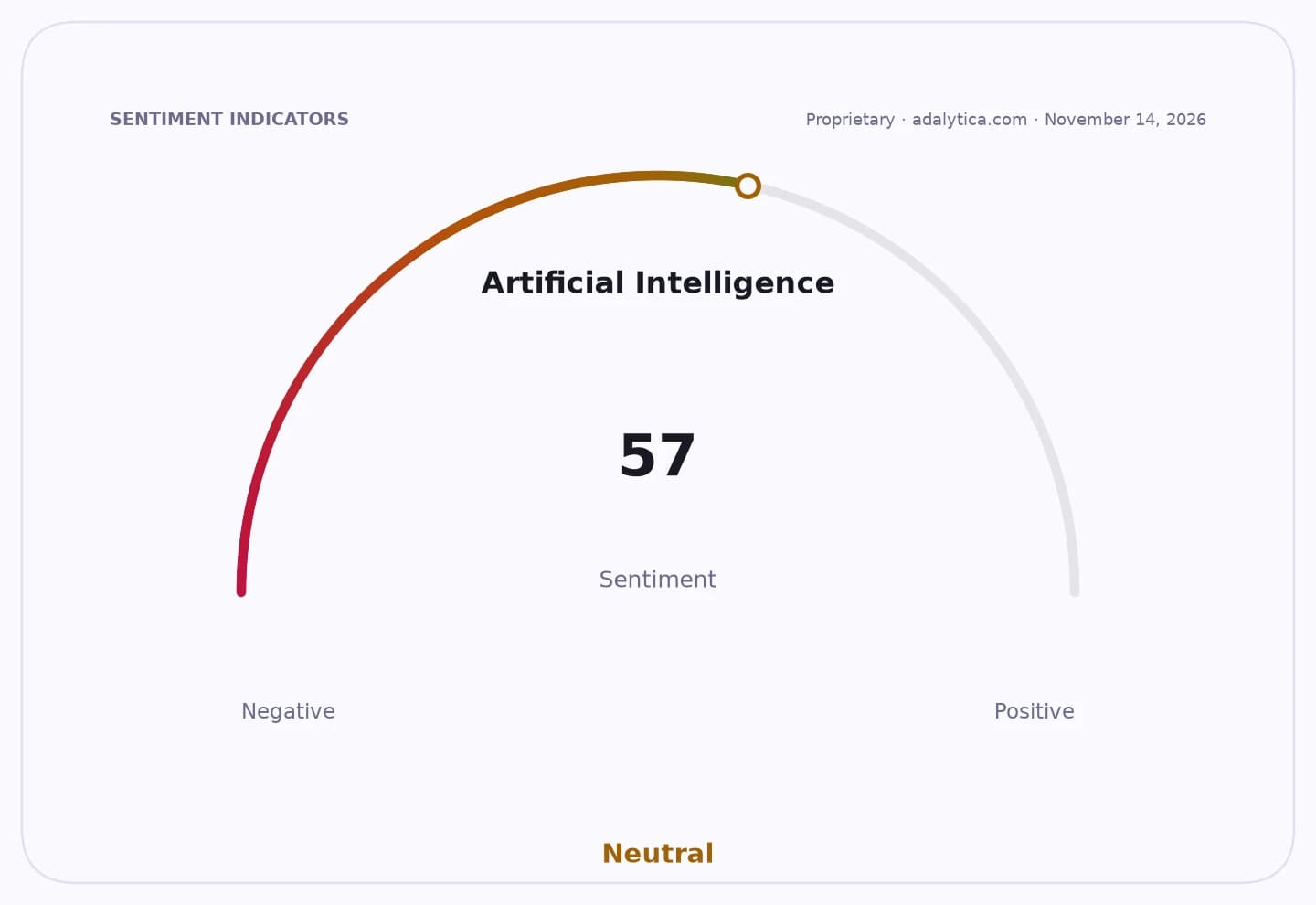
Sentiment Indicators
At the center of the debate is a proposed popular initiative to protect cultural spaces, festivals, small theaters, live clubs and independent venues, alongside new labor contracts for workers in the sector. The proposal will be filed with Italy’s Cassazione in the coming weeks before a signature drive begins, according to organizers.
The economic stakes are not limited to the arts. Supporters argue that public money is still heavily skewed toward larger defense spending while the national live performance fund, which backs theaters, orchestras, dance, music and circus, is set at less than 500 million euros for 2026. That gap feeds the broader argument that cultural infrastructure is underfunded even as the business model shifts under AI.
Political pressure is building in parallel. Elly Schlein, the head of Italy’s center-left Democratic Party, called for an “European CERN for AI,” while party colleague Nicola Zingaretti said no public money should go to works generated by AI. Their message reflects a wider European push for guardrails around training data, attribution and compensation.
Labor tensions are also rising inside the sector. Theater workers plan to protest in Rome on Monday over contract renewal talks they say have become unacceptable, while film crew workers say their agreement has been frozen since 1999 and that AI could hit set jobs irreversibly.
That combination of policy, labor and technology risk matters to investors because entertainment companies face a higher-cost, more regulated operating environment just as they are under pressure to keep producing content. The issue also lands in a market already fixated on AI’s impact on margins, intellectual property and creator compensation.
Disney shares were little changed around $118.97 on Friday, but the stock remains above both its 50-day and 200-day moving averages, suggesting investors are still giving the company credit for its content moat even as the regulatory backdrop tightens. Netflix closed at $62.15, below its 50-day and 200-day averages, with the stock’s technicals still weak despite some stabilization in recent weeks.
The broader AI trade remains active, but investor sentiment is more mixed elsewhere. Adalytica’s AI sentiment gauge stands at a neutral 57, while awareness is at an extreme fear reading of 4, underscoring how quickly the narrative has shifted from enthusiasm to risk management.
For entertainment companies, the next catalyst is not just another product launch or earnings print, but whether Europe turns creator protections into enforceable rules on data use, licensing and compensation. That could determine whether AI becomes a productivity tool for the industry or a new source of legal and labor friction.
| Entity | Gains | Losses |
|---|---|---|
| Creators and unions | ▲stronger pay protections | ▼weaker bargaining leverage if AI use spreads |
| Cultural venues and festivals | ▲potential subsidies and legal support | ▼closure risk without new funding |
| Streamers and studios | ▲clearer rules if regulation is standardized | ▼higher compliance and licensing costs |
| AI platform developers | ▲broader adoption if rules are permissive | ▼restrictions on training data and content use |