Transport blockades in Puglia are putting Italy’s grain-to-pasta chain under immediate strain, with millers warning that a prolonged stoppage in the country’s main durum wheat region could interrupt supplies to pasta makers, bakeries and retailers within days.
Italy Puglia Transport Blockades Hit Grain Supplies

The alarm from Italmopa, the association representing the nation’s milling industry, matters because Puglia is not just a local production hub: it accounts for roughly a quarter of Italy’s durum wheat output and concentrates much of the grinding capacity that turns that grain into semolina for the pasta industry. When trucks cannot move, inventories at mills and downstream factories can be depleted quickly, and the disruption spreads beyond the region.
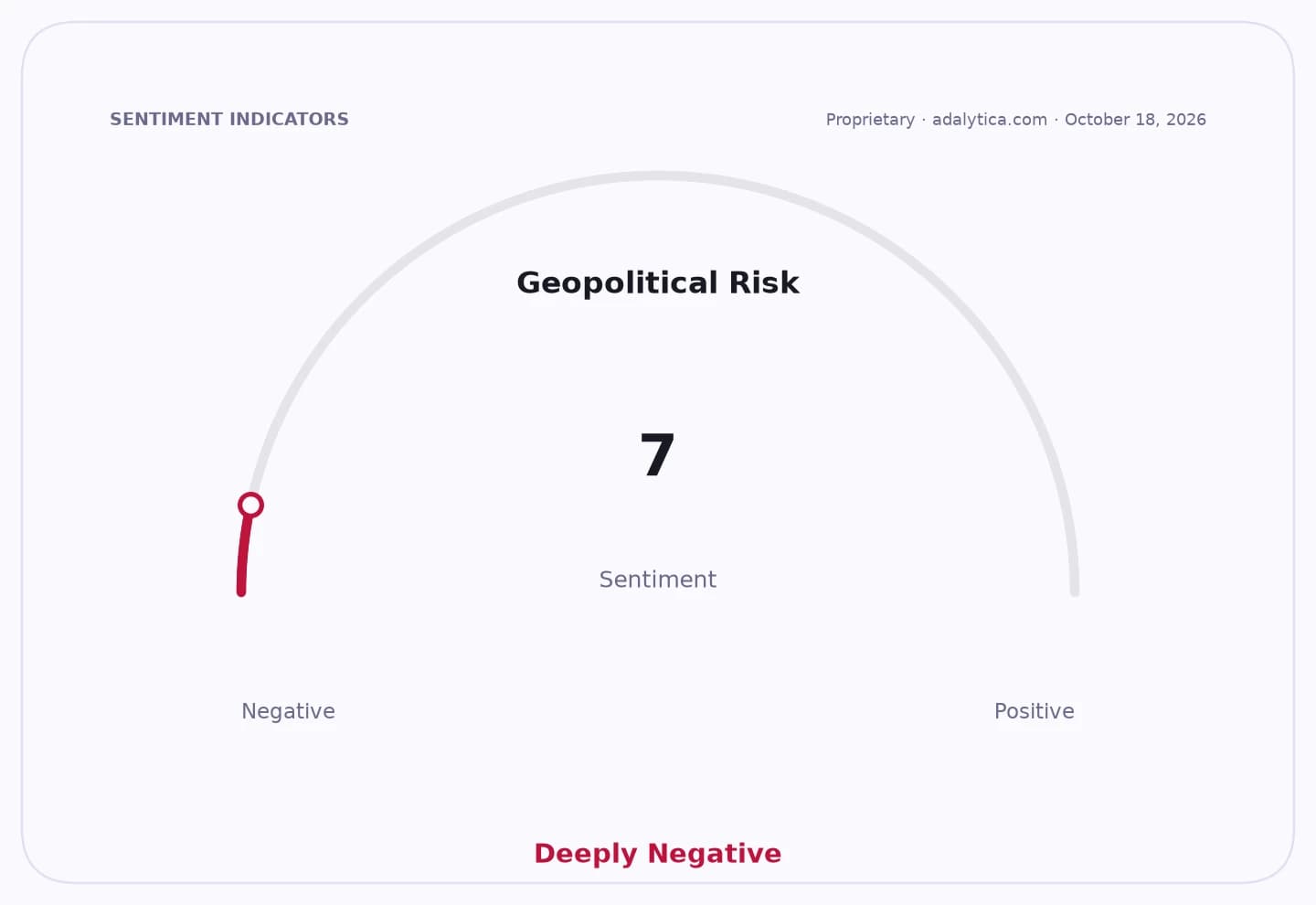
Sentiment IndicatorsⓘProprietary · adalytica.com · October 18, 2026
This is a snapshot — live sentiment, awareness and momentum for 130+ markets update continuously in the dashboard.Open AlphaPulse
Vincenzo Martinelli, Italmopa’s president, wrote to the prefect of Foggia and the interior minister to describe an “absolute emergency” caused by an unauthorised blockade of heavy vehicles. Since Sunday, road and motorway closures have hindered the movement of wheat to mills and flour and semolina to industrial users, even though most milling companies have already adjusted transport prices through fuel surcharges to offset higher diesel costs.
That distinction matters economically. The protest is not simply a logistics nuisance; it is a supply shock inside a food chain that feeds one of Italy’s most important export industries. Pasta shipments have been hitting record levels abroad, and any interruption in the flow of semolina risks production halts that could tighten domestic availability and add cost pressure at a time when food inflation remains politically sensitive.
The immediate investor relevance is clearest for the food and grocery complex. Suppliers to millers and pasta makers face the risk of production losses and contract delays, while companies with tighter inventories may need to source grain or finished product from farther afield at higher cost. For retailers and consumer staples investors, the near-term question is whether the disruption remains a regional bottleneck or evolves into a broader national shortage that forces price adjustments.
The market backdrop also argues for caution. Wheat-linked sentiment has been volatile, with technicals on the wheat ETF showing a pullback from earlier highs and the US dollar softening in recent sessions, both of which can amplify commodity price moves. But the key driver here is not a global crop shock; it is a transport failure in a strategically important part of Italy’s food system, where logistics have become the binding constraint.
For policymakers, the stakes are wider than one protest. If the blockade persists, it could expose how concentrated Italy’s grain-processing architecture has become, with a single region carrying too much of the load for a nationally important staple. For investors, that concentration increases the odds that what starts as a local labour dispute turns into a margin, inventory and pricing issue for the broader European food supply chain.
| Entity | Gains | Losses |
|---|---|---|
| Transport protesters | ▲Leverage for fuel-cost demands | ▼Risk of political backlash |
| Millers and pasta makers | ▲None | ▼Production stoppages |
| Retailers and consumers | ▲None | ▼Higher risk of shortages |
| Grain logistics firms | ▲Potential higher freight pricing later | ▼Near-term traffic disruption |