Asian equities split on Thursday, with China and Australia finishing lower while Japan’s Nikkei rose as trading resumed after a two-day holiday break.
Japan equities rise as China, Australia fall

The move matters because it highlights a market that is still trading more on relative growth and policy expectations than on a clean regional risk-on impulse. China remains the weak link, and Australia is being dragged by a softer commodity and rate backdrop, while Japan continues to attract capital on the back of a weaker yen and a still-favorable earnings setup for exporters.
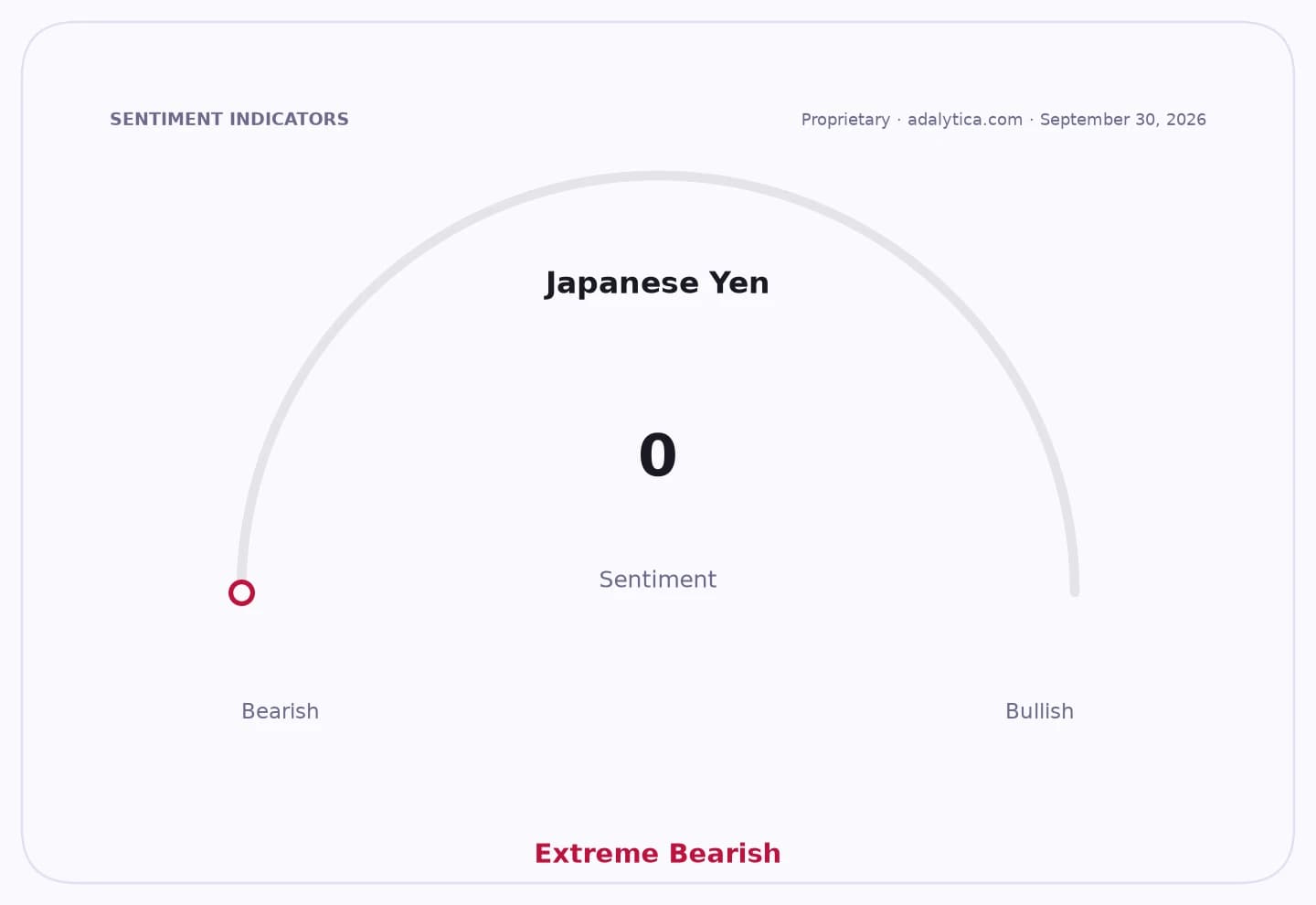
Sentiment IndicatorsⓘProprietary · adalytica.com · September 29, 2026
This is a snapshot — live sentiment, awareness and momentum for 130+ markets update continuously in the dashboard.Open AlphaPulse

The broader macro signal is that investors are still differentiating sharply across Asia instead of buying the region as a single trade. That is exactly what happens when the market sees China’s growth outlook as fragile — Adalytica’s China Economic Growth Target Sentiment sits at just 11, flagged as “Extreme Fear” — while Japan is viewed as a beneficiary of capital rotation and currency tailwinds. The yen trade signal is also in “Extreme Fear,” underscoring how currency weakness is supporting Japanese equities.
For investors, that creates a clear playbook. China-linked ETFs such as FXI remain under pressure: the fund closed at 33.76 on Tuesday, below its 50-day moving average near 35.18 and its 200-day average around 36.14, with RSI readings near 41, a sign of fading momentum rather than capitulation. Australia’s EWA is also vulnerable, slipping to 28.28 and holding only slightly above its 200-day average, with its 50-day trend still above price. By contrast, EWJ finished at 96.04, comfortably above both its 50-day and 200-day moving averages, showing that Japan remains the relative strength trade even after a modest pullback.
The narrative here is not simply that one market rose and two fell. It is that Asia is fragmenting into winners and losers as investors position for slower Chinese growth, a softer Australian resource backdrop and a Japan that still benefits from FX-driven earnings leverage. That favors selective exposure over broad regional beta, and it argues for keeping a closer eye on Japan exporters and domestic cyclicals while staying cautious on China-heavy and commodity-sensitive baskets.
| Entity | Gains | Losses |
|---|---|---|
| Japan equities | ▲Holiday catch-up buying | ▼None on the day |
| China equities | ▲Possible policy support later | ▼Growth pessimism |
| Australia equities | ▲Lower oil eases inflation pressure | ▼Commodity-linked sentiment |
| FXI / China ETF buyers | ▲Selective value hunters | ▼Momentum traders |