Japan’s plan to slash the food consumption tax to 1% for two years from April 2027 would give households immediate relief, but it also risks widening the gap between eating at home and eating out and leaving the government with a politically fraught revenue hole.
Japan food tax cut to 1% from April 2027
Prime Minister Sanae Takaichi’s proposal is the most visible attempt yet to answer voter anger over living costs without resorting to a broader, more expensive tax overhaul. For consumers, it would amount to a near-zero levy on food purchases and could soften the blow from persistent price rises. For investors, it is a signal that Japan’s policy mix is moving further toward direct household support, even as growth remains fragile and fiscal discipline comes under pressure.
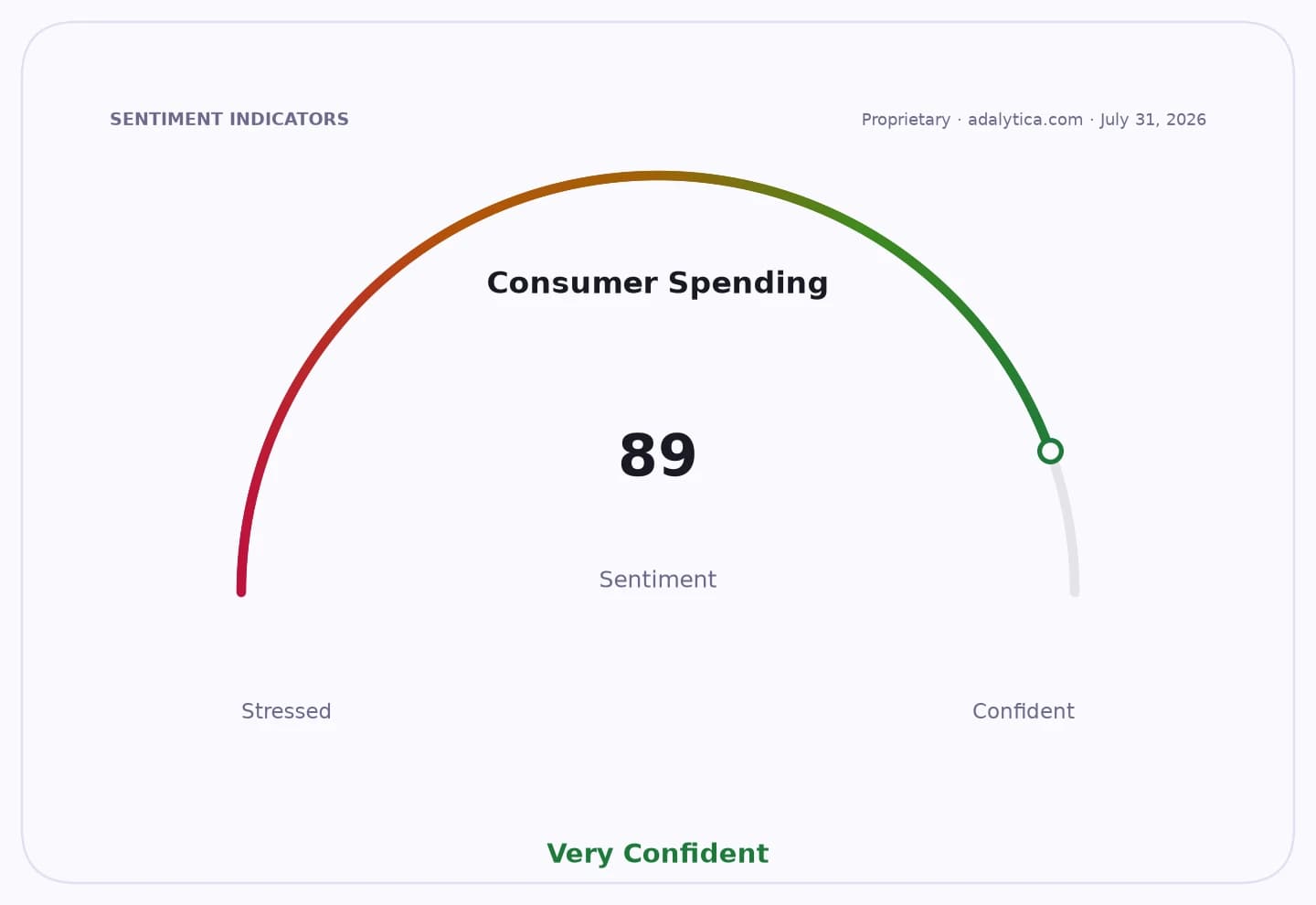
Sentiment IndicatorsⓘProprietary · adalytica.com · July 31, 2026
This is a snapshot — live sentiment, awareness and momentum for 130+ markets update continuously in the dashboard.Open AlphaPulse
The economic appeal is straightforward: food is one of the most politically sensitive components of inflation, and a cut there would be felt quickly in household budgets. That makes it a cleaner and more targeted measure than cash handouts, particularly if policymakers want to sustain spending. But the same simplicity is also the problem. By excluding a clear compensation mechanism, the plan risks adding to budget stress at a time when Japan’s public finances are already stretched and bond investors are highly alert to any expansion in unfunded promises.
The proposal also carries uneven effects across the consumer economy. If food bought at supermarkets and convenience stores becomes cheaper while restaurant prices remain largely unchanged, more households may choose to cook at home. That would aid retailers and packaged-food suppliers in the short term, but it could pressure restaurants and delivery services, which depend on discretionary spending and already face labor and input-cost inflation.
That split matters because Japan’s consumer sector is still balancing inflation, wage gains and cautious spending behavior. Adalytica’s Consumer Spending Sentiment gauge is in “Extreme Greed” territory at 89, suggesting investors are still pricing in resilience in discretionary demand. But the Household Savings Rate Sentiment sits at 64, a neutral reading, underscoring that any tax relief would likely be used to rebuild balance sheets as much as to increase consumption. In other words, the policy may cushion households without necessarily producing a strong demand surge.
The political calculus is just as important. Takaichi is trying to show she is responsive to cost-of-living concerns, but the absence of a funding plan makes consensus inside the ruling Liberal Democratic Party and with opposition lawmakers harder to secure. If the government cannot explain how it will absorb the lost revenue, the measure could become a flashpoint in the broader debate over Japan’s tax base, social spending and long-term fiscal credibility.
For investors, the key question is not whether a 1% food tax would be popular, but whether it becomes part of a broader shift toward permanent consumer support without offsetting reforms. That would be positive for near-term spending and politically popular retailers, but negative for fiscal assets if markets begin to price in looser budget discipline. The next catalyst is cabinet approval in early August, followed by the more difficult test of whether the ruling coalition can turn a popular promise into a workable revenue plan.
| Entity | Gains | Losses |
|---|---|---|
| Households | ▲Lower food bills | ▼Limited if inflation offsets savings |
| Supermarkets and food retailers | ▲Higher traffic, stronger price relief appeal | ▼Margin pressure if costs stay elevated |
| Restaurants and dining-out businesses | ▲Little direct benefit | ▼Risk of weaker demand |
| Japanese government bonds | ▲None directly | ▼Higher fiscal concerns, weaker confidence |