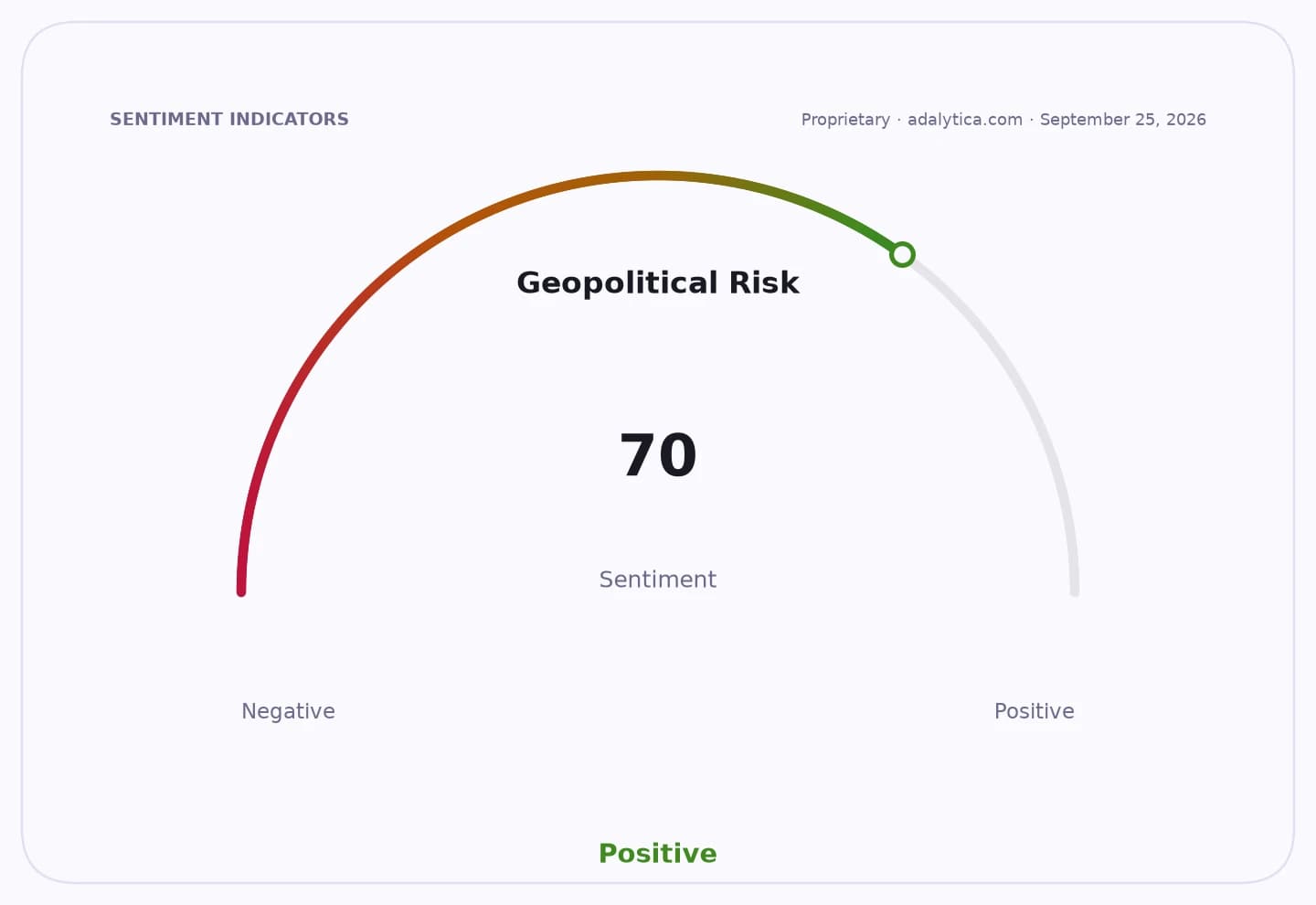
Japan’s new government is moving to channel more of the country’s vast household savings into equities and other risk assets, a policy shift that could reshape capital allocation, support domestic markets and deepen the “virtuous cycle” officials want to build around wages, spending and investment.
Japan Pushes Household Savings Toward Equities

The proposal to double the household investment ratio to 40% and loosen rules on bank investment and lending would mark one of the clearest efforts yet to convert Japan’s balance-sheet strength into demand-led growth. For an economy long defined by low inflation, excess savings and cautious asset allocation, the policy matters because it aims to redirect money sitting in deposits and conservative instruments toward capital markets and productive investment.
Sentiment IndicatorsⓘProprietary · adalytica.com · July 21, 2026
This is a snapshot — live sentiment, awareness and momentum for 130+ markets update continuously in the dashboard.Open AlphaPulse

That has immediate macroeconomic implications. If households invest more and banks are given wider latitude to provide financing and take investment positions, the government is effectively trying to raise the economy’s risk appetite without waiting for a full-cycle surge in nominal growth. The logic is straightforward: higher returns on household assets can support confidence and consumption, while broader bank participation can improve funding for companies, households and strategic sectors.
The market reaction suggests investors see the policy as supportive for Japanese assets. The iShares MSCI Japan ETF, EWJ, has risen to 92.9 from 79.8 in early October, while the WisdomTree Japan Hedged Equity Fund, DXJ, has climbed to 176.9 from 126.0 over the same span. The Financial Select Sector SPDR Fund, XLF, has also strengthened, reflecting a bid for financials as policy expectations improve the outlook for lending, investment flows and asset management.
Technically, EWJ is trading near its 50-day moving average and well above its 200-day average, while DXJ remains above both its 50-day and 200-day moving averages. That does not prove the policy will deliver, but it does indicate that Japan exposure has remained in demand despite bouts of volatility, and that investors are willing to pay for a more constructive domestic policy backdrop.
The bull case is that Japan is finally attacking one of its structural weaknesses: too much household cash sitting idle and too little of it circulating through capital markets. A successful shift could lift brokerage activity, fund inflows, bank fee income and equity valuations, while also helping the government reduce reliance on fiscal stimulus alone. It would also reinforce existing reforms aimed at improving corporate governance and shareholder returns.
The bear case is that households may remain conservative, especially if inflation and living costs stay elevated, and that bank deregulation could invite more risk-taking without enough payoff. If rate increases from the Bank of Japan continue, lenders also face a more complex environment: higher rates can improve net interest margins, but they can also strain borrowers and raise credit costs. That makes the policy mix supportive in theory but not risk-free in execution.
For investors, the key question is whether this becomes a true asset-allocation shift or just another headline-friendly reform. If it sticks, the biggest beneficiaries are likely to be Japanese banks, brokers, asset managers and domestic equities more broadly. If it falters, the risk is a familiar one: policy ambition outpacing household behavior.
The next catalysts will be how quickly the government turns the strategy into rule changes, whether households respond through increased market participation, and whether Japan’s financial sector can absorb more activity without deteriorating credit quality. If the policy gains traction, it could become one of the more durable supports for Japanese markets in 2026.
| Entity | Gains | Losses |
|---|---|---|
| Japanese households | ▲Higher potential returns | ▼Less cash-like security |
| Banks and brokers | ▲More flows and fee income | ▼Tighter risk controls |
| Japanese equities | ▲Broader domestic demand | ▼Defensive savings products |
| Conservative savers | ▲Policy protection from inflation | ▼Lower deposit dominance |