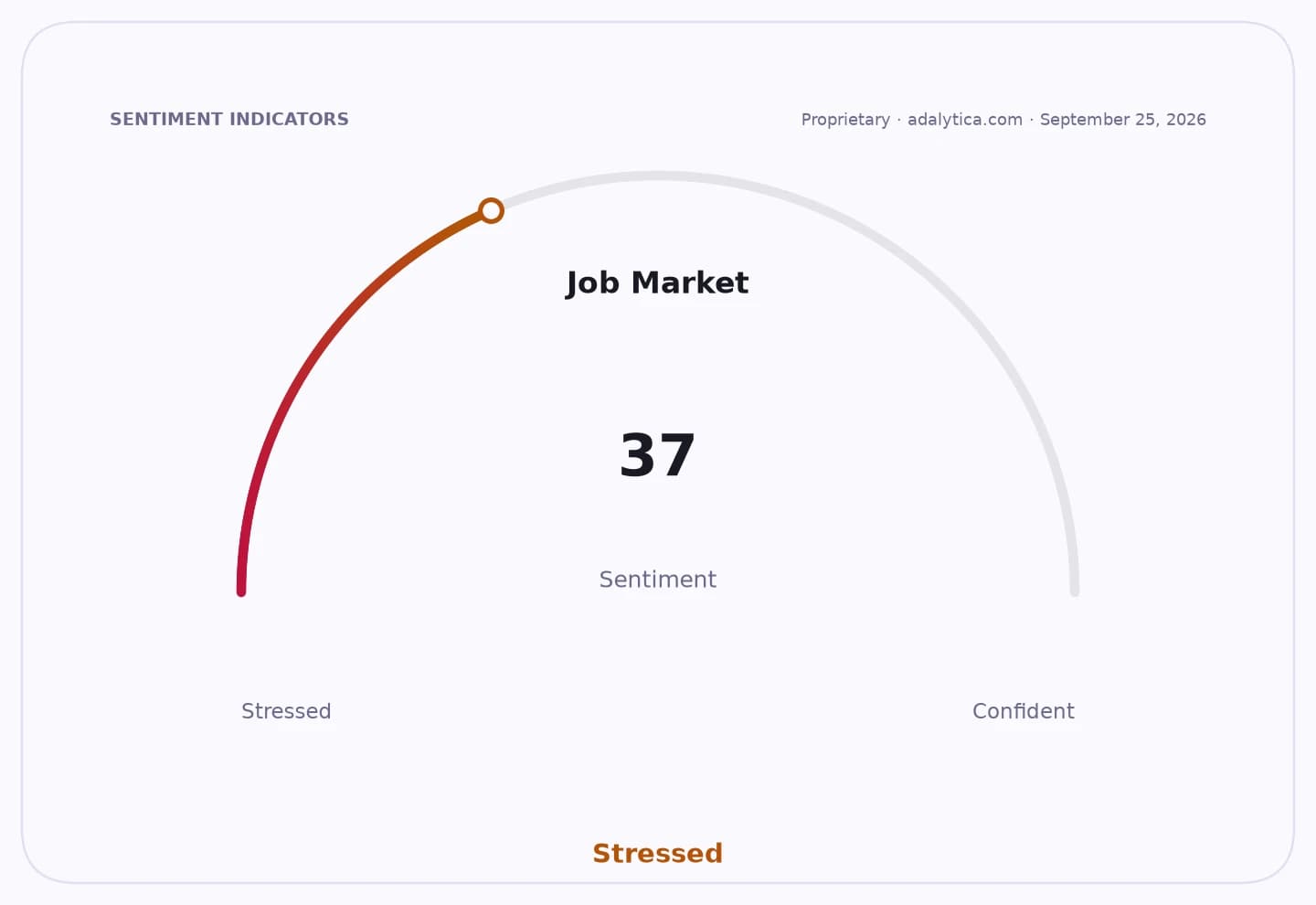
Japan’s household spending fell 3.3% in June, underscoring how quickly the country’s consumer recovery is losing momentum even as policymakers reach for tax relief.
Japan household spending fell 3.3% in June

The drop matters because Japan’s growth model is still heavily dependent on domestic demand at a time when wages have not been enough to keep households spending freely. A weaker consumer means softer service-sector activity, slower inflation momentum and less support for companies that had been betting on a durable rebound in demand. For the Bank of Japan, it also complicates the case for normalizing policy too quickly, since fragile consumption can choke off the very cycle officials want to nurture.
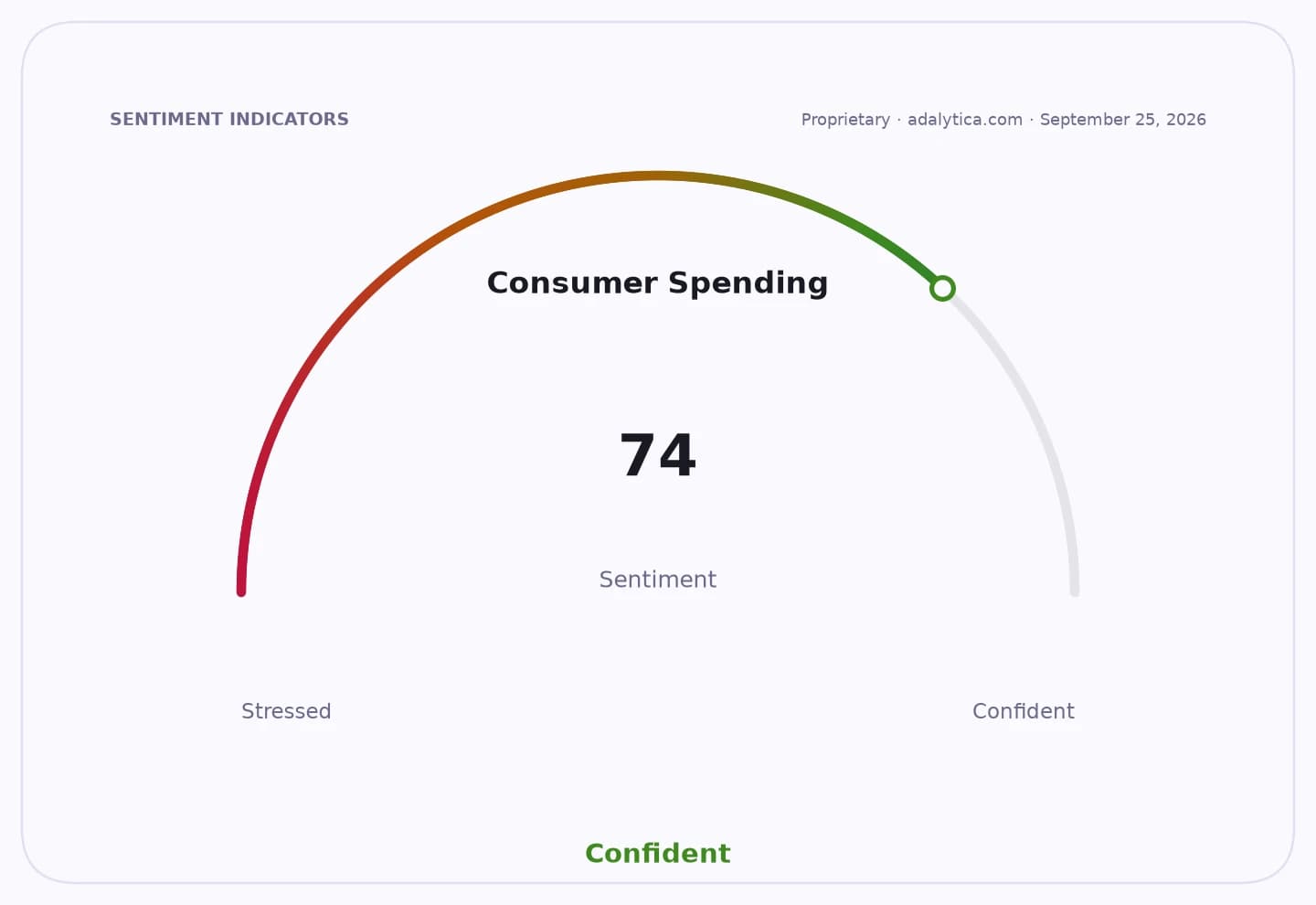
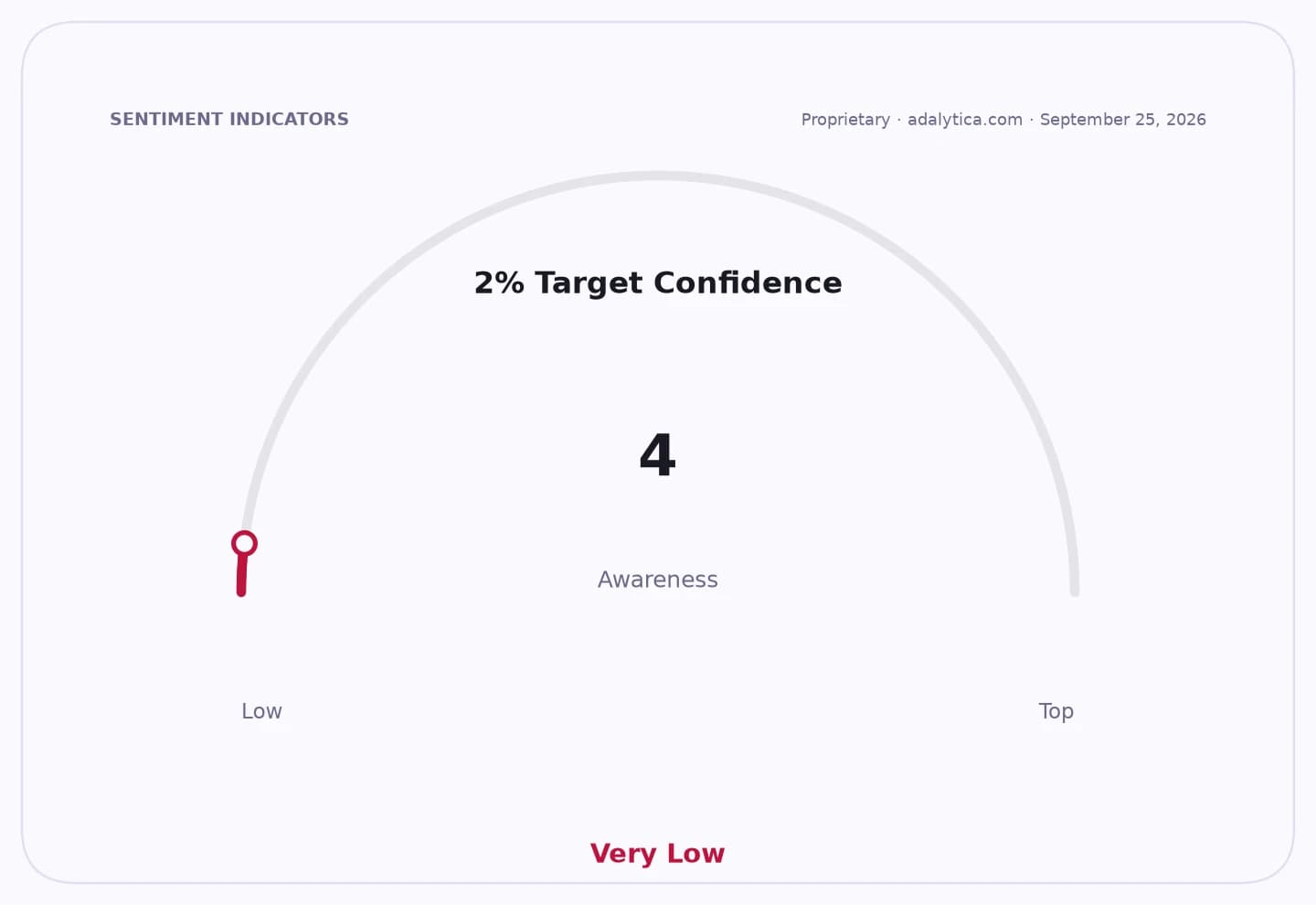
Sentiment IndicatorsⓘProprietary · adalytica.com · August 7, 2026
This is a snapshot — live sentiment, awareness and momentum for 130+ markets update continuously in the dashboard.Open AlphaPulse

The broader picture is worse than the headline number. Japan has now seen 11 straight months of declining consumption, with June marking the steepest contraction in the current stretch, according to the news context. That suggests households are still under pressure from higher living costs and cautious sentiment, even as the government tries to cushion the blow with a cut in the food consumption tax from 8% to 1%.
The tax move is meant to put cash back in consumers’ pockets, but it also highlights the fiscal trade-off investors cannot ignore. Japan is already confronting a 5 trillion yen shortfall in social security funding, and financing a tax cut through a foreign exchange special committee only shifts the burden rather than eliminating it. For equity investors, that means the near-term beneficiaries are likely to be retailers, restaurants and consumer staples tied to food spending, while banks, domestic cyclicals and any company dependent on broad household demand remain exposed to a weak demand backdrop.
Market signals are still tentative. The yen-linked FXY ETF was trading just below its 200-day moving average and its 50-day line, while RSI readings and MACD momentum showed no decisive breakout, suggesting investors have not yet priced in a sustained improvement in Japanese domestic demand. That fits the macro story: the market is waiting for proof that policy support can translate into real spending before it bids up Japan’s consumer cycle again.
The investable takeaway is straightforward: this is still a selective market, not a blanket consumer recovery. I think the better positioning is in names and funds tied to policy support and food-price relief, while staying cautious on Japan’s broader household-demand trade until wages, confidence and spending stop moving in the wrong direction. If the tax cut does gain traction into 2027, the upside could be meaningful — but for now, the market is right to demand evidence.
| Entity | Gains | Losses |
|---|---|---|
| Food retailers | ▲Higher traffic from lower tax | ▼Margin pressure from weaker demand |
| Restaurant operators | ▲Cheaper menu pricing support | ▼Upgrade costs for new tills |
| Consumers | ▲Lower food bills | ▼Real incomes still squeezed |
| Domestic cyclicals | ▲Potential policy tailwind | ▼Broad spending slowdown |