Ample LNG inventories in Japan are limiting the upside for Asia-Pacific thermal coal, keeping utilities and traders from chasing higher coal prices even as energy markets stay volatile.
Japan LNG Inventories Cap Asia-Pacific Thermal Coal Upside

The dynamic matters because Japanese power buyers are one of the region’s most important swing consumers of imported fuel. When LNG stocks are comfortable, utilities can lean less on coal for backup generation, capping near-term demand for seaborne thermal coal and muting any price response from supply tightness elsewhere.
Sentiment IndicatorsⓘProprietary · adalytica.com · August 3, 2026
This is a snapshot — live sentiment, awareness and momentum for 130+ markets update continuously in the dashboard.Open AlphaPulse
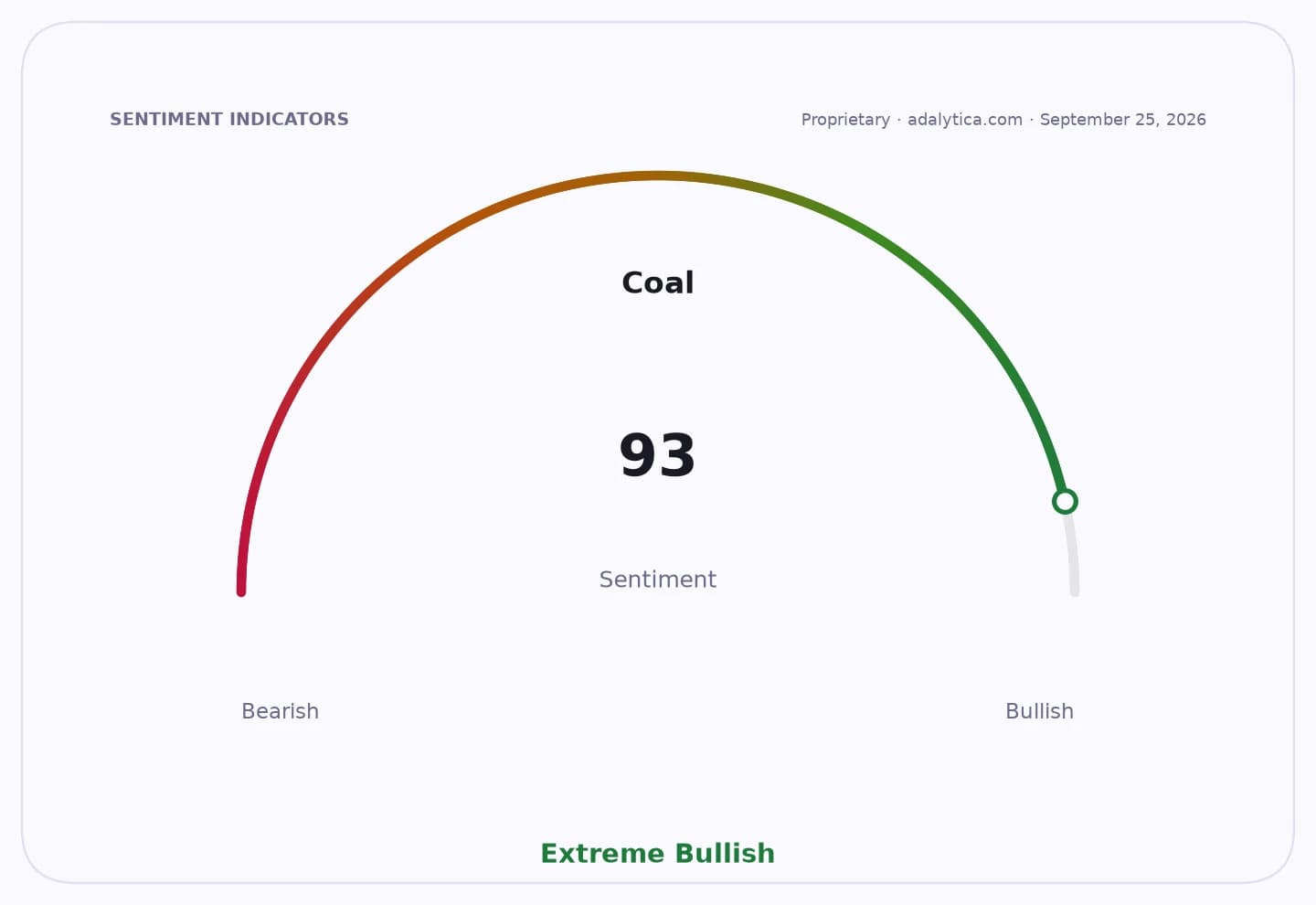
That leaves coal exposed to a softer-than-expected demand backdrop just as broader commodities are sending mixed signals. U.S. crude oil has fallen to around $88.70 a barrel in a recent forecast after trading as high as $109.76 earlier this year, underscoring how quickly energy sentiment can swing. Adalytica’s Coal Fear & Greed Index shows extreme greed at 89, but that reading reflects positioning more than a clean demand breakout, while its oil trade signals remain in greed territory at 77.
For investors, the message is that coal-linked names may struggle to sustain rallies without a tighter LNG market or a colder weather shock in Northeast Asia. Peabody Energy, reflected in its recent trading around $21.32 to $21.40 after a peak near $39.38 earlier in the year, has already shown how quickly coal equities can reverse when fuel substitution expectations shift. The stock’s 50-day moving average has rolled down to the mid-$24 area, while its relative strength index has cooled into the mid-30s, suggesting fading momentum after a sharp run-up.
The broader setup also keeps pressure on the thesis that thermal coal can extend gains simply on macro volatility. U.S. recession risk remains flagged at zero in the latest recession gauge, so there is no obvious demand shock forcing a rush back into coal, and comfortable LNG inventories in Japan are acting as a near-term brake on pricing power across the Asia-Pacific market.
The next catalysts are winter storage trends in Japan and Northeast Asia, shifts in LNG imports, and any supply disruptions that could tighten the market enough to pull utilities back toward coal.
| Entity | Gains | Losses |
|---|---|---|
| Japanese utilities | ▲Fuel flexibility | ▼Higher coal demand |
| LNG suppliers | ▲Softer spot pressure | ▼Inventory overhang |
| Thermal coal producers | ▲— | ▼Limited price upside |
| Coal consumers | ▲Lower fuel-cost risk | ▼— |