Japan’s first coordinated currency intervention with the United States since 2011 has jolted the foreign-exchange market, knocking the yen sharply higher and reminding investors that the weakest currencies can move fast when policymakers decide to act together.
Japan intervenes on yen as dollar hits 157.86

That matters because currency swings are no longer a side story. A stronger yen can ease imported inflation for Japanese households, pressure exporters’ overseas earnings when translated back into yen, and change the calculus for global investors who have spent years borrowing cheaply in Japan to fund riskier trades elsewhere. When a central bank-backed move is large enough to trigger a quick 5% jump in the yen, it can force reassessments across equities, bonds and rates.
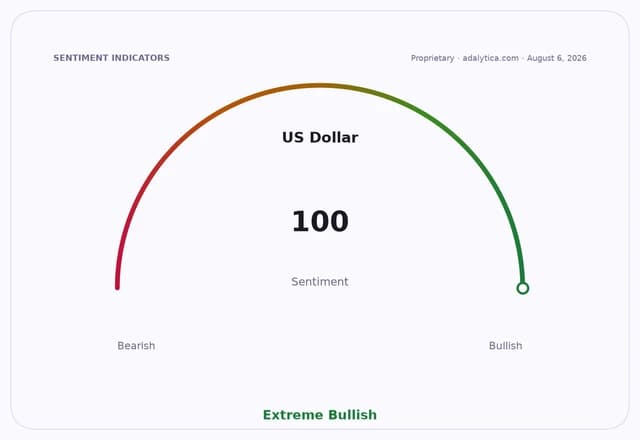
Sentiment IndicatorsⓘProprietary · adalytica.com · August 6, 2026
This is a snapshot — live sentiment, awareness and momentum for 130+ markets update continuously in the dashboard.Open AlphaPulse

The move also landed in a bond market already on edge. The U.S. 10-year Treasury yield was last around 4.63%, while the two-year yield was near 4.20%, leaving the curve only modestly inverted at roughly 43 basis points. That profile suggests markets still expect slower growth and eventual policy easing, even as yields remain high enough to keep the dollar attractive. In other words, intervention may interrupt a trend, but it does not rewrite the interest-rate gap that has helped keep the yen under pressure.
That is why investors should be careful about reading too much into the initial bounce. The yen traded at 157.86 to the dollar on Aug. 6, not far from its recent lows, even after the intervention. The Invesco CurrencyShares Japanese Yen ETF, FXY, has also been choppy, and its technical backdrop shows a weak short-term trend: its 50-day moving average sits above the current price, while RSI readings remain deeply oversold, a sign of stretched trading rather than a durable turn. By contrast, long-duration Treasury exposure through TLT has drawn support, consistent with demand for safety when currency volatility rises.
The bigger narrative is that governments can slow a one-way move, but they usually cannot beat the market forever without help from policy. Japan still faces a structural problem: ultra-low domestic rates and a wide gap versus U.S. yields encourage capital to leave the yen. Until that changes through higher Japanese rates, firmer wage growth or broader fiscal and policy reform, any intervention is likely to be tactical rather than decisive.
For investors, that means the best approach is not to chase every yen bounce, but to watch whether this intervention marks the start of a more durable policy shift. If it does, Japanese exporters, U.S. multinational earnings and global bond markets could all feel the effects. If it does not, the trade will probably revert to the same old pattern: occasional official resistance, but a currency still driven by relative yields and growth expectations. Worth watching, but still a long-term story rather than a quick fix.
| Entity | Gains | Losses |
|---|---|---|
| Japanese consumers | ▲Lower import costs | ▼Less immediate relief if yen fades |
| Japanese exporters | ▲Short-term support from intervention | ▼Yen strength can cut overseas profits |
| USD bulls / carry traders | ▲Persisting U.S. yield advantage | ▼Intervention-driven volatility |
| TLT holders | ▲Safe-haven bond demand | ▼Higher yields if intervention fails to calm markets |