Jordan’s move to mitigate the impact of a geopolitical downturn on Petra tourism matters because it goes to the heart of one of the kingdom’s most important foreign-exchange earners at a time when regional instability is clouding travel demand across the Middle East.
Jordan Defends Petra Tourism Against Regional Risk
Petra, Jordan’s most recognisable heritage site and a key draw for international visitors, has long been a bellwether for the country’s broader tourism economy. Any deterioration in arrivals can quickly ripple through hotels, transport operators, guides and small businesses in the south, while also weighing on government revenues and employment. Measures designed to offset the shock — including targeted promotion, digital tourism tools and coordination around visitor flows — are intended to keep the destination visible even as security concerns suppress discretionary travel.

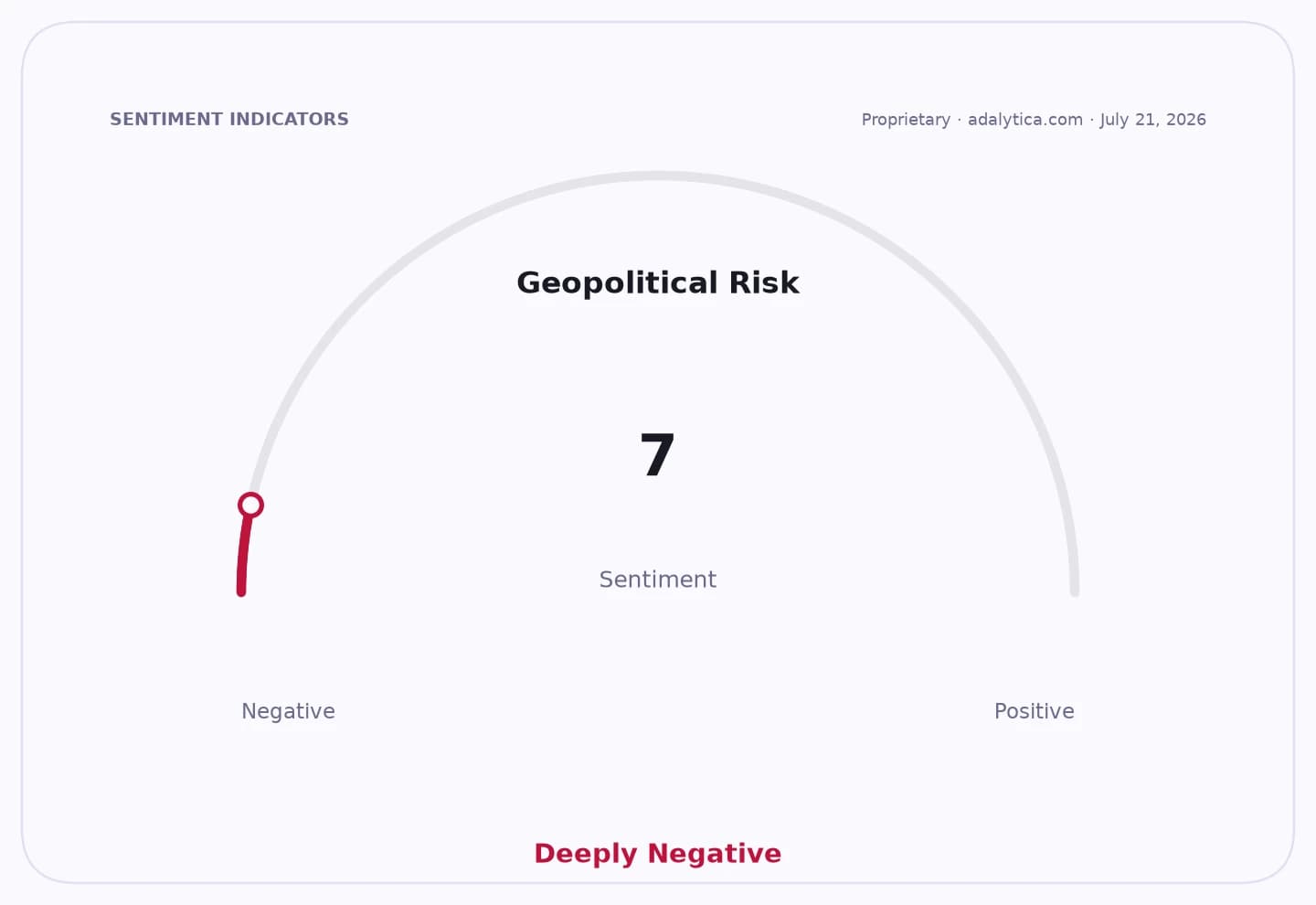
The timing is significant. Global stability sentiment tracked by Adalytica.com is in “Extreme Fear,” with the gauge near 7 and awareness still neutral, underscoring how quickly geopolitical risk has become a commercial headwind for travel-dependent economies. For Jordan, that matters because tourism is not just a branding exercise; it is a hard-currency industry that supports the balance of payments and sustains a wide network of domestic service providers.
Investors will read the response in two ways. The bullish case is that Jordan is moving early to protect one of its most resilient tourism assets, reducing the risk that a temporary external shock becomes a longer earnings drag for the sector. A successful digital push could also help broaden Petra’s reach into higher-value, pre-booked and longer-stay travellers, improving pricing power for operators. The bearish case is that marketing can only do so much if regional risk perception remains elevated; demand can be deferred, but not always created, when international travellers see the destination as part of a wider conflict zone.

Market signals around travel-related equities also suggest investors are becoming more selective. TNL shares, which can serve as a proxy for tourism and leisure sentiment, have been volatile and recently traded at 72.56, below their 50-day moving average of 70.9 after a rebound from earlier weakness. The stock’s recent swings, alongside an RSI in the mid-30s, point to a market that is neither fully discounting the risk nor pricing in a clean recovery. For operators exposed to Jordan and the wider region, that means sentiment can shift faster than fundamentals.
The broader narrative is one of defensive adaptation. Rather than waiting for geopolitics to normalise, destinations are trying to use technology, targeted campaigns and event-led promotion to preserve demand and keep the tourism pipeline open. For Petra, the key question is whether such measures can merely soften the blow or actually stabilise arrivals until regional conditions improve. The answer will determine whether this is a temporary setback for Jordan’s tourism economy or the start of a more prolonged re-rating of travel risk in the region.
| Entity | Gains | Losses |
|---|---|---|
| Jordan tourism operators | ▲Visitor retention efforts | ▼Demand hit from risk aversion |
| Local businesses in Petra | ▲Foot traffic support | ▼Spillover from fewer arrivals |
| Government of Jordan | ▲FX earnings stability | ▼Revenue pressure if slump persists |
| International travelers | ▲Better digital access | ▼Higher perceived security risk |