Jordan’s government says the country has enough wheat stock to last 18 months, underscoring a broader effort to shield consumers from a new wave of global food-price volatility even as grain markets remain unsettled.
Jordan says wheat stock covers 18 months
The disclosure, made in a formal response by Industry and Trade Minister Yarub Qudah to a parliamentary question from lawmaker Dima Tahboub, is significant because wheat is the backbone of Jordan’s bread subsidy system and a politically sensitive import. With 821,000 tons of wheat on hand or already contracted, Amman is signaling that it can keep subsidized bread prices unchanged for now despite higher international costs.
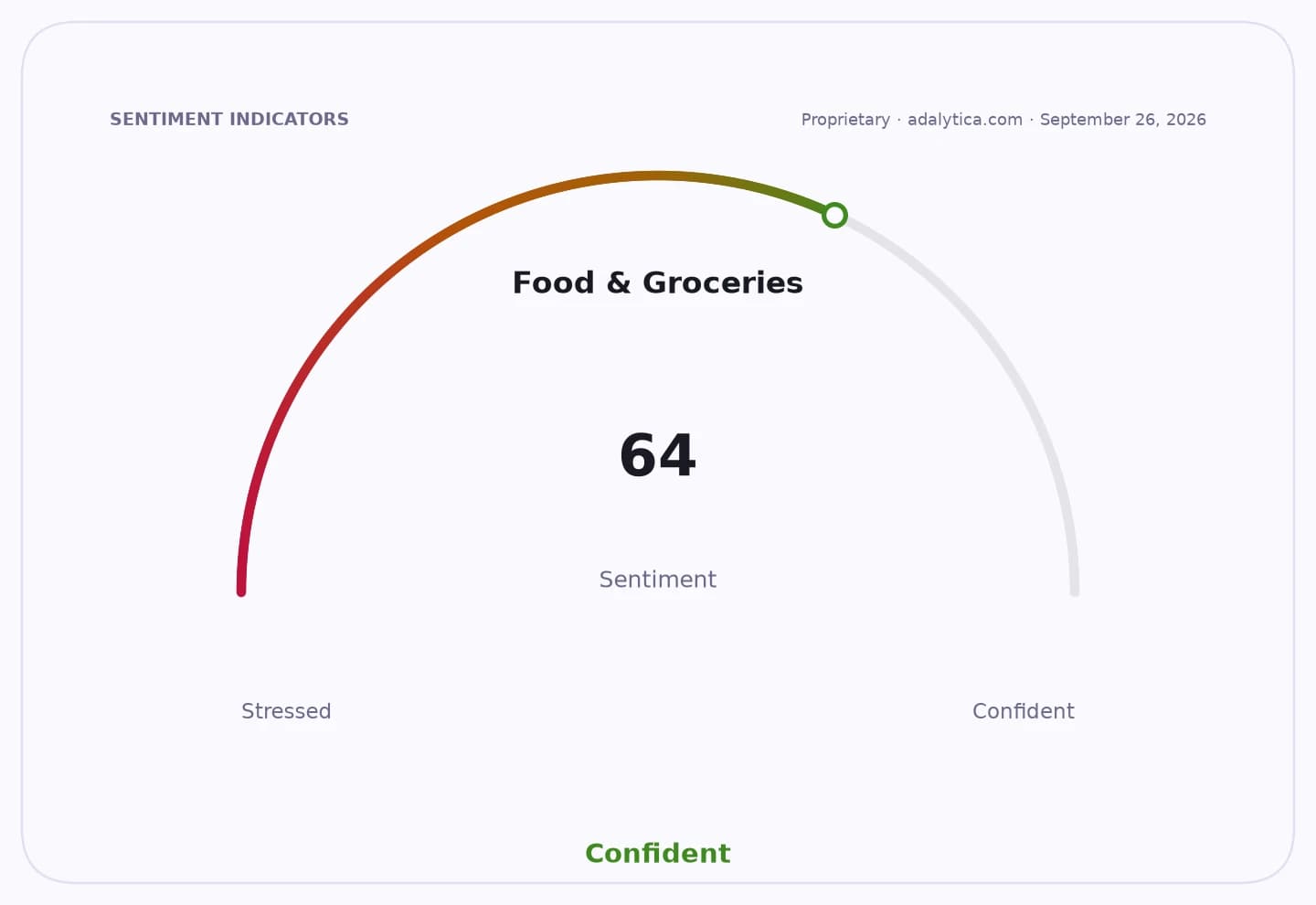
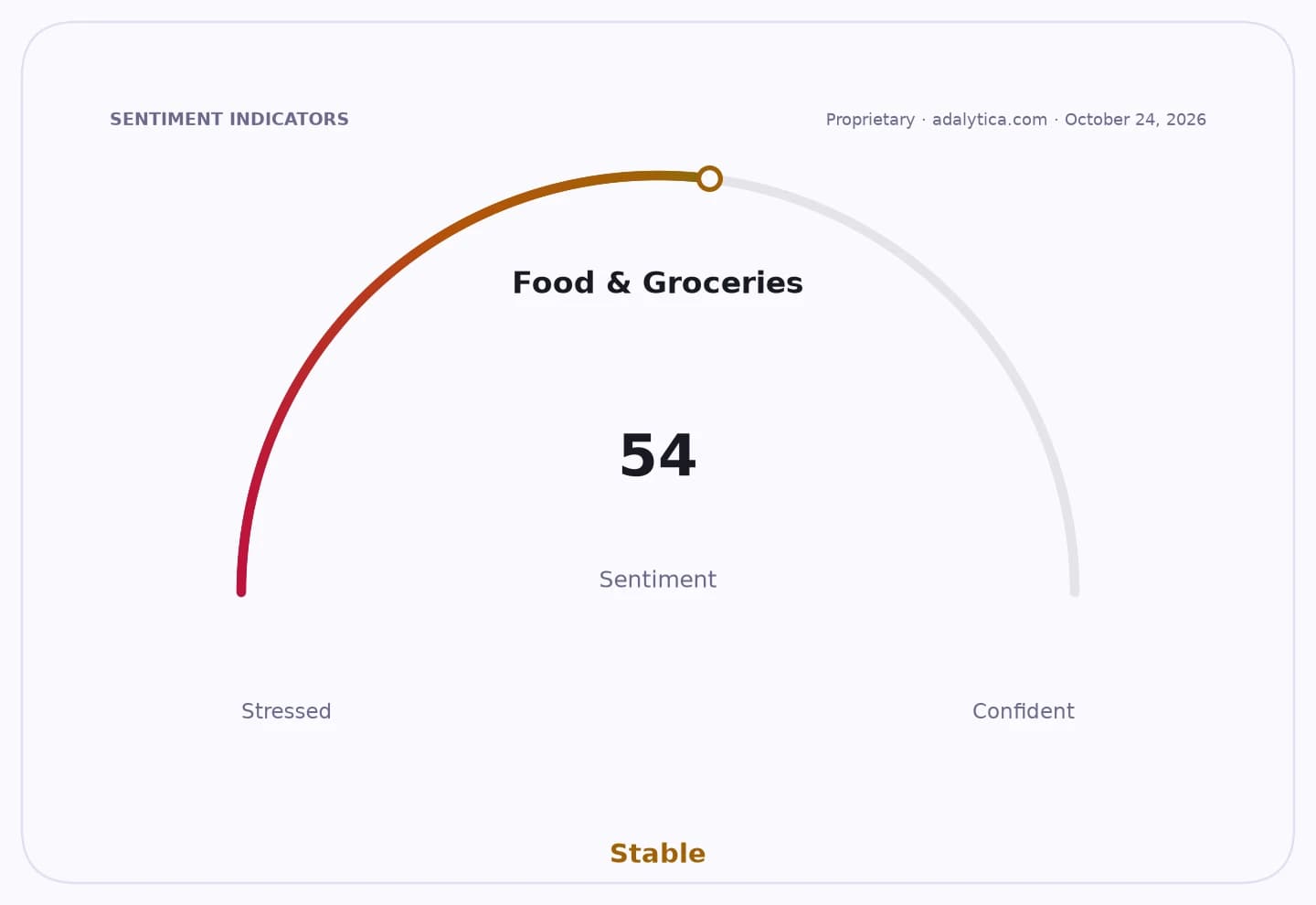
Sentiment IndicatorsⓘProprietary · adalytica.com · October 24, 2026
This is a snapshot — live sentiment, awareness and momentum for 130+ markets update continuously in the dashboard.Open AlphaPulse
That buffer matters economically because food inflation quickly feeds into household spending, wage pressure and social stability in import-dependent economies. Jordan has also set aside 105 million dinars to cover the gap between the cost of wheat and the subsidized selling price of Arab bread, plus another 66 million dinars to support animal feed prices. Together, those measures reduce the risk that external shocks in global grain or energy markets are transmitted directly to consumers.
The government’s move comes as wheat markets remain sensitive to geopolitical and supply-chain shifts. Chicago wheat futures have recently fallen to a three-and-a-half-month low on hopes of easing tensions around the Black Sea, but the broader backdrop remains one of recurring volatility, including weather-related crop risks and uneven stockpiles across importing countries. Jordan’s response shows how governments in the region are still treating food security as a balance-sheet issue, not just a market one.
The stockpile numbers also help explain why authorities are comfortable with a heavy subsidy bill. The ministry said barley stocks cover nine months at 725,000 tons, while rice, powdered milk and beans cover around three months of demand. Sugar, vegetable oils and chickpeas cover two months, and lentils only one month, indicating where the system is most exposed if shipping costs rise or supply tightens. The state has also expanded total storage capacity for wheat and barley to 2.2 million tons, giving it more room to buy ahead when prices are favorable.
For investors, the story is less about Jordan as a direct market driver than about the durability of state demand in food commodities and the policy ceiling on inflation in import-dependent economies. Subsidy spending of that scale suggests governments will keep intervening aggressively if global food prices surge again, which can support import flows and logistics activity even when end-demand is weak. It also highlights the fiscal trade-off: the more authorities spend to stabilize bread and feed, the less room they have for other priorities.
The government’s broader market controls — monitoring 90 staple foods, capping freight costs for imports and allowing private-sector storage in grain silos at discounted rates — point to an interventionist stance designed to keep the cost-of-living pressure contained. That may help explain why the ministry recorded 6,931 pricing violations in 2025 and 2026 without referring any violators to court: the priority is clearly deterrence and price stability rather than punishment.
The key question now is whether the current stockpile and subsidy package can absorb another round of imported inflation if wheat, freight or energy costs rise again. For the moment, Jordan is saying it has enough grain and enough fiscal cover to avoid immediate pressure on bread prices — and in the region, that is as much a market signal as a policy one.
| Entity | Gains | Losses |
|---|---|---|
| Jordan consumers | ▲Stable bread prices | ▼Little relief from broader food inflation |
| Government of Jordan | ▲Short-term food security cushion | ▼Higher subsidy and fiscal burden |
| Wheat importers / suppliers | ▲Assured government buying | ▼Price upside capped by state intervention |
| Unsubsidized staple sellers | ▲Potential demand for storage/logistics | ▼Tighter pricing scrutiny |