JPMorgan Chase’s blowout second quarter shows the biggest U.S. bank is still monetizing market volatility, strong client activity and elevated interest rates even as the Federal Reserve keeps policy restrictive.
JPMorgan Beats on Trading and Net Interest Income
The bank said equities trading revenue surged 86% from a year earlier, helping drive second-quarter net income to $21.2 billion, or $7.70 a share, from $15 billion a year ago. JPMorgan also lifted its full-year net interest income guidance to $105.5 billion, underscoring that the lender expects to keep earning more from its massive deposit base despite a still-tight policy backdrop.
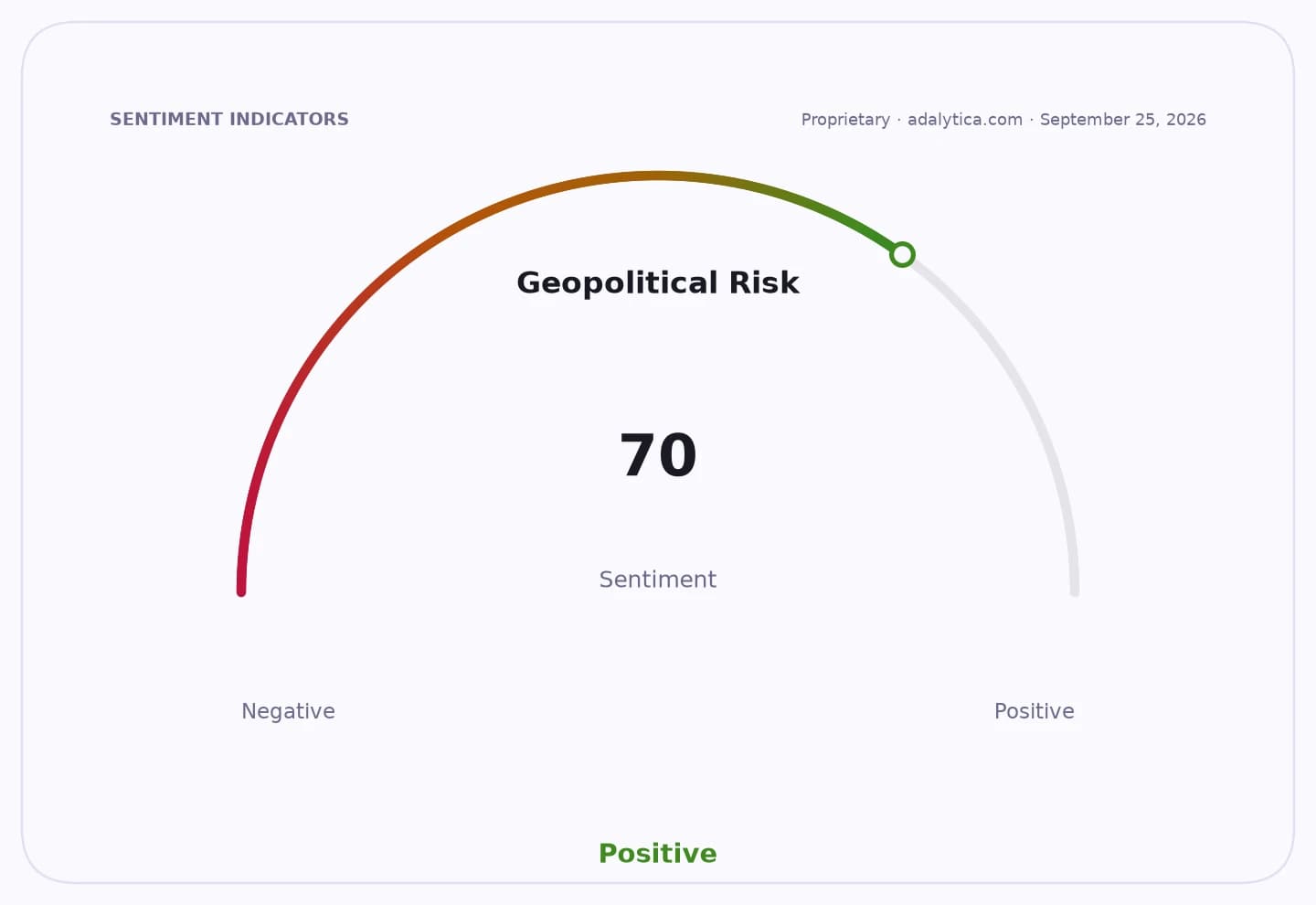
Sentiment IndicatorsⓘProprietary · adalytica.com · July 16, 2026
This is a snapshot — live sentiment, awareness and momentum for 130+ markets update continuously in the dashboard.Open AlphaPulse
That matters economically because JPMorgan is one of the clearest read-throughs on the health of both the consumer and capital markets. A stronger trading result suggests institutional clients remain active, while higher net interest income implies lending and deposit spreads are still doing the heavy lifting for bank profitability even as the Fed funds rate sits at 3.63% and two-year Treasury yields remain above 4.2%.
Investors care because the report reinforces that earnings power at the largest U.S. banks remains more resilient than feared. JPMorgan shares rose sharply into the print and were trading around $343 on July 16, well above the 50-day moving average and the 200-day moving average, reflecting bullish price momentum after the results. Bank of America also climbed to about $61.47, while Citigroup slipped to roughly $131.84, highlighting how the market is rewarding franchises with stronger capital markets and rate sensitivity.
The Treasury backdrop helps explain the setup. The 10-year yield is hovering near 4.6% and the 2-year around 4.2%, a level that supports net interest income for banks with large balance sheets, even if it also keeps pressure on borrowers and credit demand. That combination has made trading and treasury management more valuable to Wall Street lenders, especially when volatility returns to rates, currencies and equities.
JPMorgan’s result also lands after a strong run in big-bank earnings more broadly, with peers such as Bank of America and Citigroup already showing gains from market activity and banking fees. For investors, the key question now is whether the second-quarter beat proves durable or whether margin pressure and slower loan growth will cap gains later this year.
The next catalysts are the bank’s outlook for loan demand, credit quality and whether markets stay active enough to sustain the trading surge into the second half.
| Entity | Gains | Losses |
|---|---|---|
| JPMorgan Chase | ▲Higher earnings; stronger guidance | ▼Little near-term pressure to cut outlook |
| JPM bulls | ▲Better NII and trading momentum | ▼Risk of mean reversion if volatility fades |
| Bank of America | ▲Sector tailwind from stronger bank prints | ▼Lags JPMorgan’s trading strength |
| Citigroup | ▲Rising market interest in banks | ▼Weaker relative share-price momentum |