The dollar climbed to 455 tenge in Kazakhstan’s stock market, underscoring renewed pressure on the local currency and raising the cost of imports, debt service and inflation hedging for businesses and households.
Kazakhstan tenge falls to 455 per dollar

The average intraday rate on the Kazakhstan Stock Exchange rose 5.87 tenge, or about 1.3%, from the previous session to 455.00, according to exchange data. The move came after the dollar had already jumped 4.47 tenge to 448.72 a day earlier, signaling that sellers of the tenge are still in control.
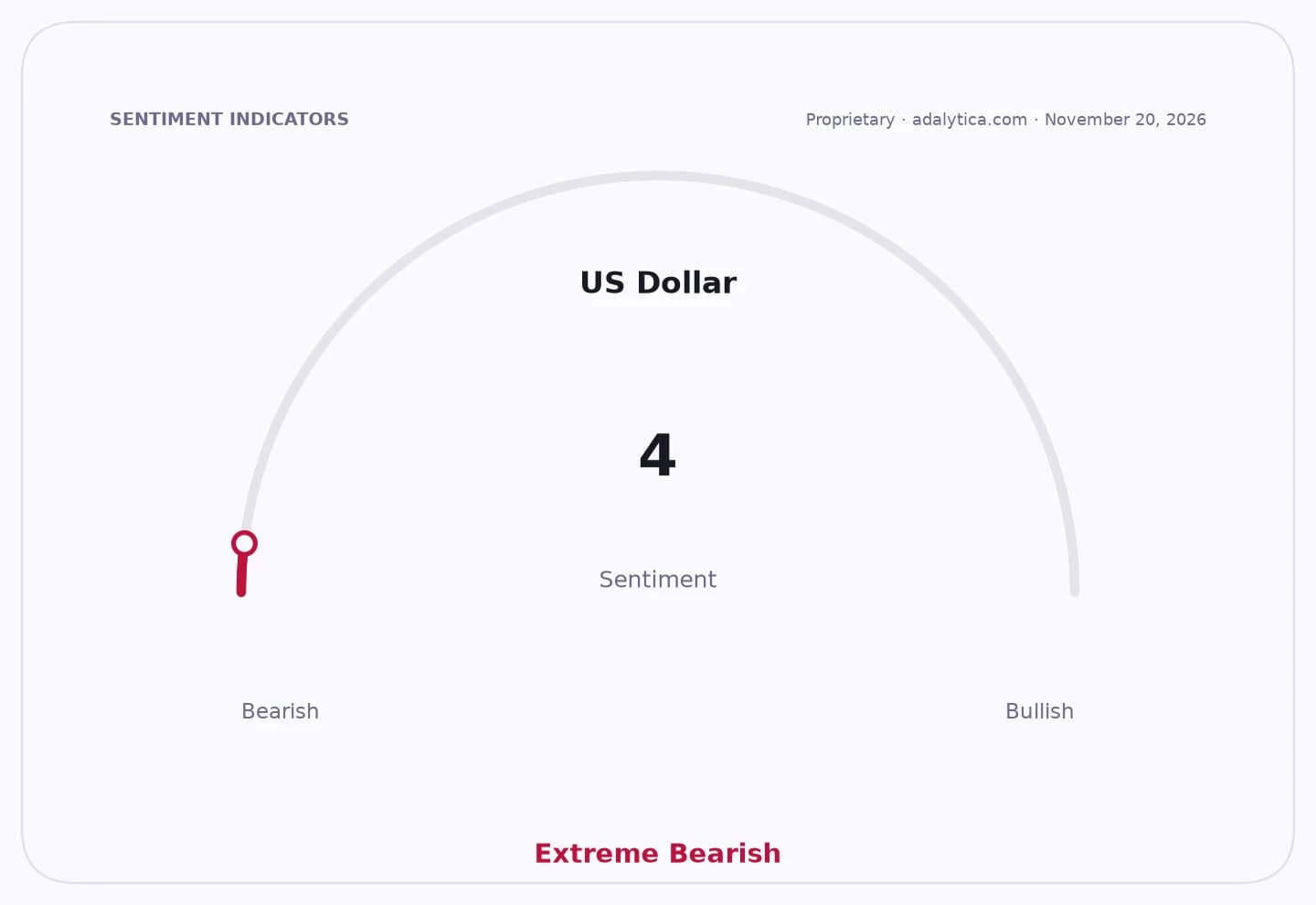
Sentiment Indicators

That matters economically because a weaker tenge feeds directly into Kazakhstan’s import bill, from fuel and consumer goods to industrial equipment. It also makes foreign-currency liabilities more expensive to service, squeezing corporates with dollar debt and potentially forcing the central bank to stay vigilant if depreciation starts to bleed into broader prices.
For investors, the move reinforces the case for higher FX risk premiums across Kazakh assets. Import-reliant sectors face margin pressure, while exporters and dollar earners tend to benefit from a softer local currency. The widening gap between the official National Bank rate of 448.72 and the market’s 455 average also shows how quickly expectations can shift in a thin currency market.
US Dollar
The broader backdrop is one of strengthening demand for hard currency and fragile confidence in the tenge’s near-term path. A stronger dollar usually tightens financial conditions at the margin, and in emerging markets that can become self-reinforcing if households and companies rush to hedge.
The key question now is whether the latest move is a one-off repricing or the start of a more durable devaluation trend. If the pressure persists, the central bank may face a tougher trade-off between defending stability and preserving growth, while investors should lean toward exporters, hard-currency earners and defensive positioning until the FX market settles.
| Entity | Gains | Losses |
|---|---|---|
| Dollar holders | ▲Higher local-currency value | ▼— |
| Kazakh importers | ▲— | ▼Higher input costs |
| Exporters / hard-currency earners | ▲Translation gains | ▼— |
| Tenge borrowers / consumers | ▲— | ▼Bigger debt and inflation strain |