A Chinese brokerage has pulled out of a South Korea semiconductor ETF just as sharp swings in Seoul are shaking confidence in one of Asia’s hottest equity themes, underscoring how quickly a momentum trade in AI-linked stocks can turn into a liquidity and risk-management problem.
Korea AI Trade Faces Volatility and Liquidity Stress
The move matters because South Korea has been one of the main listed proxies for the global artificial-intelligence buildout, with chipmakers such as SK hynix attracting heavy foreign interest. But that enthusiasm is now colliding with volatile price action, weak risk appetite in US equities and broader geopolitical unease. When a broker exits an ETF rather than absorb the turbulence, it is a sign that the cost of providing exposure has risen and that market makers are becoming more selective about where they are willing to stand in the middle.
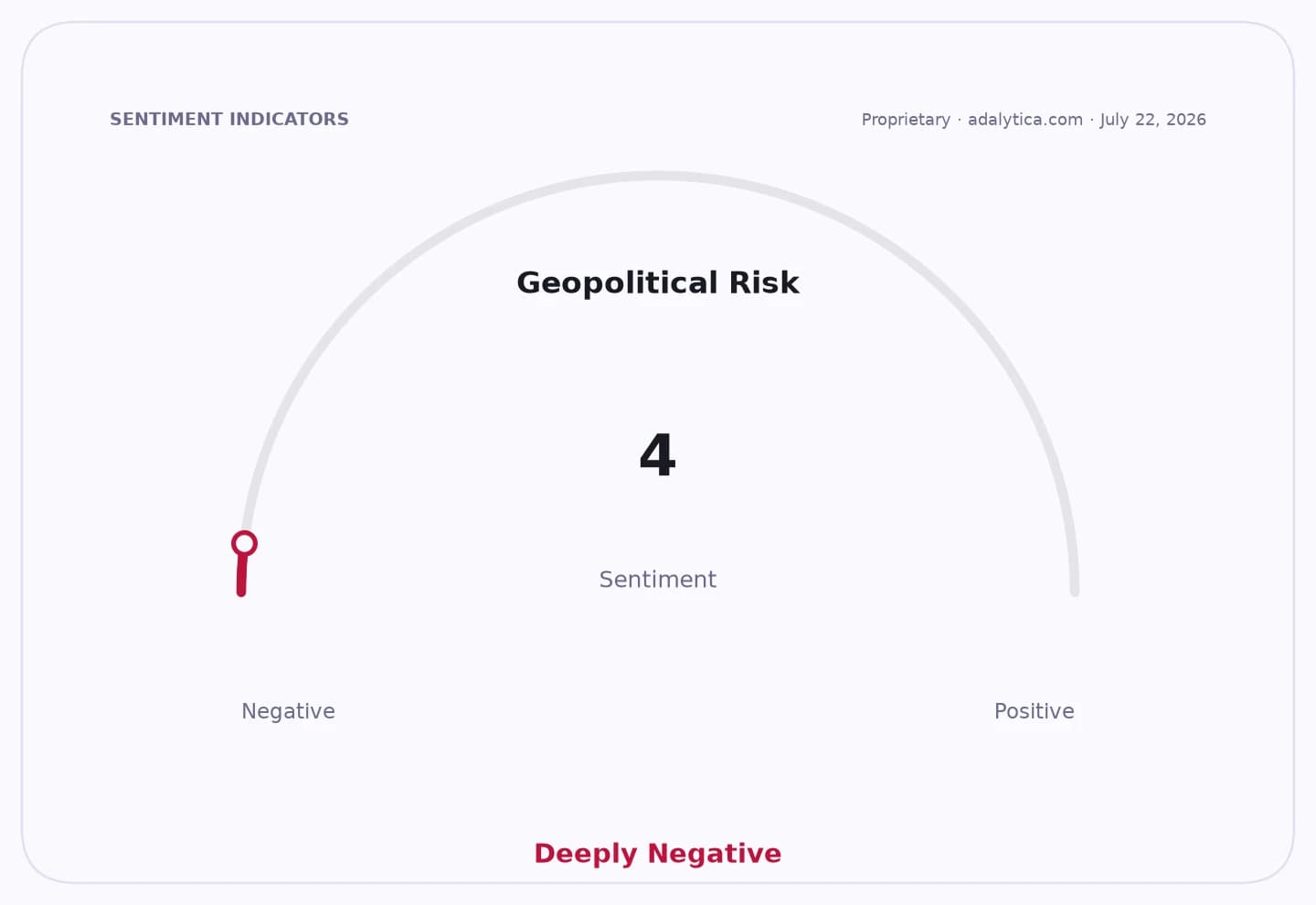
Sentiment IndicatorsⓘProprietary · adalytica.com · July 22, 2026
This is a snapshot — live sentiment, awareness and momentum for 130+ markets update continuously in the dashboard.Open AlphaPulse
The pressure in Seoul has been visible in the underlying stocks. SK hynix fell 8.2% in Seoul after a strong Nasdaq debut, a reminder that even globally competitive technology names can suffer abrupt de-rating when local flows turn. Citi responded by downgrading South Korean equities to neutral, even as it kept a constructive view on AI demand and raised China to overweight. That split verdict captures the market’s dilemma: the fundamental story around memory and AI spending remains intact, but the path to owning it through Korean equities has become much less predictable.
That instability has also been reflected in exchange-traded funds. EWY, the iShares MSCI South Korea ETF, remains well above its 200-day moving average on the latest readings, but the price has weakened sharply from earlier highs and the RSI, a standard momentum gauge, has slipped into oversold territory. KORU, the leveraged South Korea ETF, has been hit even harder, with recent trading showing extreme volatility and deeply negative momentum indicators. The divergence suggests that investors are still willing to own Korea in principle, but are increasingly avoiding products that amplify daily swings.
For investors, the development is a warning that the Korean tech trade is no longer a clean expression of AI optimism. The bull case is that semiconductor demand, especially for high-bandwidth memory and AI infrastructure, still supports a medium-term earnings cycle for Korean suppliers. The bear case is that valuation, crowding and policy/geopolitical risk are now high enough that even good news can trigger disorderly selling. In that environment, liquidity matters as much as fundamentals.
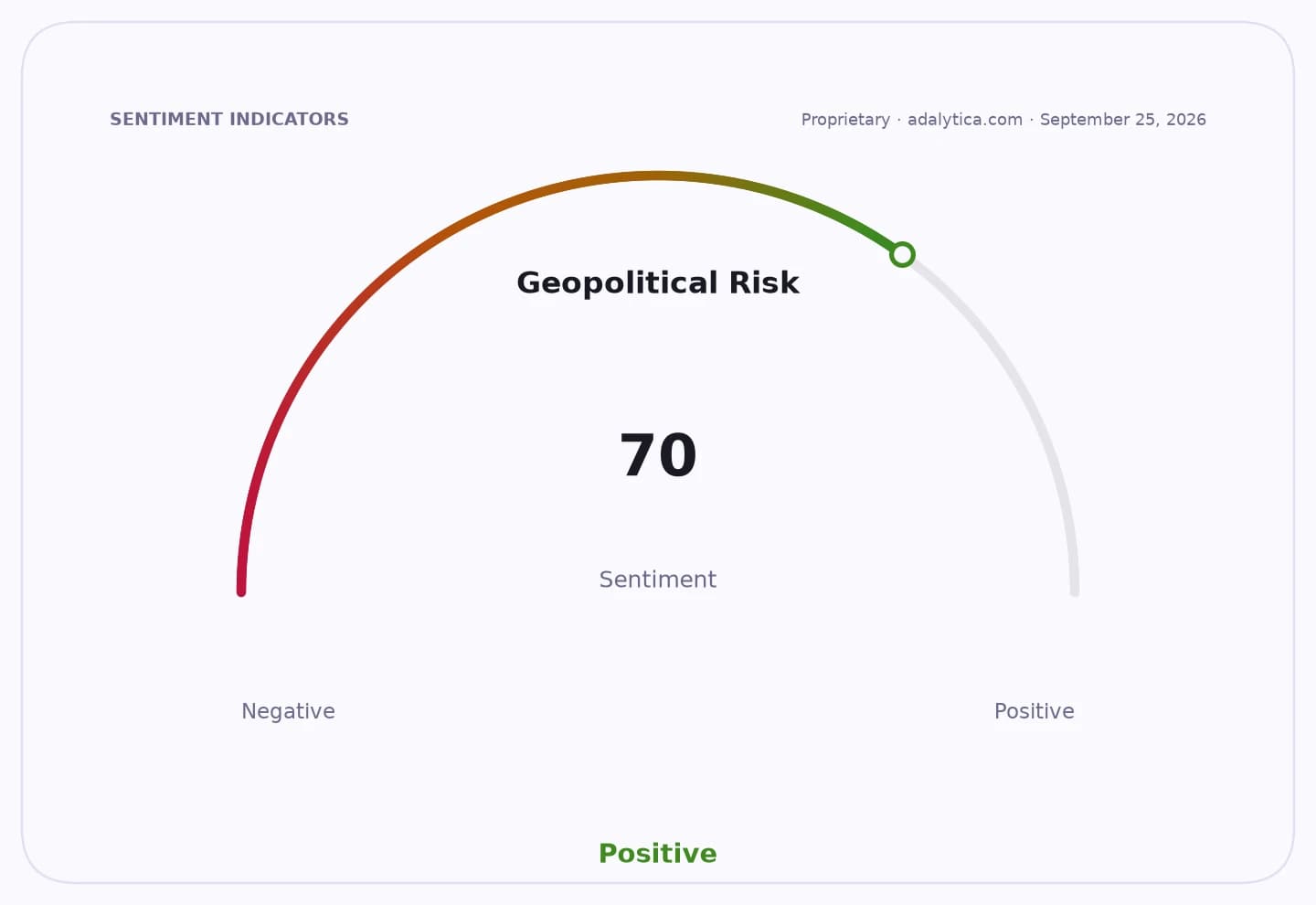
Broader market gauges point in the same direction. Adalytica’s S&P 500 trade signals show fear has returned to US risk assets, while global stability sentiment sits in extreme fear. That combination tends to punish concentrated, high-beta trades first, especially in markets such as Seoul that are tightly linked to global tech cycles and foreign capital flows.
The immediate focus is whether volatility in Korean equities stabilizes enough to bring back ETF participation and foreign demand. Until that happens, investors are likely to treat South Korea as a tactical trade rather than a straightforward structural overweight, even if the AI theme itself remains intact.
| Entity | Gains | Losses |
|---|---|---|
| Short-term risk managers | ▲Lower exposure | ▼Miss upside |
| Korean chip exporters | ▲Still have AI demand | ▼Higher funding/flow volatility |
| ETF market makers | ▲Better discipline | ▼Less trading activity |
| Leveraged Korea ETF holders | ▲Potential bounce trade | ▼Amplified drawdowns |