South Korean equities are selling off under the weight of a widening global risk shock, with the KOSDAQ collapsing to levels that point to a full-blown de-risking rather than a routine correction.
KOSDAQ Plunge Signals Broader Korea Risk Off
The rout matters because it is hitting Korea’s growth-sensitive, technology-heavy market at a moment when investors are already questioning how long the global economy can absorb higher U.S. yields, softer Chinese demand and a more fragile geopolitical backdrop. In that environment, Korea’s benchmark and its smaller-cap board become a fast-moving barometer of global liquidity and trade stress.
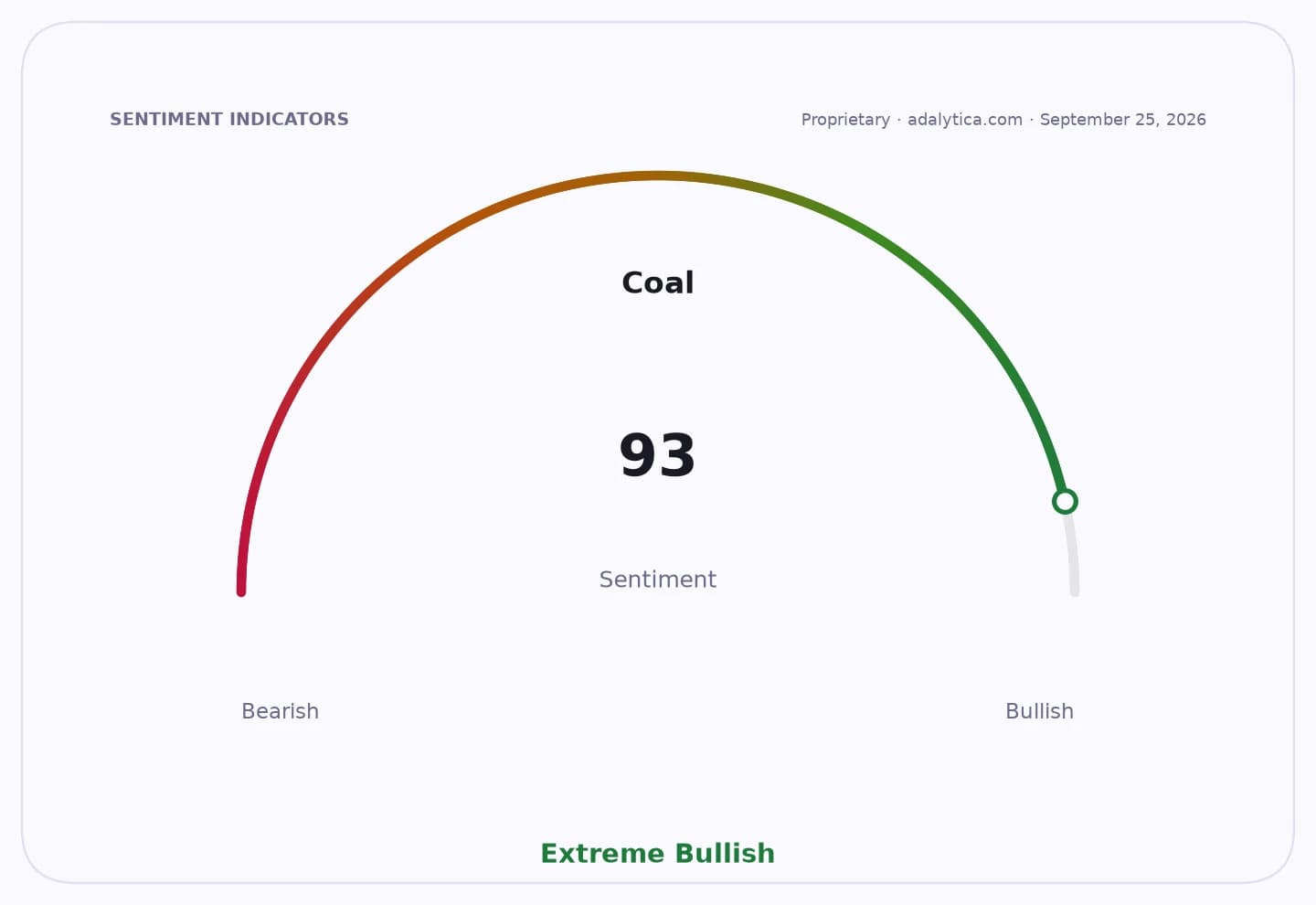
Sentiment IndicatorsⓘProprietary · adalytica.com · July 28, 2026
This is a snapshot — live sentiment, awareness and momentum for 130+ markets update continuously in the dashboard.Open AlphaPulse
The KOSDAQ fell 7.7% in the latest plunge and closed at 705.85 on July 28, extending a slide that has erased nearly 36% from its early-February level. The index is now well below its 50-day moving average of 934.85 and its 200-day average of 999.58, with a relative strength index of 35.8 suggesting the market is oversold but not yet signaling stabilization. The move followed a 5.3% drop on July 24, underscoring how quickly selling has accelerated.
For investors, the significance goes beyond the chart damage. Korea is one of Asia’s most trade-exposed markets, and a sharp break in the KOSDAQ typically reflects pressure on semiconductors, battery makers, biotechs and other cyclical growth names that depend on external demand and easy funding conditions. When these shares are hit hardest, it usually means global investors are cutting exposure to the most economically sensitive parts of the market first.
Geopolitical Risk — 30-day sentimentadalytica.com
Explore this data interactively — full history, time series and cross-market comparisons.Open AlphaPulse
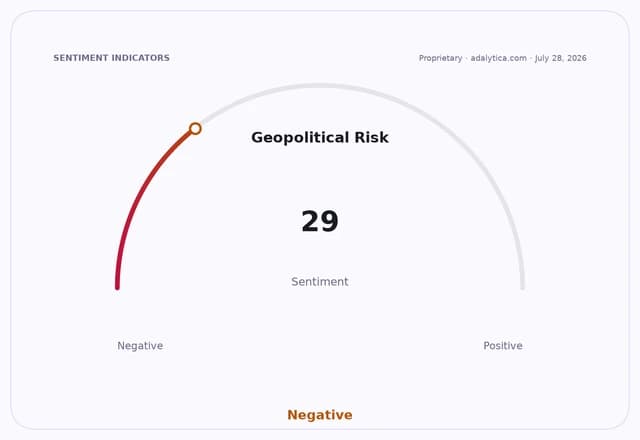
The selloff also fits a broader spike in global anxiety. Adalytica’s Global Stability Sentiment gauge shows “Fear” at 29, down seven points in a day and near its lowest reading in months, while its China growth-target sentiment sits at 86, indicating extreme optimism that policy support in Beijing may not be enough to offset trade and growth risks. U.S. Treasury yields have remained elevated, with the 10-year at 4.69% in the latest reading and a forecast of 4.738%, reinforcing the pressure on equity valuations and on long-duration growth stocks.
That combination is especially painful for Korea. Higher U.S. yields tighten global financial conditions, while a shakier China outlook threatens Korea’s export cycle in semiconductors, display panels and industrial inputs. The result is a market that has become a transmission channel for U.S.-China stress rather than a domestic story alone.
The KOSDAQ’s technical backdrop shows the damage is broad-based. It remains below its 50-day and 200-day averages, and the recent break lower came after repeated failed attempts to recover above the 900 level. By contrast, the iShares MSCI South Korea ETF, EWY, is holding above long-term support but has also weakened sharply, falling to 161.2 on July 27 from 205 earlier in the month and slipping below its 50-day average of 188.67. Its RSI of 36.1 also points to stress, though not yet to capitulation.
There is a bull case that the market is becoming washout-prone rather than fundamentally broken. Oversold readings can draw in bargain hunters, and Korea’s export earnings can rebound quickly if U.S. and Chinese growth stabilizes or if policy support arrives in Asia. But the bear case is stronger for now: with volatility elevated, global risk sentiment fragile and trade tensions unresolved, every bounce risks being sold into.
For investors, the immediate question is whether this is a disorderly clearing event or the start of a deeper repricing of Asian growth assets. If U.S. yields stay high and China fails to convince markets that stimulus can lift demand, Korea’s smaller-cap and technology-heavy shares remain vulnerable to further forced selling. A sustained recovery will likely require calmer global bond markets, firmer Chinese policy transmission and signs that foreign outflows are slowing rather than accelerating.
| Entity | Gains | Losses |
|---|---|---|
| Risk-off hedgers | ▲Protection from volatility | ▼Equity upside |
| U.S. Treasury bulls | ▲Safe-haven demand | ▼Growth stocks |
| Korean exporters with dollar revenue | ▲FX tailwind | ▼Domestic risk assets |
| KOSDAQ longs | ▲Oversold rebound potential | ▼Bear market losses |