A new industry study says 43% of grocery marketers believe they are underutilizing in-store retail media, highlighting how one of retail’s fastest-growing ad channels is still constrained by measurement gaps, activation complexity and fragmented ownership.
Kroger, Walmart in-store retail media study
The finding matters because grocers are trying to turn stores into higher-margin media platforms at a time when advertising dollars are increasingly tied to provable sales lift and repeat purchases. For retailers such as Kroger and Walmart, the stakes are not just marketing efficiency but a bigger slice of the ad budgets that have become central to retail profit growth.
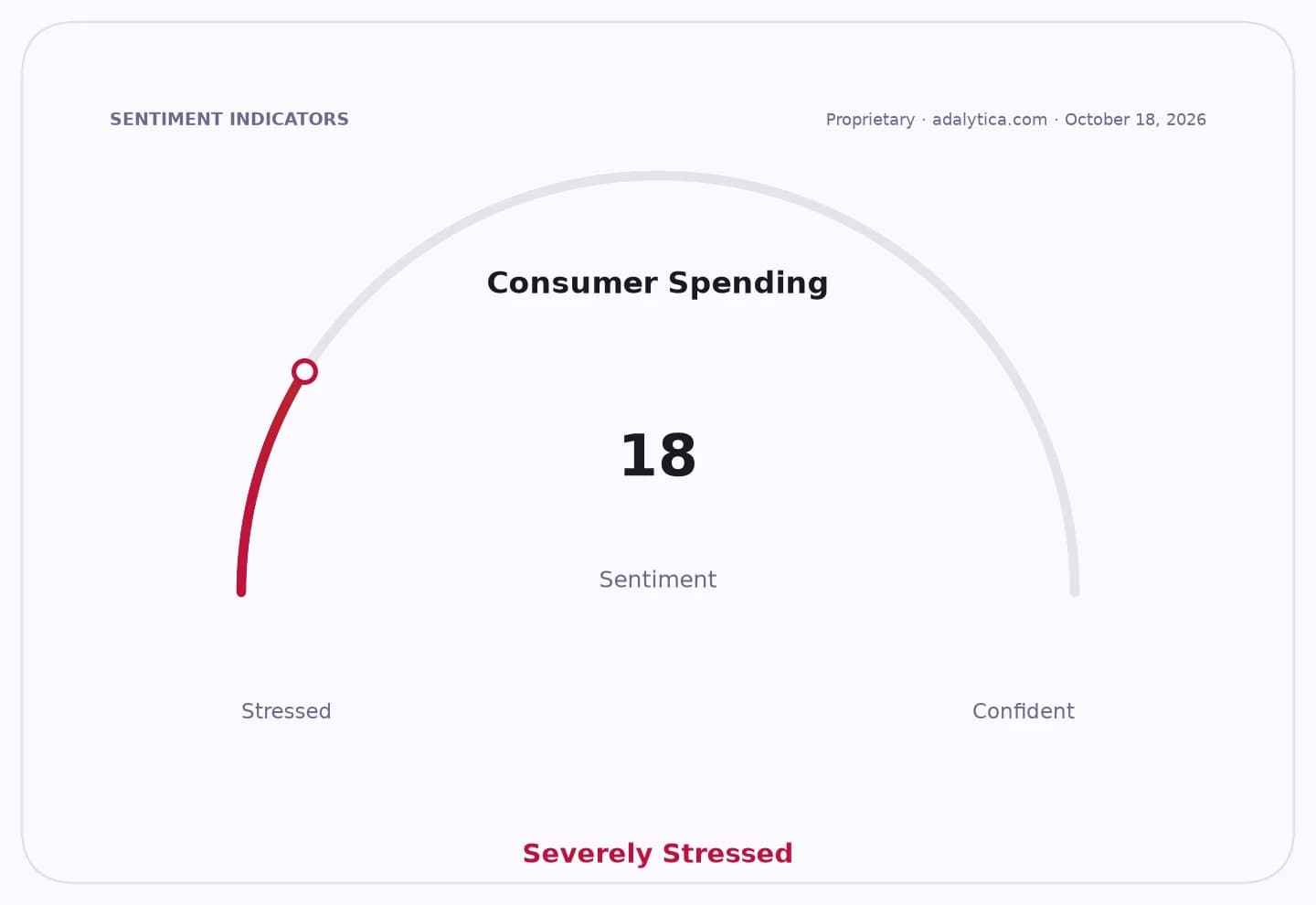
Sentiment IndicatorsⓘProprietary · adalytica.com · October 20, 2026
This is a snapshot — live sentiment, awareness and momentum for 130+ markets update continuously in the dashboard.Open AlphaPulse
The report from the Interactive Advertising Bureau and Grocery TV surveyed 100 retail media buyers and decision makers already investing in in-store retail media. More than 90% said awareness, consideration, sales lift and loyalty were important or essential metrics, underscoring that marketers now want in-store placements to work across the full purchase funnel rather than as a narrow shopper-marketing tool.
But the study also shows why spending is not scaling faster. Activation complexity and measurement limitations were each cited by 27% of respondents as the biggest barriers to additional investment, while 23% pointed to a lack of creative resources. Fifty-nine percent ranked inventory and scale among their top three considerations, ahead of measurement opportunities and cost per thousand impressions.
The organizational split is also telling. Companies with dedicated retail media and national media or brand teams were more likely to say they are fully using in-store media, while those leaving responsibility to shopper or trade marketing teams were more likely to report underutilization. That suggests the channel is moving out of the shopper-marketing silo and into broader media planning, but many grocers have not yet reorganized around it.
That shift matters for investors because retail media has become one of the few high-margin growth levers in grocery, where core merchandising is still low-margin and highly competitive. Kroger has already said its eCommerce business, including third-party media revenue, was profitable in the second quarter and first half of 2026, reinforcing the idea that ad sales can help offset pressure elsewhere in the business.
Market action has reflected that optimism. Kroger shares have recently traded around $63, above their 50-day moving average, while Walmart has held near $119, with both stocks supported by the view that retail media can deepen monetization of store traffic. Target, by contrast, has been more volatile and remains below its 50-day average, showing how uneven execution can affect investor confidence across big-box and grocery names.
For marketers, the next test is whether grocers can prove performance and align key performance indicators across teams. If they can, in-store retail media could move from an underused add-on to a more material source of ad revenue and margin support. If not, the category risks staying popular in theory but underbuilt in practice.
| Entity | Gains | Losses |
|---|---|---|
| Grocers with scaled retail media teams | ▲Higher ad revenue potential | ▼Less reliance on low-margin grocery sales |
| Shopper/trade marketing siloed teams | ▲Smaller workload burden | ▼Less control over media strategy |
| Kroger and Walmart | ▲Better monetization of store traffic | ▼Pressure to execute on measurement and scale |
| Advertisers | ▲More full-funnel retail media inventory | ▼More complexity and KPI fragmentation |