Thanksgiving grocery discounts are giving U.S. households a rare bit of price relief, even as the broader inflation backdrop suggests the holiday bargains are more a seasonal promotion than a lasting reset in food costs.
Kroger, Walmart Gain as Thanksgiving Grocery Deals Rise
Food & Groceries
The important shift is not that groceries suddenly became cheap, but that retailers are leaning harder on promotions to defend traffic and volume after a long stretch of elevated prices. That matters because food remains one of the most visible gauges of household inflation, and even modest markdowns can shape consumer behavior heading into the year-end spending period. For retailers, the battle is less about raising tickets than keeping baskets full.
Sentiment Indicators
The latest inflation data show why the deals are resonating. Consumer prices are still rising, but at a far slower pace than during the post-pandemic surge, with the CPI forecast to edge up 0.35% in November after a 0.35% rise in October. Producer prices are also expected to increase 1.07% in November, suggesting input costs remain contained enough for grocers to use price as a competitive weapon without immediate pressure to pass through bigger increases.
That is helping large chains advertise more aggressive holiday pricing, but the underlying economics are not especially generous. Grocery retail is still a low-margin business, and temporary discounting usually reflects competition rather than abundance. If food inflation re-accelerates into 2027, the room for “staggering deals” will narrow quickly, especially if wage, transport or wholesale costs pick up.
Investors are watching the pricing environment closely because it affects both traffic and margin mix. Kroger, whose shares have risen back above their 200-day moving average, has seen momentum improve as traders bet on steadier food demand and better execution in its core grocery business. Walmart has also stayed firm, with the stock trading above both its 50-day and 200-day averages, reflecting confidence that its scale lets it use grocery as a traffic engine even when promotions are heavy. Target, by contrast, remains more exposed to discretionary demand and has been trading more erratically as consumers continue to prioritize essentials over general merchandise.
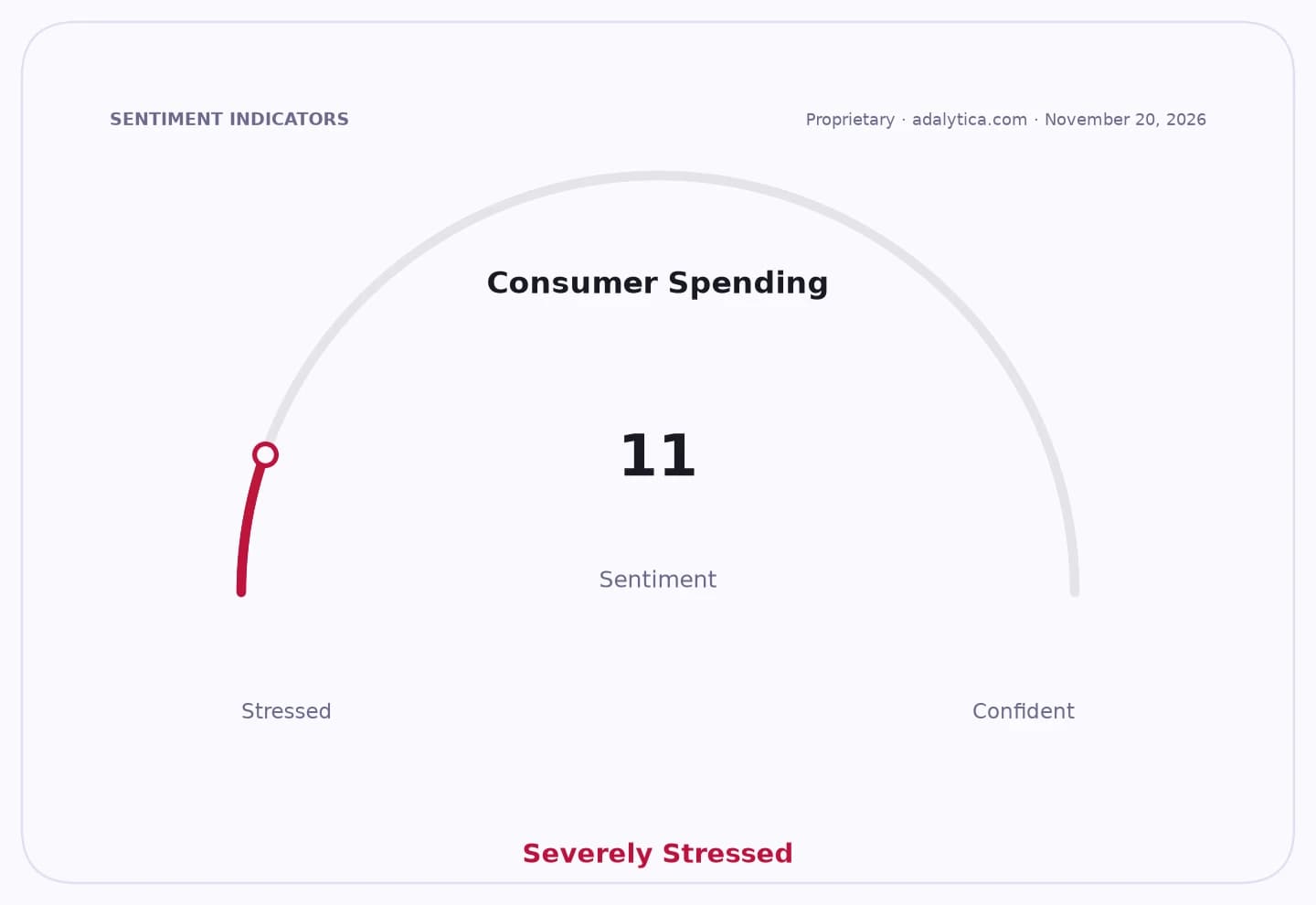
Adalytica’s Food and Grocery Spending Sentiment gauge points to the same theme: shoppers are still willing to spend, but they are highly responsive to value. That supports traffic into Thanksgiving, yet it also shows how dependent retailers remain on promotions to win share in a cautious consumer environment. A stronger CPI or PPI print later in the season would quickly test whether these discounts were a holiday feature or the start of a more prolonged price war.
For now, the holiday grocery aisle is offering one of the clearest signs that inflation has cooled enough for shoppers to notice. The bigger question for investors is whether that relief can last once seasonal promotions fade.
| Entity | Gains | Losses |
|---|---|---|
| Shoppers | ▲Lower holiday bills | ▼Less relief if inflation rebounds |
| Kroger | ▲Higher traffic, share gains | ▼Margin pressure from discounts |
| Walmart | ▲Traffic lift in groceries | ▼Aggressive price competition |
| Target | ▲Some holiday basket support | ▼Weaker discretionary mix |