Russia’s plan to turn battle-scarred parts of Kursk into “patriotic tourism” sites shows how Moscow is trying to recast a live war zone as a state-managed memory project, even as fighting, drone strikes and infrastructure damage continue to make the region unsafe.
Kursk plans patriotic tourism at war sites

The initiative matters economically because it points to a broader Kremlin effort to extract political and commercial value from occupied or contested territory before the war has ended. By proposing museum spaces, defensive structures and underground command posts as visitor attractions, regional authorities are signaling that wartime geography may become part of the local economy, not just a military footprint. That is a familiar playbook in Russia’s occupied regions, where the state has already pushed memorial routes and war-themed tourism in eastern Ukraine, including plans tied to Mariupol and Bakhmut.
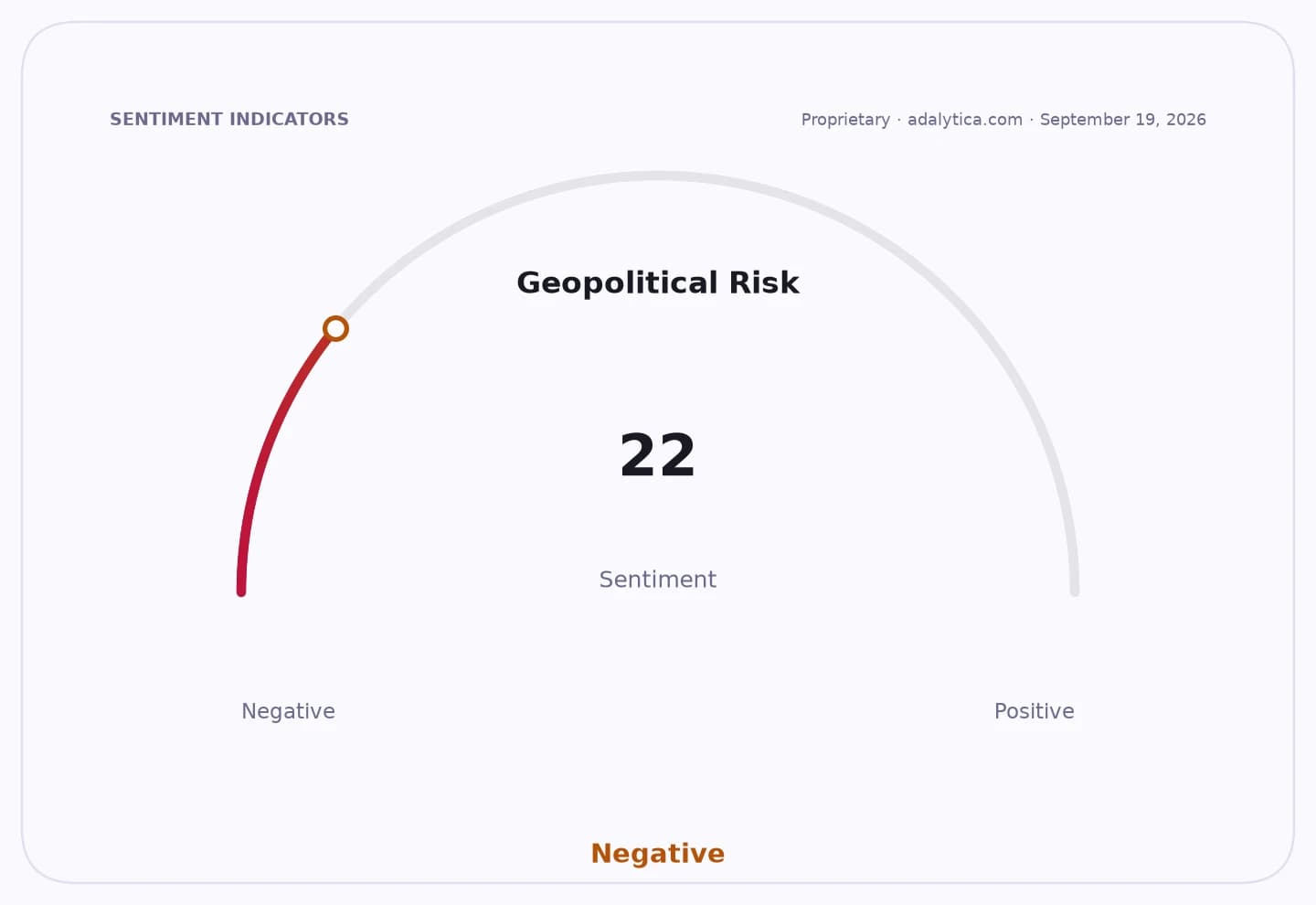
Sentiment IndicatorsⓘProprietary · adalytica.com · September 20, 2026
This is a snapshot — live sentiment, awareness and momentum for 130+ markets update continuously in the dashboard.Open AlphaPulse

Governor Alexander Khinshtein said Kursk authorities are working with the military to map out possible routes through combat-related sites, including underground facilities used by Russian personnel during the fighting. He said the project was being developed without waiting for the end of what Moscow calls its “special military operation,” underscoring the political aim: to normalize the war’s legacy while the conflict is still active.
The timing is sensitive. Kursk remains exposed to near-daily drone and artillery attacks, according to the report, which makes any tourism concept economically fragile and potentially dangerous. Investors should read the initiative less as an immediate revenue opportunity than as a sign of how deeply the war is being embedded into regional policy and public spending decisions. That can support construction, security and local service contracts in the short term, but it also raises the risk of stranded assets if the security situation deteriorates or the narrative shifts.
The military backdrop is important to the story. Ukraine’s August 2024 incursion into Kursk was the largest foreign ground incursion into internationally recognized Russian territory since World War Two, briefly giving Kyiv control over a sizable swath of land. Russia later retook most of it, and by April said it had driven Ukrainian forces out, though Kyiv disputed the claim that cross-border operations had fully ended. The fighting also drew in North Korean troops, with western and Ukrainian assessments saying around 12,000 were initially deployed, adding another layer of geopolitical symbolism to any future visitor route.
From an investor perspective, the project has little direct market impact today, but it reinforces three themes relevant to war-risk pricing: Russia’s willingness to spend on symbolic infrastructure, the persistence of security threats in border regions, and the state’s use of historical narrative to justify economic activity in contested areas. For tourism and hospitality, the upside is limited and politically driven; for defense and reconstruction contractors, the implication is continued demand tied to militarized infrastructure and postwar memorialization.
The main question now is whether Kursk becomes a one-off propaganda tour or part of a wider state-backed industry built around war sites in Russia and occupied Ukraine. If the security environment worsens, the project may remain aspirational. If Moscow succeeds in consolidating control and financing basic infrastructure, the region could become another example of how the Kremlin tries to monetize conflict after the fact.
| Entity | Gains | Losses |
|---|---|---|
| Kursk authorities | ▲Political messaging | ▼Tourism credibility |
| Russian military-linked contractors | ▲Museum and infrastructure work | ▼— |
| Kremlin narrative | ▲War normalization | ▼Safety-sensitive visitors |
| Local residents and travelers | ▲Limited future jobs | ▼Security and safety risk |