The U.S. State Department says any major reconstruction push for Lebanon hinges on Hezbollah giving up its weapons, placing disarmament at the center of a potential aid package worth billions of dollars and tying postwar money to a broader security reset.
Lebanon reconstruction aid tied to Hezbollah disarmament
The statement matters because Lebanon’s economy remains crushed by war damage, financial collapse and mass displacement, but outside donors are not prepared to fund rebuilding while Hezbollah retains an armed wing that Washington and its allies view as a destabilizing force. That makes reconstruction not just a humanitarian issue but a bargaining chip in the effort to reshape Lebanon’s security order.
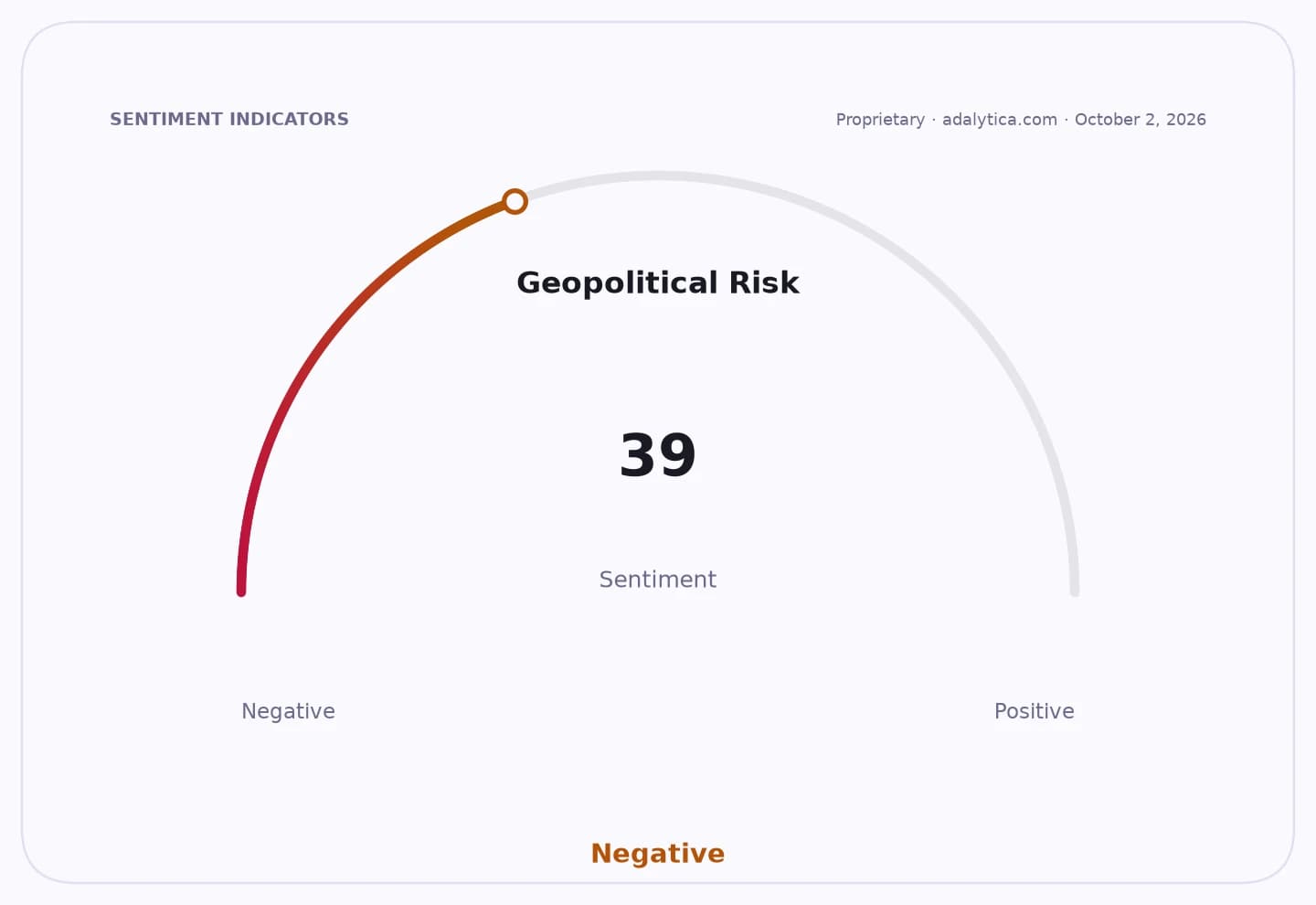
Sentiment IndicatorsⓘProprietary · adalytica.com · October 14, 2026
This is a snapshot — live sentiment, awareness and momentum for 130+ markets update continuously in the dashboard.Open AlphaPulse
A State Department spokesman said Washington is working with Gulf and European partners on a plan to unlock multibillion-dollar assistance for reconstruction, but only after Hezbollah is disarmed. For investors and policymakers, that sets up a prolonged negotiation in which aid flows, regional diplomacy and the risk of renewed conflict are tightly linked.
The timing is sensitive. Israeli forces continued intermittent shelling in parts of southern Lebanon on Tuesday, underscoring how fragile the border remains even as diplomatic pressure builds on Beirut to assert control over armed groups. Lebanon’s foreign minister has said the state’s priorities include ending Israeli attacks, restoring the state’s monopoly over war and peace and restricting weapons to official forces.
The issue also reverberates across the region. Lebanese President Joseph Aoun spoke with Saudi Arabia’s crown prince on Tuesday, reinforcing the role of Gulf states in any reconstruction framework, while international criticism of Hezbollah and wider regional instability keeps the country’s recovery tied to security guarantees rather than economic planning alone.
For markets, the key implication is that any reconstruction windfall for Lebanese contractors, utilities, banks and imported materials depends on a political settlement that is far from assured. The longer disarmament remains unresolved, the longer Lebanon’s rebuild stays frozen, and the greater the risk that aid pledges remain rhetorical.
| Entity | Gains | Losses |
|---|---|---|
| U.S., Gulf and European donors | ▲Leverage over Lebanon aid | ▼Faster cash outlays |
| Lebanese state and reformers | ▲Security monopoly prospects | ▼Short-term reconstruction speed |
| Hezbollah | ▲None from aid conditionality | ▼Weapons autonomy and financing |
| Lebanon’s economy and builders | ▲Potential future contracts | ▼Immediate reconstruction funding |