Libya’s Central Bank is at risk of exhausting its free reserves within 18 months to two years if foreign-exchange outflows keep outpacing oil income, underscoring a widening financing gap that could strain the country’s ability to defend the dinar and fund imports.
Libya Central Bank Faces Reserve Gap Risk
The pressure comes from a persistent mismatch between what flows into the bank and what goes out. In 2025, oil and royalty revenue reached about $22.1 billion, while foreign-currency uses and obligations totaled $31.1 billion, leaving a gap of nearly $9 billion, according to central bank data.
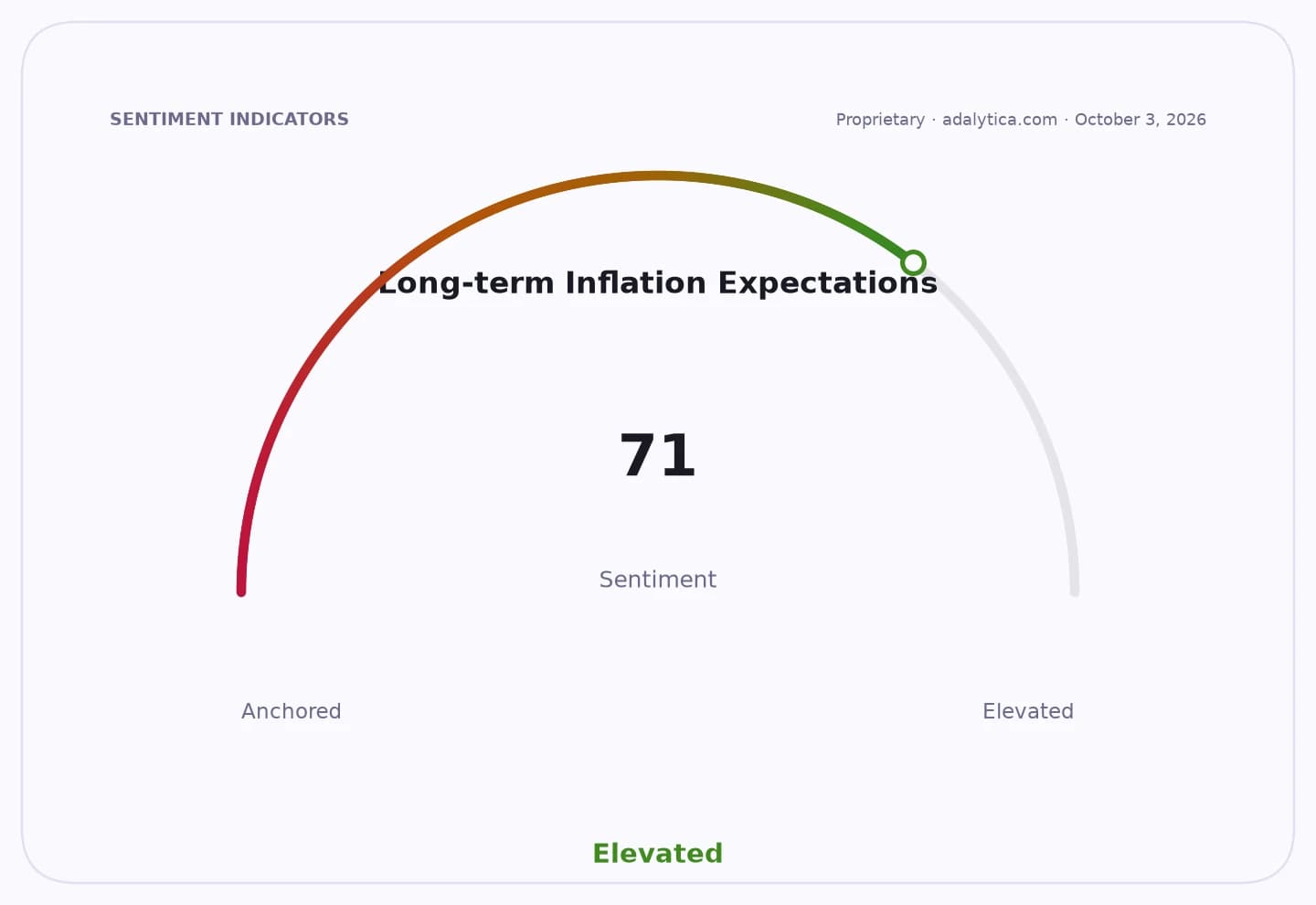
Sentiment IndicatorsⓘProprietary · adalytica.com · October 13, 2026
This is a snapshot — live sentiment, awareness and momentum for 130+ markets update continuously in the dashboard.Open AlphaPulse
That shortfall has not improved much in the first eight months of 2026. Revenue and royalties came in at about $15.2 billion, versus roughly $20.1 billion in foreign-exchange uses, a difference of about $4.9 billion. Combined, the two periods produced a gap of $13.9 billion.
The central bank’s free reserve is estimated at about $21 billion, enough to cushion the imbalance for now, but not indefinitely. Officials said even though Libya’s total foreign assets exceed $100 billion, those holdings are not immediately available as ready cash to cover spending needs.
That makes the issue economically important well beyond the central bank’s balance sheet. If reserve drawdowns continue, Libya would have less room to absorb oil-price swings, support external payments and maintain currency stability, all of which matter in an economy still heavily dependent on hydrocarbons and imports.
The timing is awkward for Tripoli. Global oil prices have strengthened at points in recent months, which should have given Libya a better chance to rebuild external buffers, but higher energy revenue has still not been enough to keep pace with spending and dollar demand.
For investors, the story points to mounting sovereign and currency risk in a country where fiscal and monetary policy remain tightly linked to oil receipts and political fragmentation. A faster-than-expected reserve decline would likely increase pressure on the dinar, complicate imports and raise the stakes for any future policy shift by the central bank under Governor Naji Issa, now entering his third year in office.
The next test is whether authorities can narrow the foreign-exchange gap without relying so heavily on reserves. If they cannot, Libya’s external buffer — while still sizable on paper — could become materially harder to defend over the next two years.
| Entity | Gains | Losses |
|---|---|---|
| Central Bank of Libya | ▲Time to manage the gap | ▼Free reserve buffer |
| Oil exporters/state revenue | ▲Higher gross receipts | ▼Not enough to cover FX demand |
| Libyan importers and households | ▲Short-term access to dollars | ▼Risk of tighter FX supply |
| Dinar bulls | ▲Large total foreign assets | ▼Faster reserve drawdown risk |