Connecting Sirte’s power station to Libya’s gas network would do more than change a fuel source: it could ease one of the country’s most persistent drains on foreign exchange by cutting fuel imports and allowing more oil output to reach export markets.
Libya Gas Link Could Free More Oil for Export
For an economy still heavily dependent on hydrocarbons, even a modest reduction in imported fuel oil matters. Libya’s National Oil Corp. has long faced a trade-off between burning valuable crude or refined products at home and exporting them abroad for hard currency. Moving Sirte from fuel oil to natural gas lowers that inefficiency, improves the domestic energy balance and, in theory, leaves more barrels available for sale overseas. In a country where public finances and the dinar are hostage to oil receipts, that is economically meaningful.
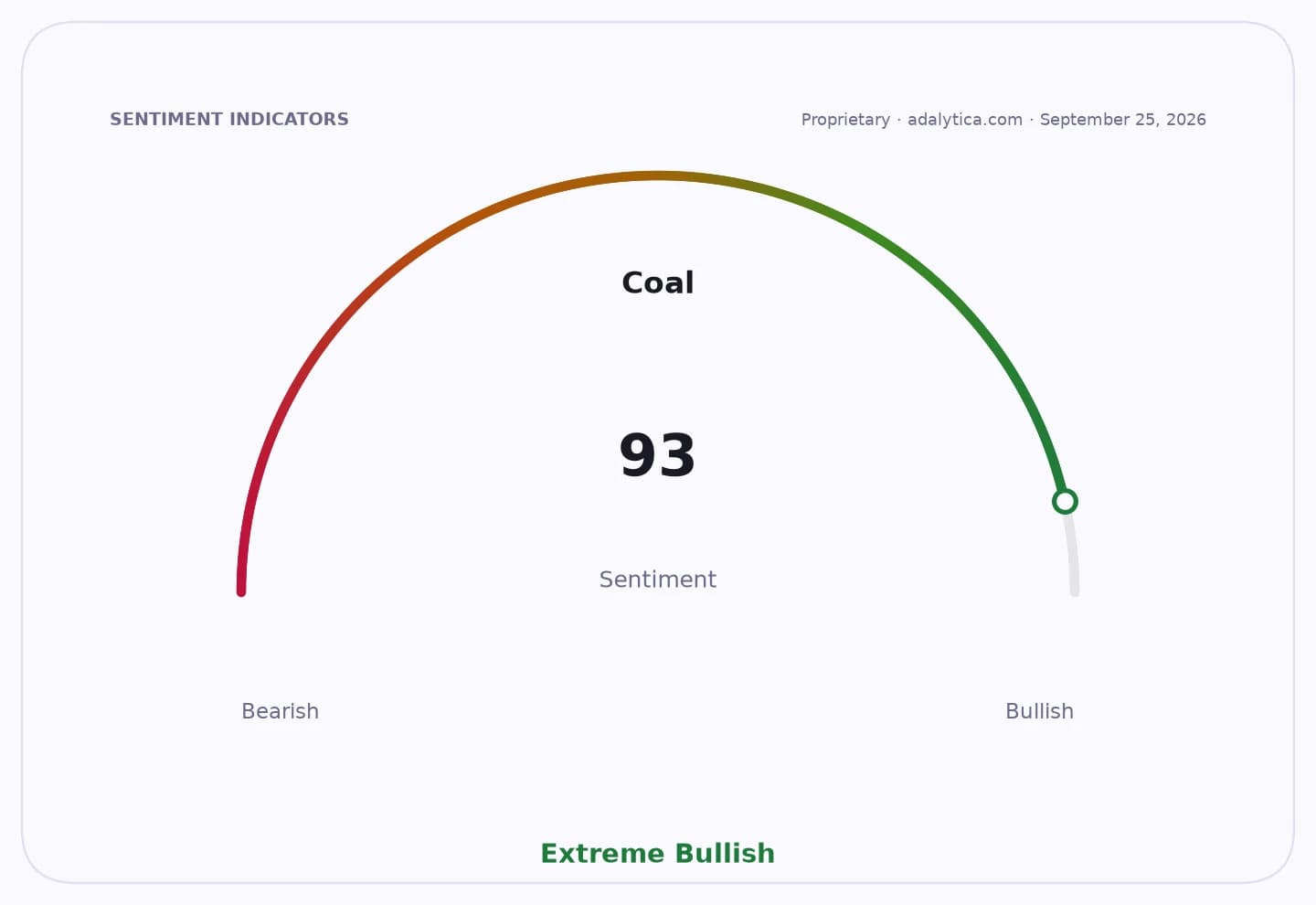
Sentiment IndicatorsⓘProprietary · adalytica.com · July 20, 2026
This is a snapshot — live sentiment, awareness and momentum for 130+ markets update continuously in the dashboard.Open AlphaPulse
The timing also matters. Global oil markets remain volatile, with benchmark WTI recently swinging from below $73 a barrel to nearly $80 before easing again. That kind of price action can quickly change the value of every barrel Libya is able to export rather than consume domestically. Higher realized export volumes tend to matter more in a country like Libya than marginal gains from the price cycle, because production reliability and export access are the key constraints.
For investors, the Sirte connection is less about Libya becoming a tradable equity story and more about what it signals for supply. Any improvement in infrastructure that reduces domestic fuel burn can support exports from a geopolitical flashpoint that has repeatedly disrupted output. Oil-linked exchange-traded funds such as USO and sector funds such as XLE and XOP have already reflected a market that is sensitive to supply shocks, while conventional technical indicators on those funds show the recent rebound has come alongside strengthening momentum. A more efficient Libyan system would add to that broader supply narrative, even if the near-term effect on global balances is small.
The bull case is straightforward: cheaper fuel for utilities, better use of domestic gas, improved cash flow for the state and higher oil export availability. The bear case is that Libya’s infrastructure, security and governance risks have a way of diluting even sensible energy projects. A connection to the gas grid does not guarantee stable supply, timely maintenance or protection from political interference. The economic benefits are real only if the system can operate consistently.
Still, the strategic logic is clear. Across the Middle East and North Africa, governments are treating natural gas as a bridge fuel because it supports power generation, reduces import bills and preserves crude for export. In Libya, the Sirte project fits that pattern: a practical infrastructure fix with an outsized effect on fiscal resilience. Investors will be watching whether the move proves durable enough to translate into sustained export gains rather than another short-lived operational improvement.
| Entity | Gains | Losses |
|---|---|---|
| Libya/NOC | ▲Lower fuel imports | ▼Less domestic crude burn |
| Power sector | ▲Cheaper gas supply | ▼Fuel-oil reliance |
| Oil exporters | ▲More barrels for export | ▼Smaller local sales |
| Global oil bulls | ▲Tighter supply narrative | ▼Slightly weaker demand call |