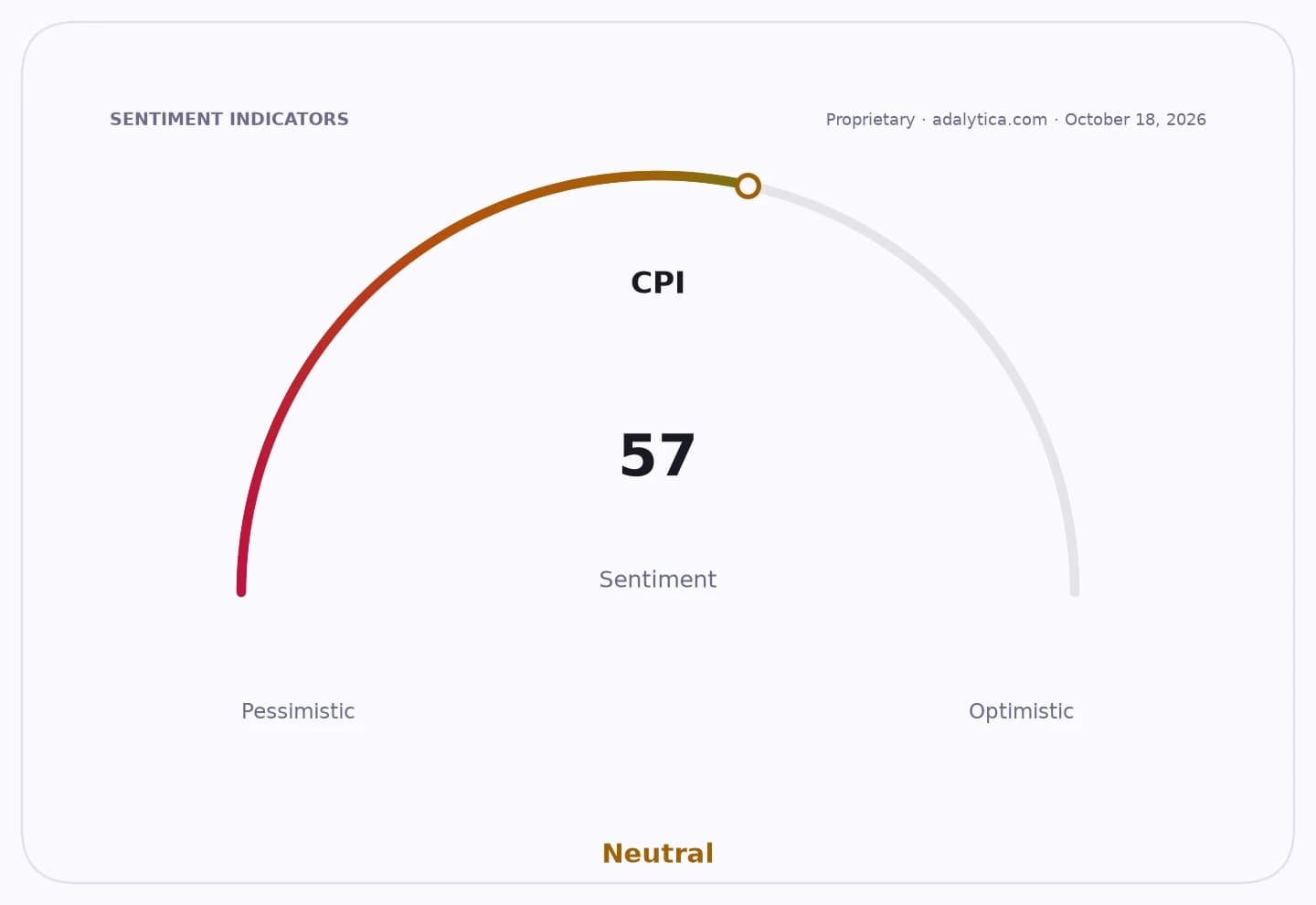
Libya’s inflation is projected to accelerate to 14.1% in 2026, underscoring how currency weakness and chronic policy instability are eroding household purchasing power and raising the risk of a broader economic squeeze.
Libya inflation seen at 14.1% in 2026
That matters because inflation at that pace does more than lift prices — it taxes consumption, complicates business planning and makes any recovery in domestic demand harder to sustain. For investors, the message is clear: Libya remains a high-risk macro market where currency fragility can quickly overwhelm nominal growth and where capital preservation matters more than yield chasing.
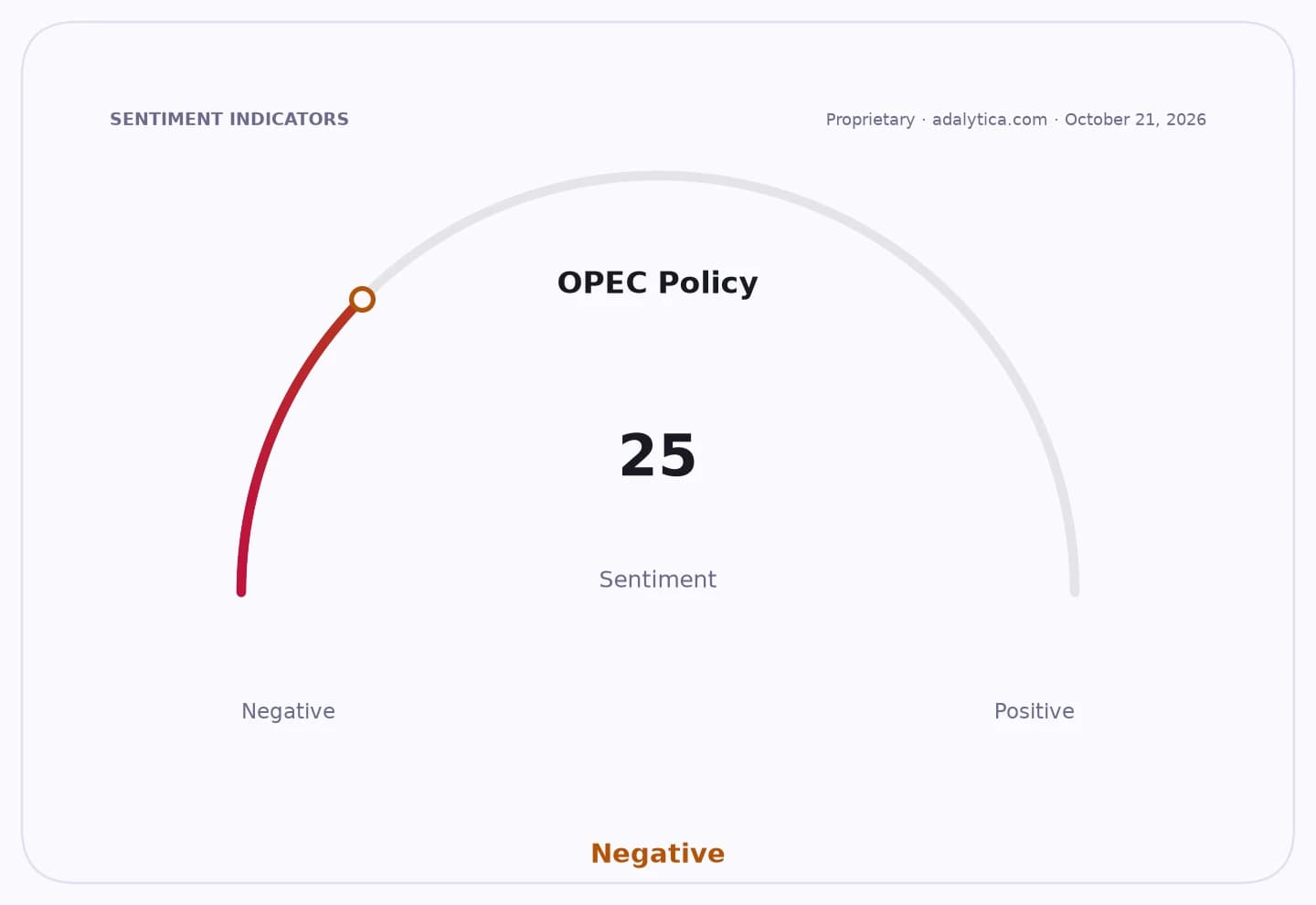
Sentiment IndicatorsⓘProprietary · adalytica.com · October 21, 2026
This is a snapshot — live sentiment, awareness and momentum for 130+ markets update continuously in the dashboard.Open AlphaPulse
The projection would make Libya the second-highest inflation economy in the Arab world, trailing only the region’s most strained price environments. It also marks a stark deterioration from 2.5% in 2010, a reminder of how far the country has drifted from price stability. Rising living costs for food, fuel and basic services will hit consumers first, but the spillover reaches importers, retailers and any business that depends on a functioning banking system and stable exchange rates.
The dinar’s weakness is central to the story. Libya’s currency has been among the world’s worst performers since the start of 2026, a sign that domestic liquidity stress and confidence erosion are feeding inflation rather than containing it. The Central Bank of Libya’s shipment of dollar cash was a clear attempt to shore up the financial system, but it also highlights how dependent the economy remains on ad hoc support rather than durable reform.
For markets, this is less about a tradable inflation print than about what it says on regime risk, policy credibility and the cost of doing business across North Africa. Persistent inflation can force tighter monetary management, strain government finances and keep foreign capital on the sidelines. In a region already exposed to energy and geopolitical shocks, Libya’s price trajectory is a warning that instability can still overwhelm commodity wealth.
The investable takeaway is to favor balance sheets and business models with hard-currency revenue, regional diversification and low exposure to local consumer purchasing power. Until Libya stabilizes its currency and restores confidence in monetary management, inflation will remain a brake on growth — and a premium should be placed on any asset or sector able to hedge it.
| Entity | Gains | Losses |
|---|---|---|
| Hard-currency earners | ▲Preserve purchasing power | ▼Local-currency earners |
| Import-dependent consumers | ▲— | ▼Face higher living costs |
| Dinar shorts / hedges | ▲Benefit from currency weakness | ▼Long-only local investors |
| Stable regional exporters | ▲Gain relative appeal | ▼Libya-focused businesses |