Libya’s oil revenue dispute is no longer just an accounting row; it is forcing a broader audit of how the country’s oil money is collected, transferred and spent, with fuel subsidies now squarely in the spotlight.
Libya oil revenue gap puts fuel subsidies under review
The immediate issue is the yawning gap between what Libya’s National Oil Corporation says it routed and what the Central Bank says actually reached its accounts. Between Oct. 1 and Oct. 14, the central bank said oil revenue received totaled just $361 million, while the oil company said $1.23 billion had been transferred to the Libyan Foreign Bank, leaving roughly $871 million unaccounted for in the public debate. That discrepancy matters because in an economy that depends overwhelmingly on crude exports, every missing dollar raises questions not just about revenue management but about the state’s ability to fund imports, defend the currency and finance basic services.
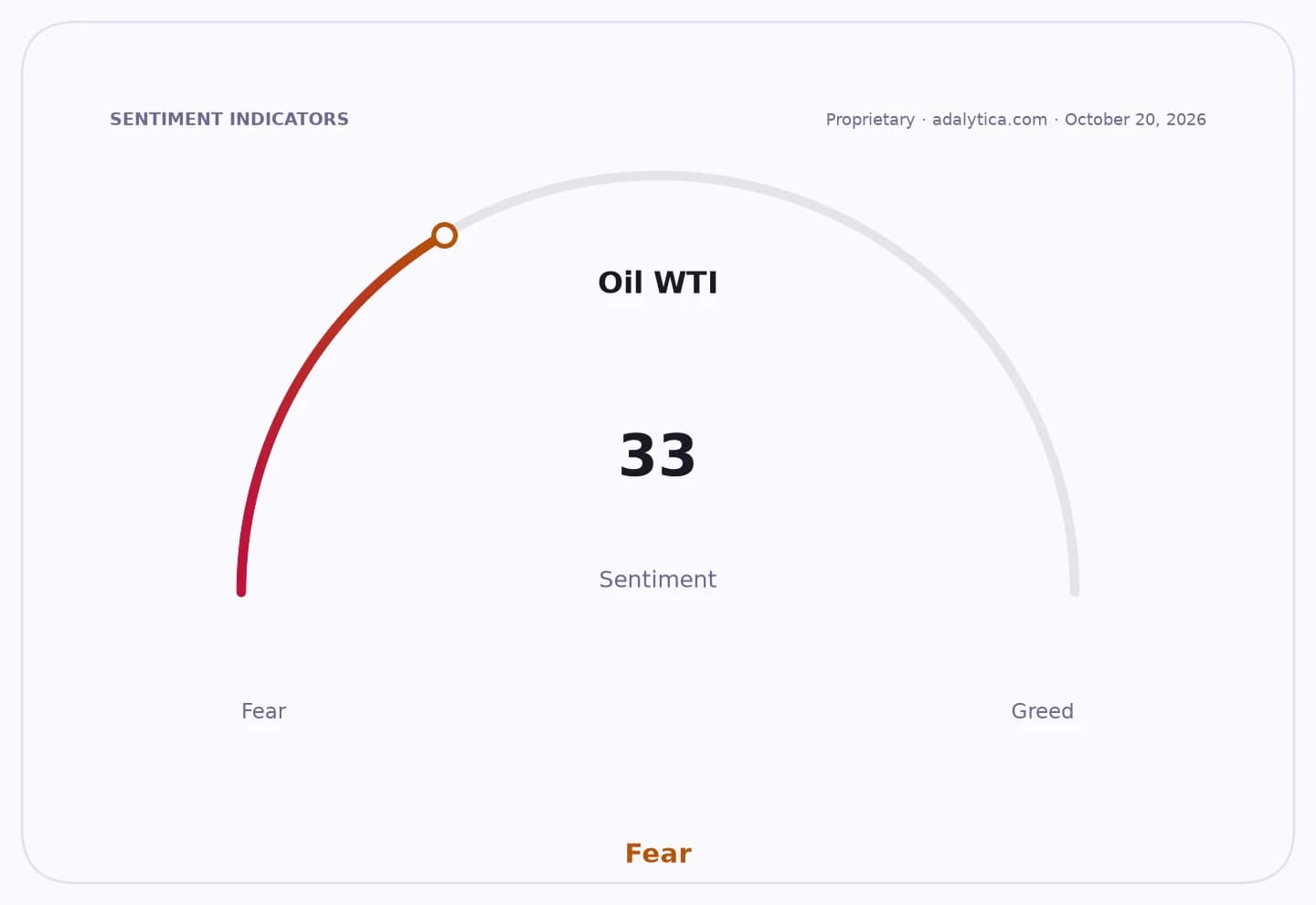
Sentiment IndicatorsⓘProprietary · adalytica.com · October 21, 2026
This is a snapshot — live sentiment, awareness and momentum for 130+ markets update continuously in the dashboard.Open AlphaPulse
For investors, the bigger story is not the dispute itself, but the pressure it puts on Libya’s spending architecture. Calls for a full, independent investigation now extend beyond the central bank and the oil company to the foreign bank and, crucially, to the country’s subsidy bill. Fuel subsidies are among the most distortionary items in Libya’s public accounts, and any lack of clarity over how those outlays are funded feeds black-market activity, drains reserves and weakens the dinar. That is exactly the kind of leakage that can keep inflation elevated and purchasing power under pressure even when oil prices are supportive.
The political economy here is combustible. In a fragmented state where competing institutions already struggle to coordinate, public suspicion over oil receipts becomes a proxy fight over control of the treasury. If the gap between booked revenues and actual inflows cannot be reconciled quickly and transparently, the result is likely to be more scrutiny of spending, more pressure on the central bank, and more incentives for actors who profit from opaque flows and subsidized fuel. The market message is clear: Libya’s oil sector is not just a production story, it is a governance story, and governance risk is the real discount rate.
That makes transparency the next catalyst. If investigators force disclosure of transfer records, settlement documents and subsidy allocations, the winning side will be the institutions and businesses tied to cleaner financial channels. If not, the losers are the dinar, the state budget and ordinary consumers, while the shadow economy keeps taking its cut. For investors watching North African energy and macro risk, Libya remains a high-beta trade on state credibility — and credibility is now the asset under review.
| Entity | Gains | Losses |
|---|---|---|
| Libyan state transparency push | ▲Credibility boost | ▼Institutional resistance |
| Central Bank of Libya | ▲Clearer oversight role | ▼Scrutiny over receipts |
| National Oil Corporation | ▲Proof of transfers | ▼Questions on reporting |
| Fuel subsidy system | ▲Potential reform pressure | ▼Black-market operators |