The Oil Corporation’s decision to wrap up a renewable-energy training course in Sebha matters less as a ceremonial event than as a signal that Libya’s state energy sector is trying to build capacity beyond crude at a time when oil markets remain volatile and the country’s economy is still heavily tied to hydrocarbons.
Libya Oil Sector Signals Broader Energy Ambitions
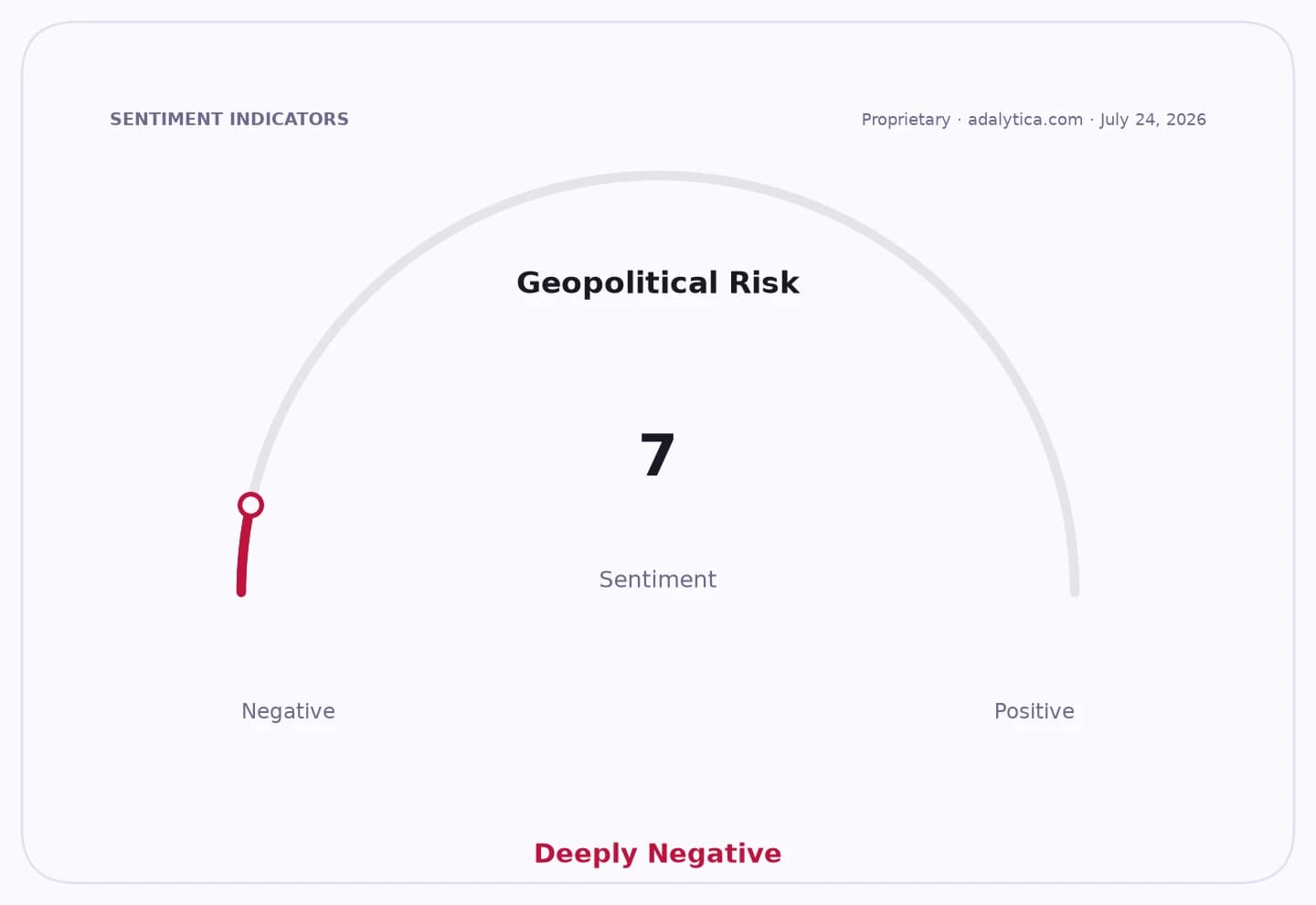
For a producer like Libya, the economic significance is straightforward: every step toward developing local renewable skills is a hedge against the fiscal and employment risks of overreliance on oil revenues. With Brent near the mid-$80s a barrel and West Texas Intermediate around $85, Libya is benefiting from a supportive oil-price backdrop, but that also underlines the vulnerability of a budget still exposed to swings in global energy markets, production disruptions and political uncertainty. Training students in renewable energies does not transform that reality overnight, but it helps prepare a workforce that can support project development, power diversification and eventual private investment.
Sentiment IndicatorsⓘProprietary · adalytica.com · July 24, 2026
This is a snapshot — live sentiment, awareness and momentum for 130+ markets update continuously in the dashboard.Open AlphaPulse
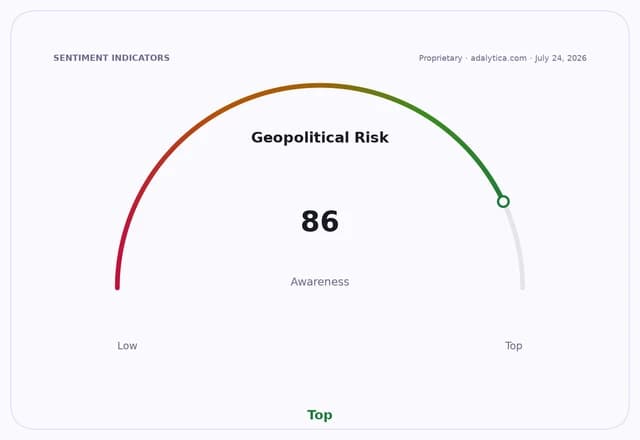
The move also fits a broader macro narrative. Industrial output in the United States has been edging higher, underscoring how global energy demand remains tied to manufacturing and transport, while Treasury yields around 4.6% point to a still-restrictive financing environment for long-duration infrastructure projects. In that setting, governments and state-linked companies have stronger incentives to develop domestic technical talent before capital-intensive clean-energy plans can scale. Libya’s challenge is not a lack of sun or land; it is the institutional capacity to turn those advantages into bankable projects.
For investors, the immediate market impact is limited, but the strategic read-through is more important. Renewable-energy education in a city like Sebha suggests Libya’s energy establishment is at least acknowledging that future power demand cannot be met by oil alone. That matters for regional utilities, equipment suppliers, development partners and any foreign investor assessing the country’s power sector. It also signals to the market that the state oil sector may be trying to preserve relevance in a transition era by positioning itself as a platform for broader energy development rather than just a crude exporter.
That shift comes with clear bull and bear cases. The bull case is that skills training is the first necessary step in building local project pipelines, reducing reliance on imported expertise and improving energy security in a country where instability has repeatedly delayed investment. The bear case is that without grid upgrades, financing and policy consistency, the course risks becoming another isolated initiative with little commercial follow-through. Libya has announced energy ambitions before; execution has been the harder part.
The key question for investors is whether this kind of initiative becomes part of a broader national energy strategy or remains a symbolic gesture. If it is followed by permitting, partnerships and actual project awards, it could gradually expand opportunities in distributed power, solar installation and maintenance. If not, it will mostly reinforce the view that Libya’s energy transition remains aspirational while oil remains the real economic anchor.
| Entity | Gains | Losses |
|---|---|---|
| Libya’s Oil Corporation | ▲Broader energy role | ▼Narrow oil-only identity |
| Renewable-energy students | ▲Technical skills | ▼Short-term job certainty |
| Local power sector | ▲Future talent pool | ▼Dependence on imports |
| Oil exporters | ▲High-price support | ▼Long-term transition pressure |




