The United States is trying to build a lithium supply chain at home, but the biggest economic reality is that even a surge in domestic mining would not break China’s hold on the metal’s most valuable step: processing.
Lithium Americas Thacker Pass, China refining dominance
That matters because lithium is no longer just an EV story. It is a strategic input for batteries, drones, weapons and communications gear, which makes supply-chain control a question of industrial competitiveness and national security. Investors should care because the opportunity in North American lithium mining may be real, but the profits will still be shaped by who controls refining capacity, permitting timelines and the cycle in lithium prices.
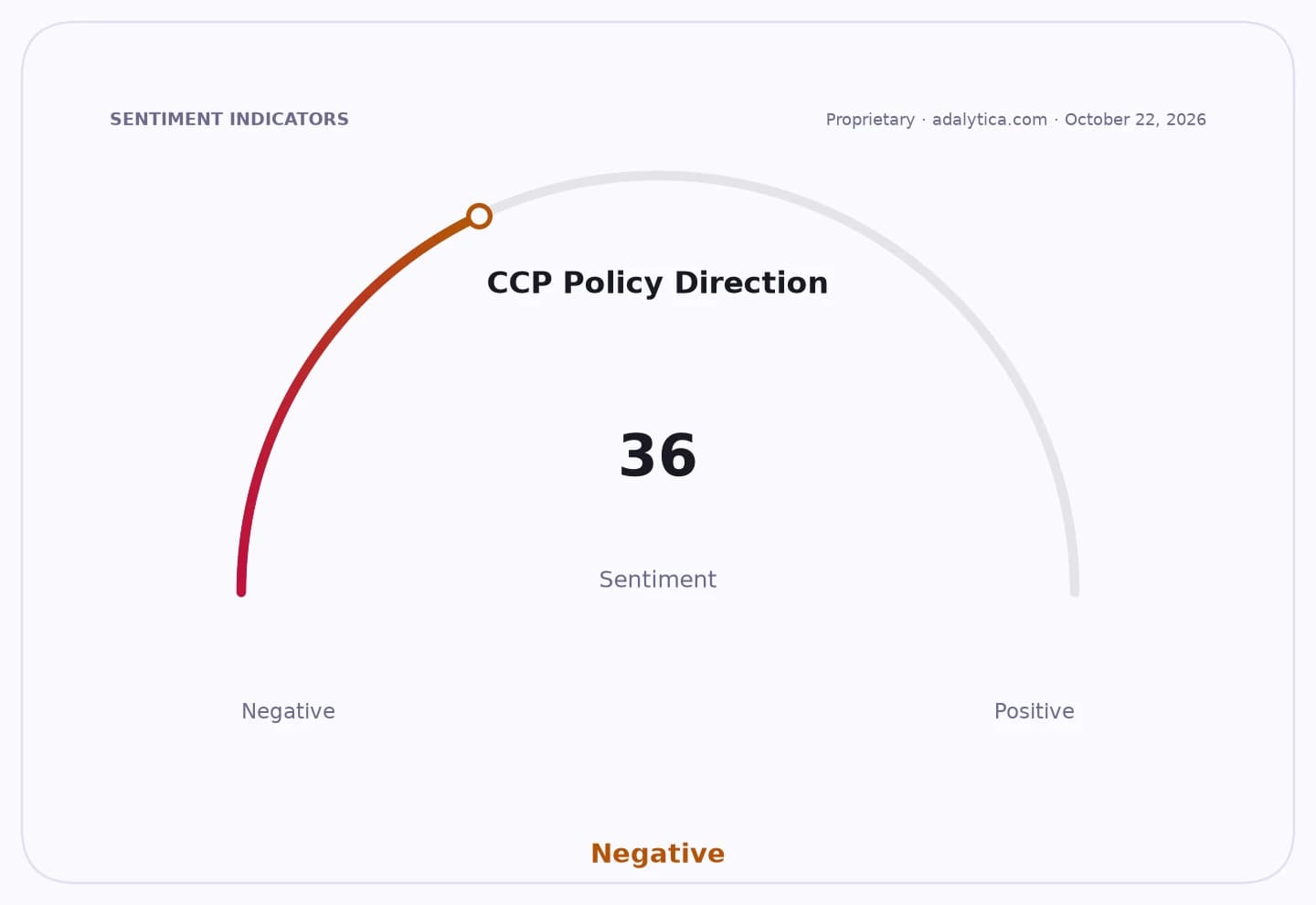
Sentiment IndicatorsⓘProprietary · adalytica.com · October 22, 2026
This is a snapshot — live sentiment, awareness and momentum for 130+ markets update continuously in the dashboard.Open AlphaPulse
A massive project in Nevada captures the ambition. Lithium Americas is pushing ahead with its Thacker Pass mine, aiming to finish construction by the end of 2027 and begin full-scale production in 2028. The project is designed to produce about 40,000 tons a year, enough for batteries in as many as 800,000 electric vehicles. The Trump administration has backed the effort, with Washington having already moved to accelerate the project and secure an equity option in the company and the mine.
The policy push is part of a broader U.S. campaign to shorten the years-long permitting process that has long slowed mining in the West. The administration says it wants to make the United States a mineral superpower again, and a recent zinc and manganese project in Arizona became the first mining development to complete permitting under the federal FAST-41 coordination program after only a little more than two years.
For long-term investors, that is a meaningful structural shift. If permitting really can be streamlined, it could improve the economics of domestic mining and help build a deeper North American critical-minerals ecosystem. It also supports the longer-term case for the lithium sector, which remains central to electrification, grid storage and defense applications.
But the story is not as simple as “mine more at home, depend less on China.” China accounts for about 20% of global lithium mining, but it controls roughly 70% of refining and processing, the stage that turns raw material into battery-ready chemicals. That means U.S. mining projects can reduce one dependency while leaving the more important bottleneck largely intact.
That bottleneck is why the investment case is more nuanced than a standard commodity boom. A mine can take years to build, while lithium prices can swing quickly. If too many projects come online at once, the industry could face oversupply just as capital-intensive producers are still ramping up. Environmental opposition also remains a real risk, especially for projects in the U.S. West where water use and tailings disposal can draw intense scrutiny.
The market is already signaling that investors should not confuse strategic importance with easy gains. Shares of major lithium names have been volatile, reflecting both the long-term demand story and the near-term reality of falling prices, financing needs and execution risk. Even with Washington’s support, domestic miners still need processing capacity, permitting certainty and durable pricing power to turn strategic value into shareholder returns.
For investors, the best takeaway is not to chase the headline that America can simply replace China. The better long-term thesis is that lithium supply chains are being rebuilt in stages, and the winners will be the companies with low-cost assets, credible downstream partnerships and the patience to outlast the cycle. This remains a sector worth watching closely, but it is still a business where the hardest part is not digging the ore out of the ground.
| Entity | Gains | Losses |
|---|---|---|
| U.S. miners | ▲Permitting support, policy backing | ▼Still need Chinese processing |
| China processors | ▲Preserve refining dominance | ▼Lose some mining leverage |
| Lithium Americas and peers | ▲Higher strategic value | ▼Execution and price-cycle risk |
| EV and defense users | ▲Potentially more domestic supply | ▼No quick end to dependence |