Lithuania’s urgent security meeting after a drone breach matters because it turns a regional airspace scare into a fresh test of NATO’s eastern-flank defenses, with direct implications for military readiness, border surveillance and the next wave of European defense spending.
Lithuania drone breach lifts NATO defense focus
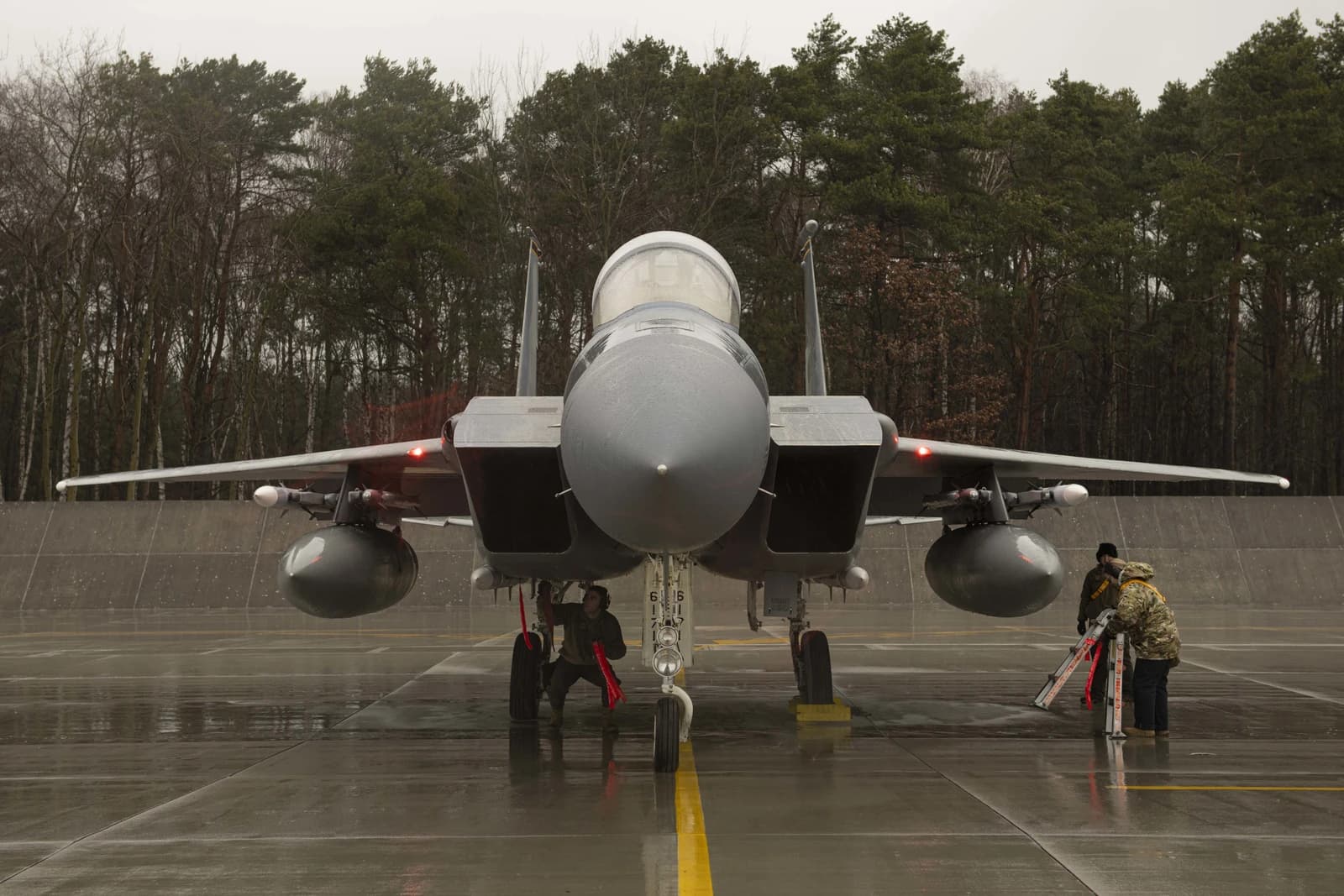
Vilnius said it found likely drone wreckage near Juodonys in northern Lithuania after briefly issuing a red alert for two regions and scrambling NATO fighter jets. Authorities said the object may have entered Lithuanian airspace from Poland, although Warsaw said its radar systems had not confirmed any crossing from Polish territory. The Lithuanian defense ministry is now in contact with Poland as both sides try to reconstruct the incident and determine where the drone came from, when it was first detected and whether it was intentionally diverted.
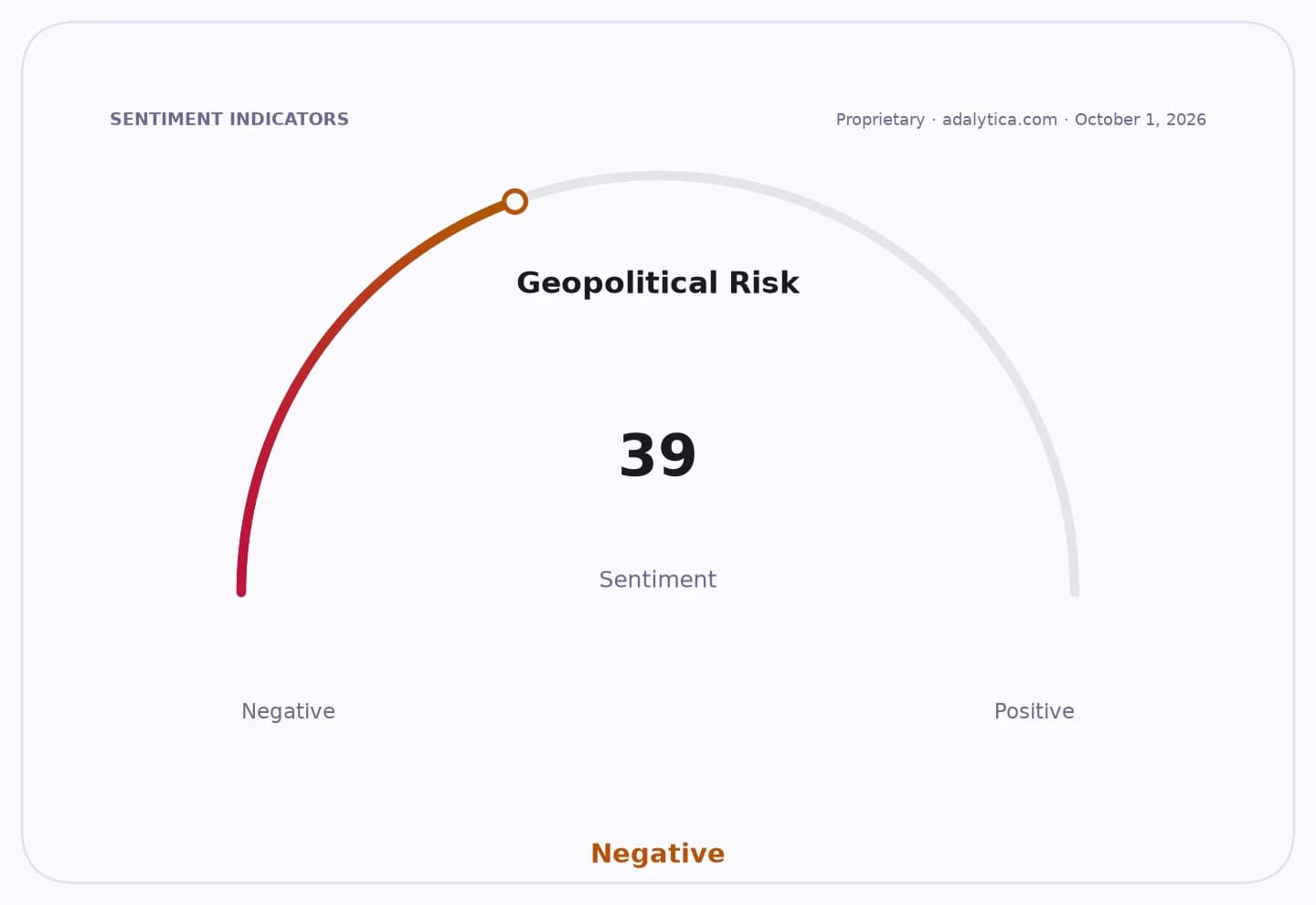
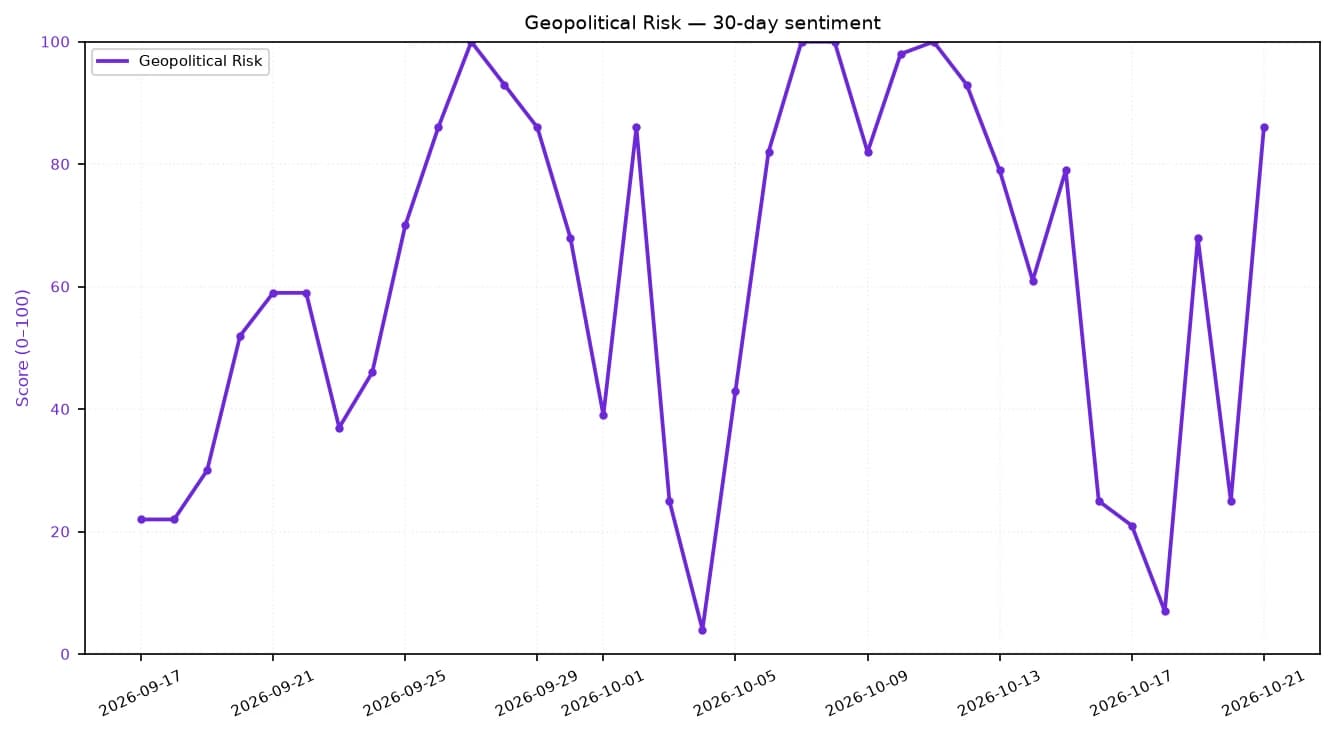
Sentiment IndicatorsⓘProprietary · adalytica.com · October 22, 2026
This is a snapshot — live sentiment, awareness and momentum for 130+ markets update continuously in the dashboard.Open AlphaPulse
That is the economically meaningful part of the story: drone incursions are no longer isolated battlefield events in Ukraine or the Middle East. They are becoming a permanent security cost for NATO states on the front line. Every incident like this raises pressure on governments to invest in counter-drone systems, tighter radar coverage, faster interception protocols and more resilient communications networks. Lithuania’s prime minister has already said his government will discuss giving the security services additional powers to neutralize drones, a sign that this is moving from a one-off alert to a policy response.
For investors, the message is straightforward. The market still underestimates how quickly Europe’s defense budget mix is shifting away from legacy platforms and toward detection, electronic warfare, air defense and base protection. The beneficiaries are not just the obvious missile and fighter-jet names. The better trade is in the picks-and-shovels: drone detection, command-and-control software, secure communications, sensors and NATO interoperability systems. Incidents like this also strengthen the case for defense contractors tied to border surveillance and counter-UAS capabilities, as governments move from planning to procurement.
The backdrop makes the urgency clearer. Poland and Lithuania sit on a sensitive corridor linking NATO territory to the wider war in Ukraine, and Moscow’s drone campaign has already shown how cheap aerial systems can force expensive defensive responses. That asymmetric equation is exactly why defense spending can stay elevated even if front-line fighting eases. Governments are buying insurance against a threat that is cheap to launch, hard to stop and politically impossible to ignore.
The investment setup is therefore less about the headline itself than the policy chain it can trigger. If Lithuania pushes for broader authority to intercept drones and coordinates more closely with Poland and NATO, the next catalyst is likely to be procurement rather than rhetoric. That is where the opportunity lies: infrastructure around air defense, electronic warfare and secure military communications could keep compounding as Europe hardens its eastern flank. In a market that still treats drone incidents as episodic news, this is becoming a durable investment theme.
| Entity | Gains | Losses |
|---|---|---|
| Counter-drone suppliers | ▲Higher procurement demand | ▼Legacy air-defense-only vendors |
| NATO eastern flank members | ▲Stronger deterrence | ▼Airspace exposed to incursions |
| Poland-Lithuania defense links | ▲Closer coordination | ▼Air-traffic certainty |
| Drone attackers | ▲Tactical ambiguity | ▼Freedom of maneuver |