The government will import five more cargoes of liquefied natural gas this month, a move that underscores how quickly energy security has become a hard economic priority as governments race to lock in fuel supplies and shield power systems from volatility.
LNG Imports Rise as Governments Secure Supply

For investors, the message is bigger than a one-off procurement. Every incremental LNG cargo reflects persistent demand for imported gas in markets that cannot yet rely on domestic production, renewables or pipeline flows to meet baseload needs. That keeps the LNG trade tight, supports infrastructure build-outs and reinforces the case for the companies that sit on the toll roads of the gas market: exporters, liquefaction operators, terminal owners and pipeline networks.
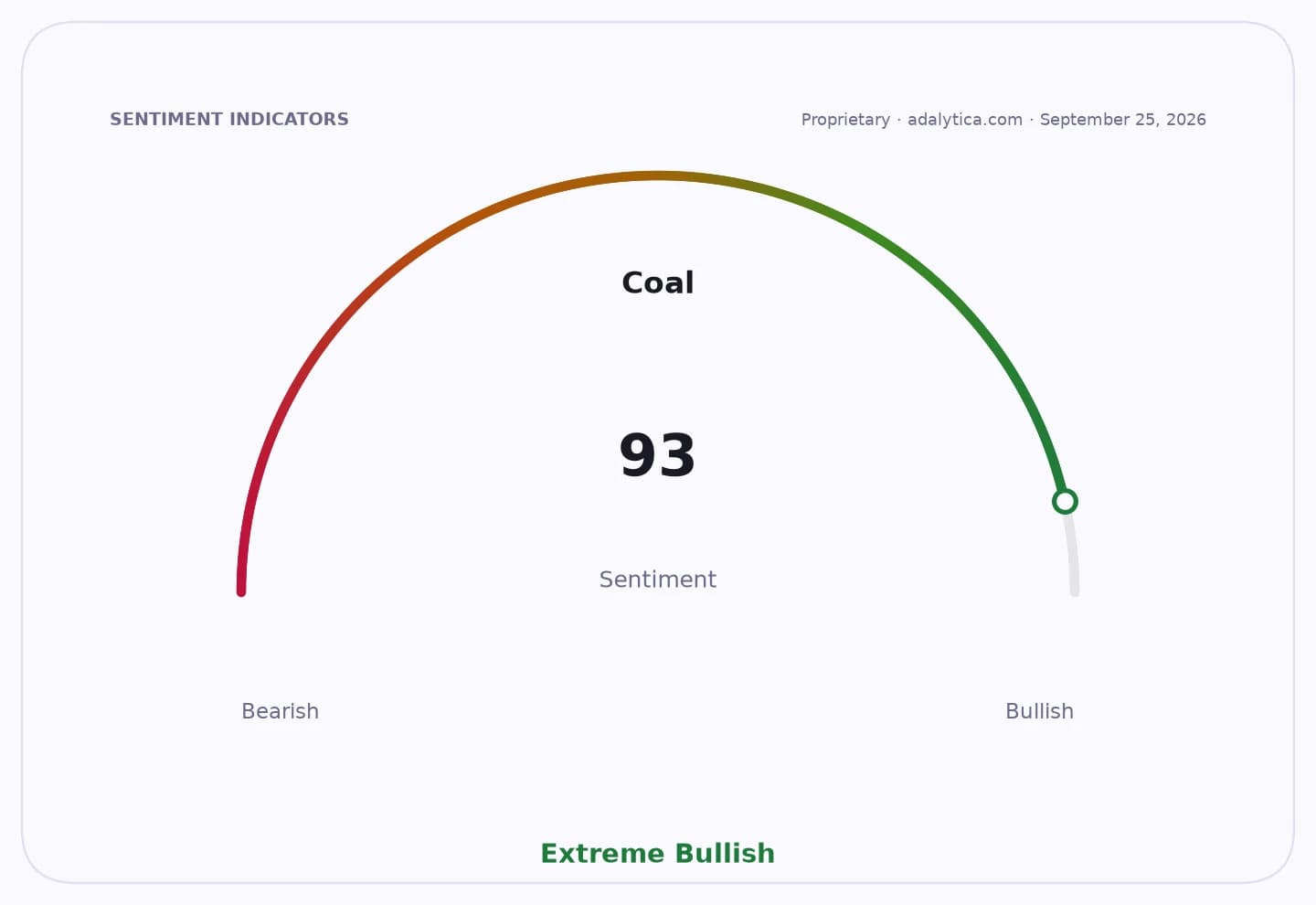
Sentiment IndicatorsⓘProprietary · adalytica.com · August 14, 2026
This is a snapshot — live sentiment, awareness and momentum for 130+ markets update continuously in the dashboard.Open AlphaPulse

The backdrop is a firm energy market. U.S. crude has recovered to about $87 a barrel in the latest forecast, while the 10-year Treasury yield is holding near 4.7%, a combination that keeps financing conditions tight even as the cost of imported fuel remains elevated. In natural gas, Adalytica’s proprietary trade signals show sentiment at 79, labeled Greed, with awareness at 86 and up sharply over the past week, suggesting the market is leaning into the LNG theme rather than fading it.
That lines up with the equity tape. U.S. natural gas proxy UNG has slipped to around $9.97 after trading above $10.20 in the latest sessions, but it still sits far below the spikes seen earlier this year, leaving room for another upside move if cargo demand tightens balances again. LNG-linked infrastructure names have held up better: Cheniere Energy has stayed near $266, while Kinder Morgan has climbed to about $32, showing that investors continue to favor the fee-based side of the LNG story.

The real investment implication is that governments are moving from emergency buying to structural contracting. That is bullish for LNG developers and midstream operators with takeaway capacity, export terminals and long-duration contracts, and it is less friendly to countries and utilities forced to buy spot cargoes into a volatile market. If this month’s extra cargoes become the new normal, the market may be underpricing the next leg of LNG capex and the earnings durability of the companies that enable it.
The trade to watch is not just gas prices but who controls the molecules. Long-term winners are the exporters, terminal owners and pipeline operators that can charge for access to constrained LNG infrastructure. The losers are spot buyers, import-dependent utilities and any country hoping energy costs will normalize without securing supply first.
| Entity | Gains | Losses |
|---|---|---|
| LNG exporters | ▲More contracted demand | ▼Less spot pricing power for buyers |
| Terminal and pipeline operators | ▲Higher utilization | ▼None immediate |
| Import-dependent governments | ▲Greater supply security | ▼Higher fuel bills |
| Spot gas buyers | ▲None | ▼Volatile procurement costs |