The DAX looks set to start the week in the green as easing oil prices give Europe’s biggest equity benchmark a cleaner macro backdrop and remove one of the market’s most persistent headwinds: higher energy costs.
Lower Oil Could Lift DAX Relative Performance
That matters because Germany’s index is unusually exposed to the interplay between global growth, input costs and industrial margins. When crude retreats, the immediate win is for energy-intensive manufacturers, chemicals, transport and consumers; the broader win is for the inflation outlook, which can help keep bond yields from lurching higher and support cyclical stocks. In a market that has repeatedly punished Europe on any whiff of imported inflation or geopolitical shock, lower oil is a direct valuation tailwind.
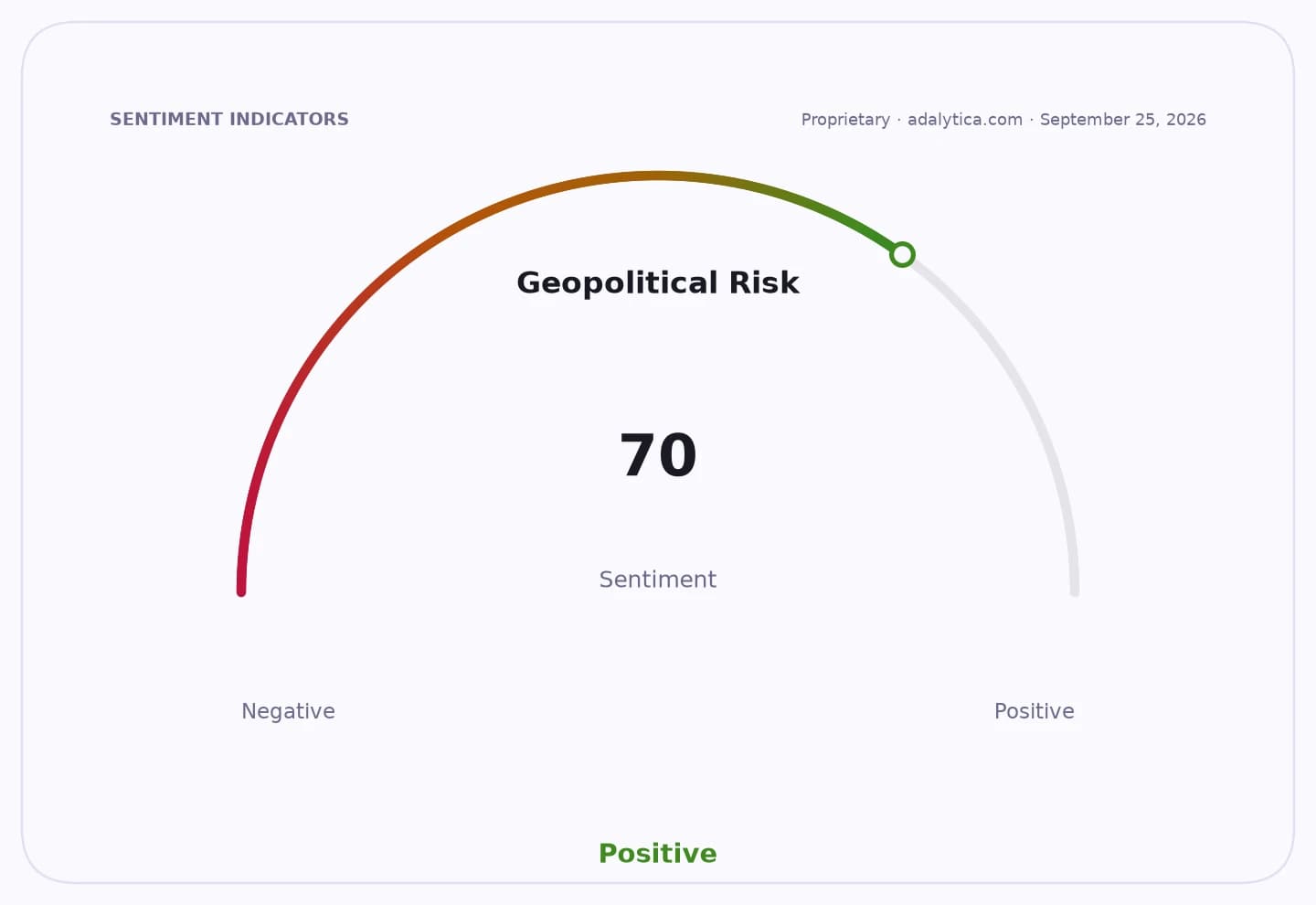
Sentiment IndicatorsⓘProprietary · adalytica.com · July 28, 2026
This is a snapshot — live sentiment, awareness and momentum for 130+ markets update continuously in the dashboard.Open AlphaPulse
The latest oil move has been sharp enough to matter. West Texas Intermediate, at $84.38 a barrel on July 20, is still elevated by historical standards, but the broader trend has turned lower from earlier levels near $109.76 in May and above $85 in mid-April, according to the data. That pullback helps explain why the DAX recovered to 44.78 on July 27 after a brief dip below its 50-day moving average earlier in the month. The index’s 50-day average now sits at 44.32 and its 200-day average at 44.04, leaving the market in a constructive technical position as momentum improves.
Investors should care because Germany is not just a domestic story — it is a global manufacturing proxy. Lower energy prices improve operating leverage for exporters and reduce the risk that companies are forced to absorb another round of cost inflation at a time when demand remains uneven. That is especially important for a market like the DAX, where industrials and cyclicals carry outsized influence and where earnings revisions tend to amplify any change in the energy backdrop.
The same logic is visible across related assets. The energy sector ETF XLE has held near 58.36 after a powerful rally, but it has also become stretched, with RSI readings still elevated at 71.4. That suggests investors may already be crowded into the oil trade, while the more attractive risk-reward may now be in the beneficiaries of lower fuel costs rather than the producers themselves. Canada’s equity ETF, EWC, has also stayed firm around 59.07, underscoring that commodity-linked markets remain supported — but the next marginal move in Europe may come from relief, not scarcity.
Adalytica’s Euro Trade Signals snapshot adds to that setup, showing sentiment at 29 — fear — even as awareness sits at 95, or extreme greed. That is a classic late-stage positioning mix: investors know the story, but are still underweight the second-order winners. In that environment, any sustained decline in crude can trigger a sharper-than-expected re-rating in German equities, especially if it eases pressure on inflation expectations and supports rate-sensitive parts of the market.
Our thesis is simple: the market underestimates how powerful a lower-oil regime can be for the DAX. If crude keeps sliding, Germany’s index should outperform on a relative basis, with industrials, autos, logistics and broader cyclical exposure likely to benefit most. For investors looking for asymmetric upside, this is a moment to favor German equity exposure over energy — and to treat any weakness in oil as a buy signal for the DAX.
| Entity | Gains | Losses |
|---|---|---|
| DAX | ▲Lower input costs | ▼Geopolitical inflation shock |
| German industrials | ▲Margin relief | ▼Energy-price squeeze |
| Energy producers / XLE | ▲Higher crude prices | ▼Oil-price retreat |
| Consumers / importers | ▲Lower fuel costs | ▼Persistently expensive energy |