Human connections remain Match Group’s core selling point even as artificial intelligence reshapes how people search, chat and match online, and investors are treating that argument as more than philosophy. Chief executive Spencer Rascoff said AI should bring two people closer rather than stand between them, a view that matters because the $3.5 billion parent of Tinder, Hinge, Match and OkCupid is trying to defend the economics of paid dating apps at a time when AI agents are beginning to mediate more of consumers’ digital lives.
Match Group Shares Rise as AI Dating Debate Grows
The strategic issue is not whether users will talk to bots — many already do — but whether AI erodes the willingness to pay for human-first dating platforms. That is why Rascoff’s line that “humans need humans more than ever” lands inside a broader investor debate over whether dating apps can remain indispensable in an era of increasingly personalized AI companions. For Match, the answer has to be yes: its value proposition depends on being the place where intent turns into real-world relationships, not simulated conversation.
The market is already pricing that tension. Match shares were trading around $40.32 on Oct. 2, roughly 3% above their 50-day moving average and more than 20% above the 200-day average, after a rally from a 2026 low near $28.57. The stock, however, has lost momentum in the latest sessions, with the relative strength index slipping to 32.3, a level that suggests the recent advance has cooled. Bumble, a key listed rival, has fared far worse: its shares were at $2.54 on Oct. 2, below both the 50-day and 200-day averages, underscoring how little margin the market is giving the broader online-dating category.
That gap matters because online dating is still a monetization story as much as a growth story. Match’s portfolio spans Tinder, Hinge, Match and OkCupid, and the company’s latest filings show Hinge continues to provide one of the clearest growth engines, with direct revenue up 22% on payer growth and pricing. But the sector remains vulnerable to consumer fatigue, product churn and the risk that AI-driven alternatives make shallow digital interaction even easier and cheaper than paying for a subscription.
For investors, Rascoff’s comments are a defense of scarcity. If AI makes attention more abundant, then platforms that facilitate genuine human connection may become more valuable, not less. The bullish case is that AI can improve matching, safety and conversation prompts without changing the end goal, which would support user engagement and monetization. The bearish case is that the same technology could lower the friction of meeting new people outside the apps, or redirect time toward AI companions that compete for emotional attention.
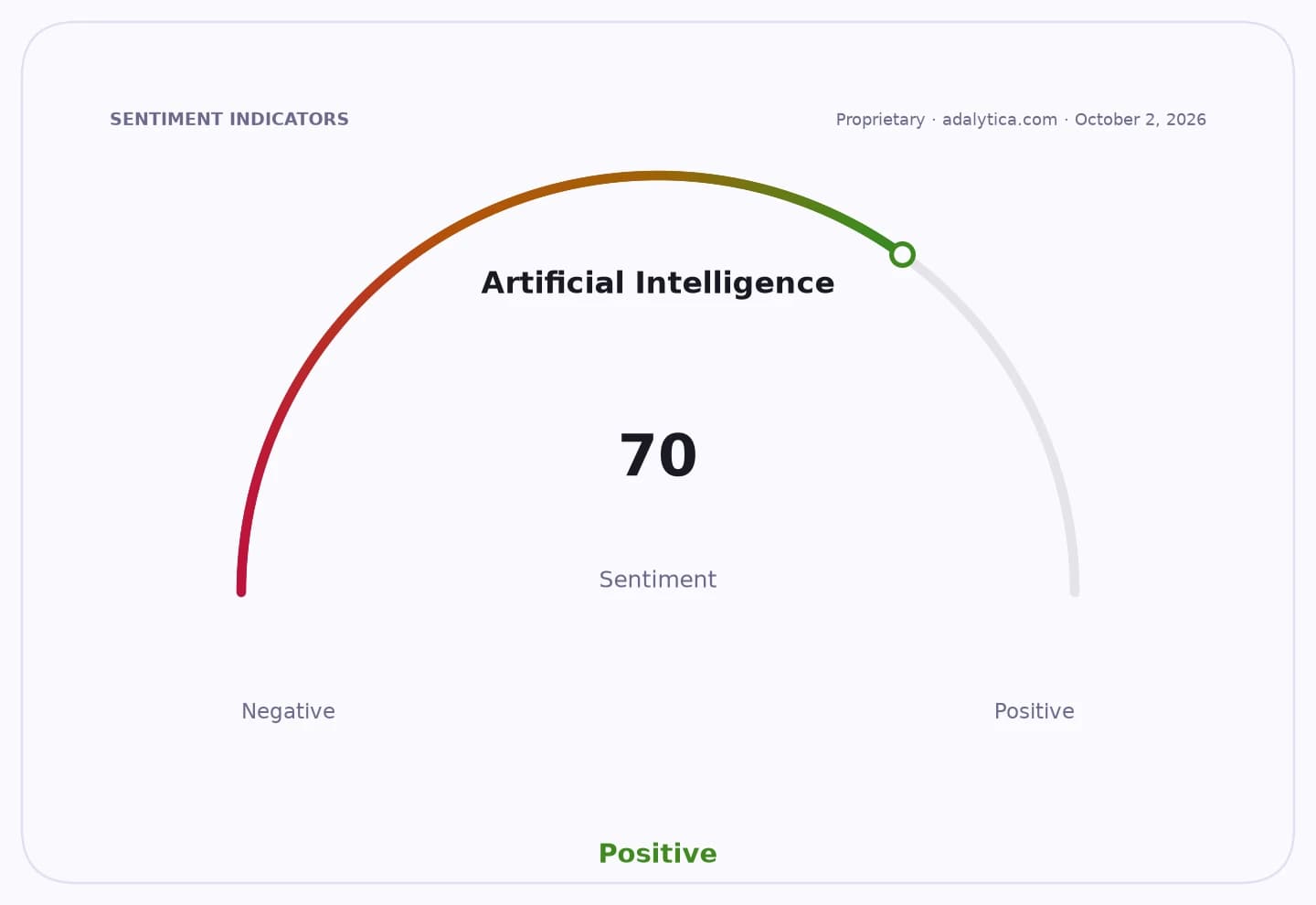
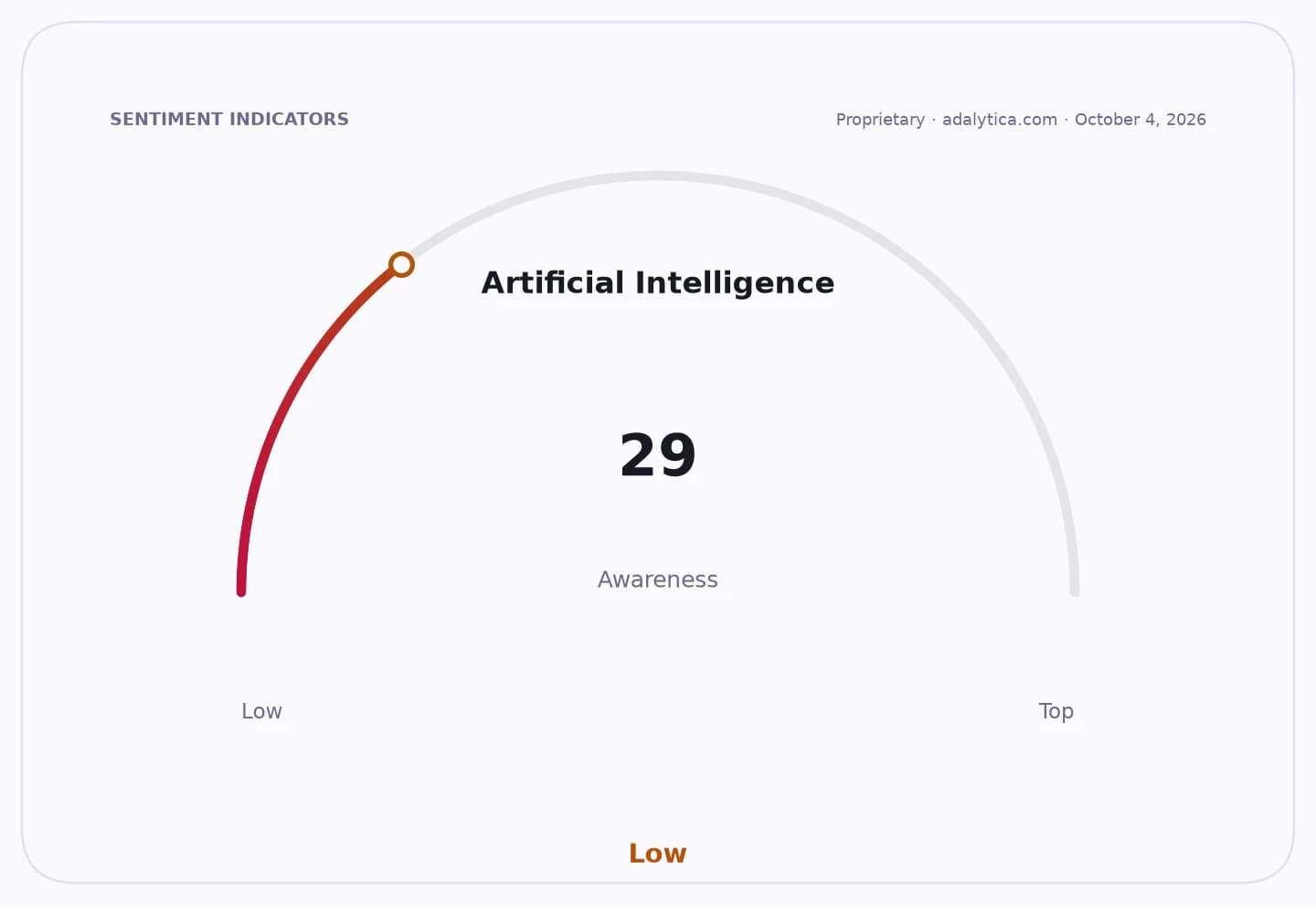
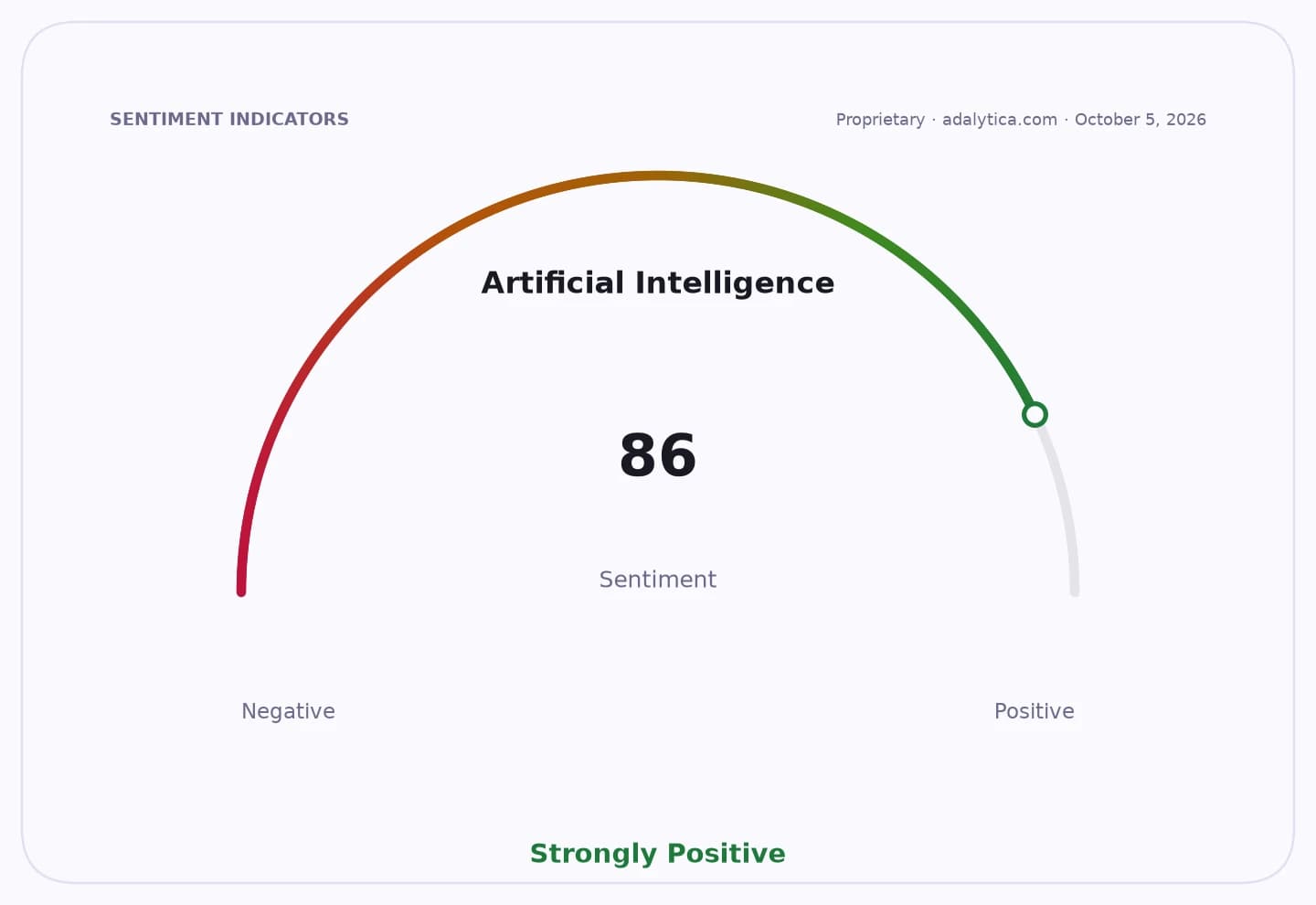
Adalytica’s AI gauge suggests the broader theme is attracting intense market interest, with sentiment at 86, or “Extreme Greed,” even as awareness remains in “Fear” territory at 29. That mix points to a market eager to own AI exposure but still uncertain about where the durable winners will be. Match is arguing it belongs in the second camp: not as an AI company, but as a company that can use AI without surrendering the human interaction at its center.
The near-term test for Match is whether it can keep growing paid users and engagement while threading AI into the product without diluting trust. For now, Rascoff is betting that the rise of AI will sharpen, not weaken, the value of human dating — and investors will judge that claim on whether Tinder and Hinge can keep converting matches into revenue.
| Entity | Gains | Losses |
|---|---|---|
| Match Group | ▲AI-enhanced matching and retention | ▼If AI substitutes for dating apps |
| Bumble | ▲Industry focus on human connection | ▼Weaker valuation if AI threatens category |
| AI agents | ▲Broader adoption in daily life | ▼Scrutiny over emotional substitution |
| Paid dating app users | ▲Better matching tools | ▼More competition for attention |