Germany’s Chancellor Friedrich Merz is reshaping the top ranks of his government as the country’s mainstream parties struggle to slow the far-right’s rise, a political adjustment that could prove as important for Europe’s largest economy as any near-term policy package.
Merz reshuffle may support German assets
The reshuffle matters because it is not just about personnel. It is a test of whether Merz can restore credibility to the governing coalition, improve delivery on growth and migration, and blunt the Alternative for Germany’s appeal before disillusion hardens into a more permanent electoral shift. For investors, the stakes are broader: a government seen as more stable and competent would be better placed to support fiscal reforms, industrial policy and defense spending at a time when Germany’s economy is still searching for traction.
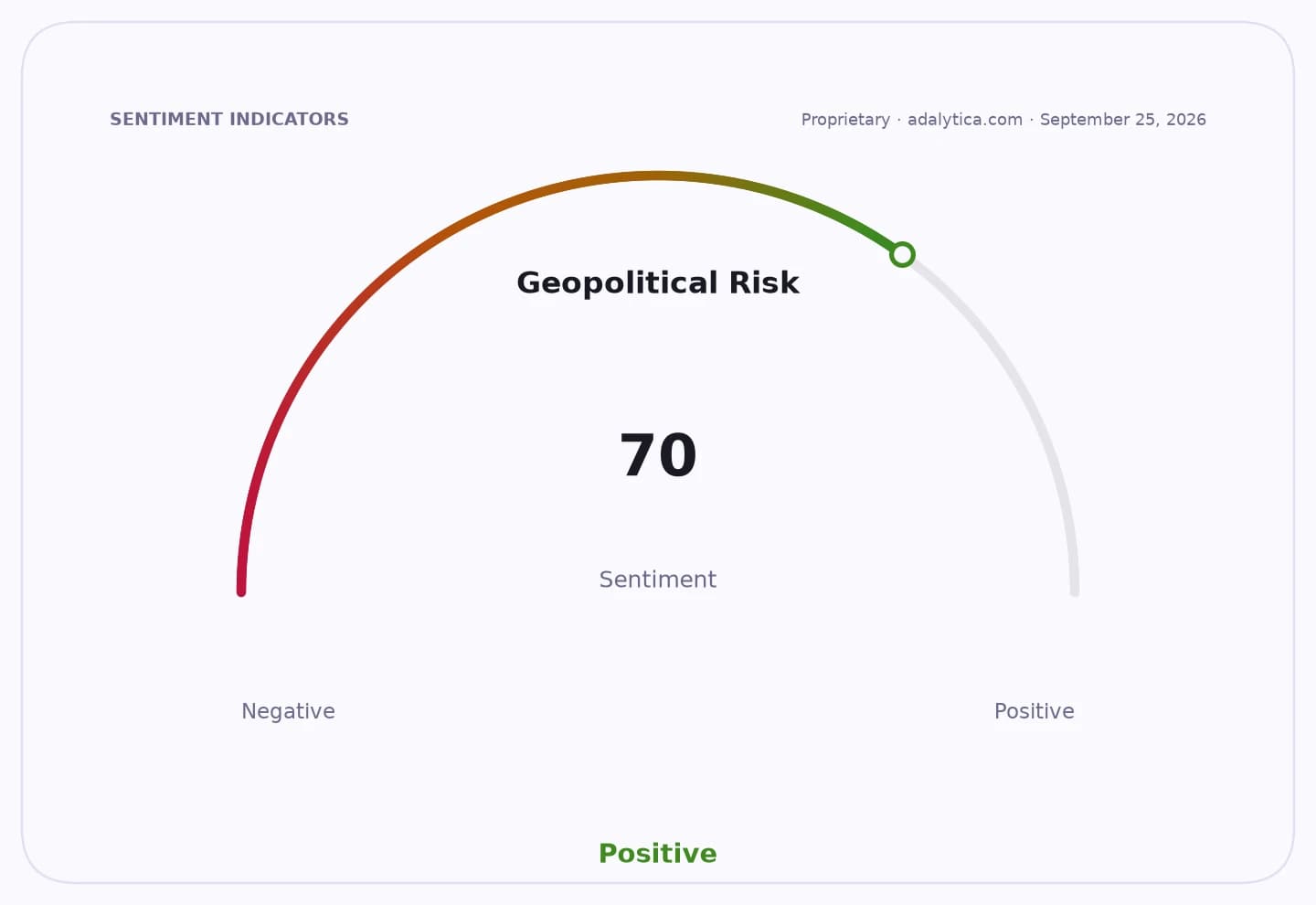
Sentiment IndicatorsⓘProprietary · adalytica.com · July 24, 2026
This is a snapshot — live sentiment, awareness and momentum for 130+ markets update continuously in the dashboard.Open AlphaPulse
The immediate challenge is economic as much as political. Germany remains the weak spot in the euro area, with business confidence fragile, manufacturing under pressure and consumers still cautious after two years of stagnation. In that environment, cabinet changes are interpreted less as a search for fresh faces than as an effort to impose discipline on a coalition that has often looked reactive. If Merz can lift approval and show a clearer governing line, it could help revive confidence in policy continuity, particularly around tax, energy and investment decisions that companies have delayed.
Markets have already started to reflect the tension between political risk and policy hopes. The iShares MSCI Germany ETF, traded as EWG, has recently slipped back from around 42.6 in early May to 40.59 on July 23, while remaining near its 50-day moving average. The move is not dramatic, but the technical picture has weakened: the relative strength index has dropped to 30.2, a level that points to a stretched selloff, and the ETF is now below its 200-day average. That suggests investors are taking profits and reassessing Germany exposure as growth doubts and political uncertainty persist.
The euro has been more resilient, with FXE trading around 105.03 on July 23, but it too has softened from earlier highs above 110 earlier this year. Standard technical indicators show the fund below both its 50-day and 200-day moving averages, underscoring how difficult it has been for the currency to sustain momentum. That reflects a market that still sees the euro area as dependent on policy follow-through in Berlin and on a broader pickup in regional growth.
The political logic of the reshuffle is clear. Merz needs to show voters that mainstream government can deliver faster on migration control, infrastructure spending and business-friendly reforms, while also containing the perception that the political center is out of ideas. The far right has benefited across Europe from the same mix that weighs on Germany: slower growth, higher living costs, and frustration with institutional drift. Reassigning key posts may help sharpen message discipline, but it will not by itself solve the deeper problem of whether the coalition can execute.
That leaves the market’s judgment hinging on delivery rather than symbolism. A successful reset would support German equities, improve the case for euro stability and potentially ease pressure on domestic cyclicals that depend on a stronger home economy. Failure, by contrast, would strengthen the argument that Germany is entering a longer phase of political fragmentation, with more frequent leadership changes and less room for the policy coordination needed to lift investment.
For investors, the next catalyst is whether the reshuffle leads to measurable movement on budgets, industrial policy and migration enforcement. If it does, German risk assets could regain some lost ground. If it does not, the reshuffle will be read as a defensive move against populism rather than the start of a credible recovery in the political center.
| Entity | Gains | Losses |
|---|---|---|
| Merz and mainstream coalition | ▲Fresh mandate, tighter control | ▼Reform delay risk |
| Alternative for Germany | ▲Polarization, protest vote | ▼Center-right recovery |
| German equities | ▲Policy clarity, confidence rebound | ▼Prolonged political drift |
| Euro | ▲Credible fiscal and reform path | ▼Continued Germany weakness |