MEXC’s decision to stop serving users in Russia and Belarus is another sign that global crypto exchanges are hardening access to sanctioned markets, and that shift matters because it narrows liquidity for millions of traders while pushing more activity toward less regulated venues.
MEXC Stops Serving Russia and Belarus Users

The exchange said affected customers will receive individual notices on how to close positions and withdraw assets, framing the move as part of a broader push to strengthen regulatory compliance. MEXC is no minor player: CoinMarketCap ranks it ninth globally, with about $900 million in daily trading volume, and it has been popular with Russian users.
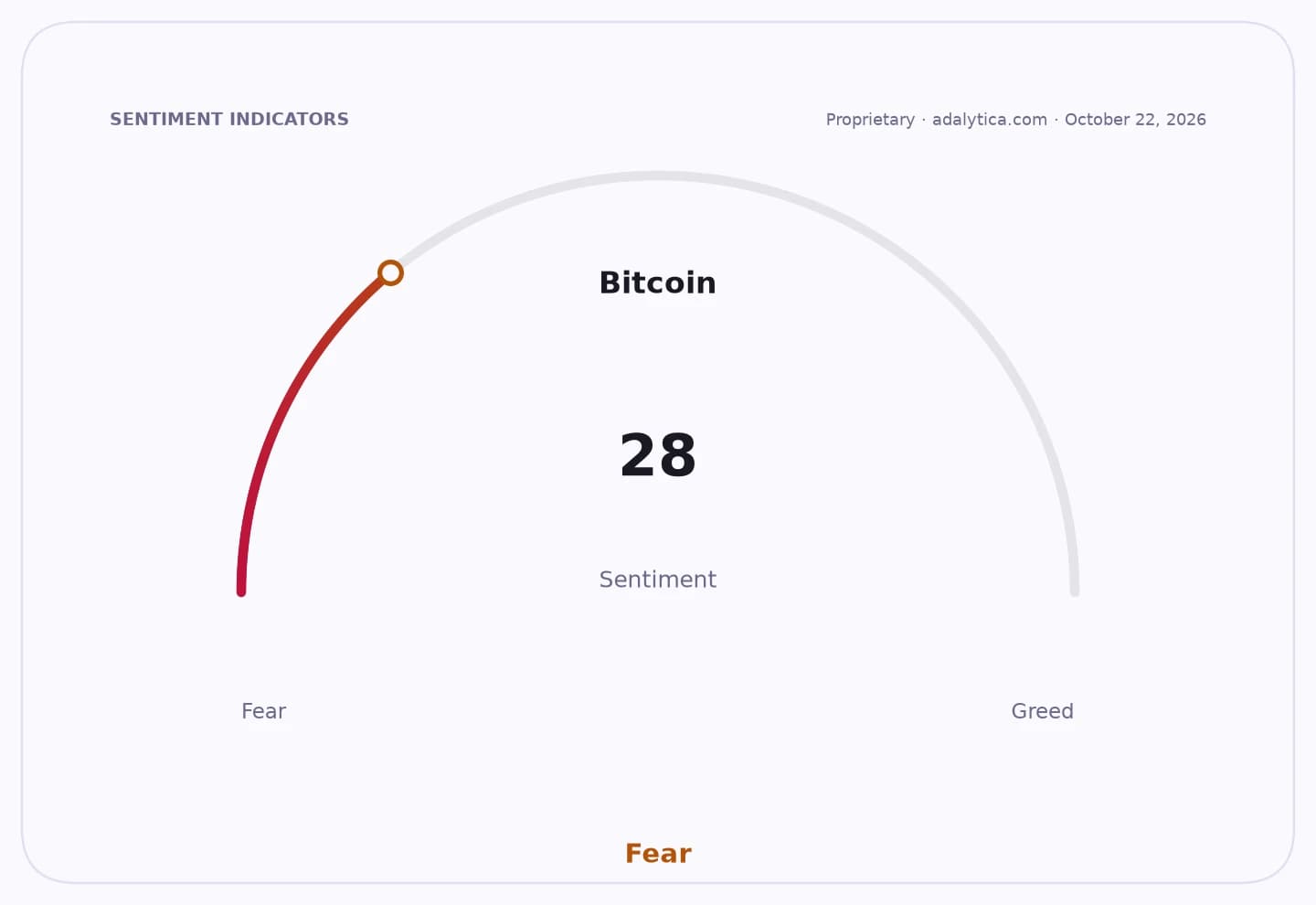
Sentiment IndicatorsⓘProprietary · adalytica.com · October 25, 2026
This is a snapshot — live sentiment, awareness and momentum for 130+ markets update continuously in the dashboard.Open AlphaPulse
For investors, the significance goes beyond one platform. The withdrawal adds to a growing pattern of foreign exchanges reassessing the economics of doing business in Russia as compliance costs, sanctions exposure and future legal uncertainty rise. Bitget announced an exit from Russia, Belarus and Kazakhstan last week, and market participants are already gaming out who may follow. Bybit and OKX are seen as the most exposed because they have larger Russian communities, while smaller venues such as Gate.io and BingX could become relative beneficiaries if users keep migrating instead of exiting crypto altogether.
The timing is especially important because Russia is heading toward tighter rules. A law due to take effect in 2027 would restrict certain resident operations through relevant market participants, giving offshore exchanges a long runway of regulatory uncertainty. That makes the decision less about one-off geopolitics and more about a structural repricing of cross-border crypto access in Eastern Europe.
The economic effect is likely to be messy rather than immediate. Users will scramble to unwind positions, move balances and find alternative venues, which could pressure volumes on compliant exchanges while boosting over-the-counter channels, self-custody wallets and smaller platforms willing to take the risk. For the market, that means less transparency and potentially more fragmentation in a segment already defined by regulatory arbitrage.
Bitcoin’s own trading backdrop suggests the market is not pricing this as a broad bullish catalyst for crypto risk. BTC has been stuck around $80,612 after a steep slide, with conventional technical readings showing the token below its 50-day moving average and momentum weak. Adalytica’s Bitcoin Fear & Greed Index is flashing extreme fear, underscoring how fragile sentiment remains even as exchanges continue to prune higher-risk jurisdictions.
The investment takeaway is clear: this is a compliance-driven consolidation trade, not a growth story for the excluded market. The beneficiaries are the exchanges, brokerages and infrastructure providers that can absorb volume without tripping sanctions alarms; the losers are venues dependent on Russian flow and traders forced into a smaller, more expensive market. If the pattern spreads, the real opportunity is not in chasing the local exit stories, but in owning the platforms and market-structure firms that can become the new toll roads for global crypto liquidity.
| Entity | Gains | Losses |
|---|---|---|
| MEXC | ▲compliance profile | ▼Russian user growth |
| Bybit / OKX | ▲share if rivals exit | ▼exposure to sanctions risk |
| Gate.io / BingX | ▲potential inflows | ▼compliance scrutiny |
| Russian crypto traders | ▲limited alternatives | ▼access, liquidity, pricing |