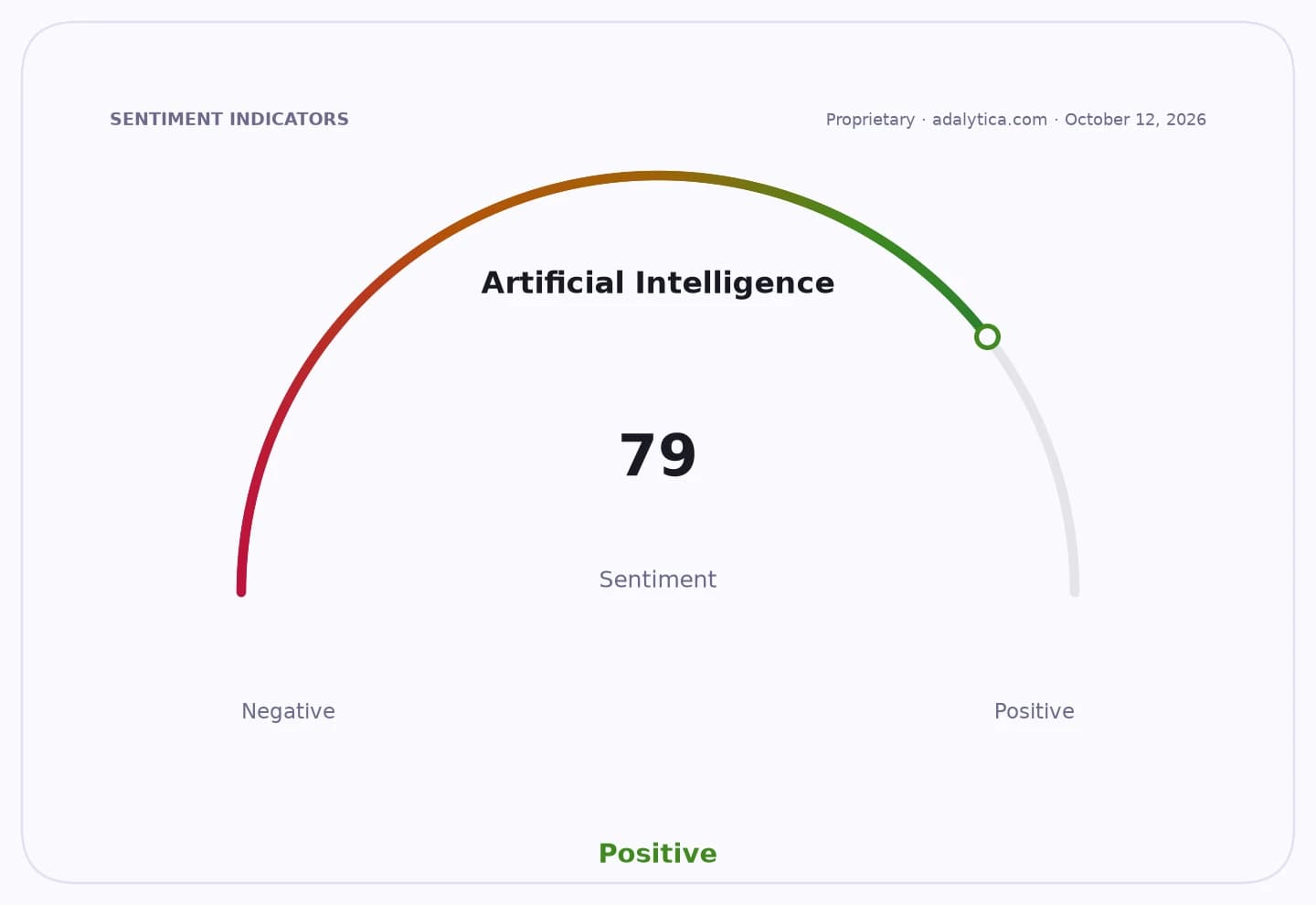
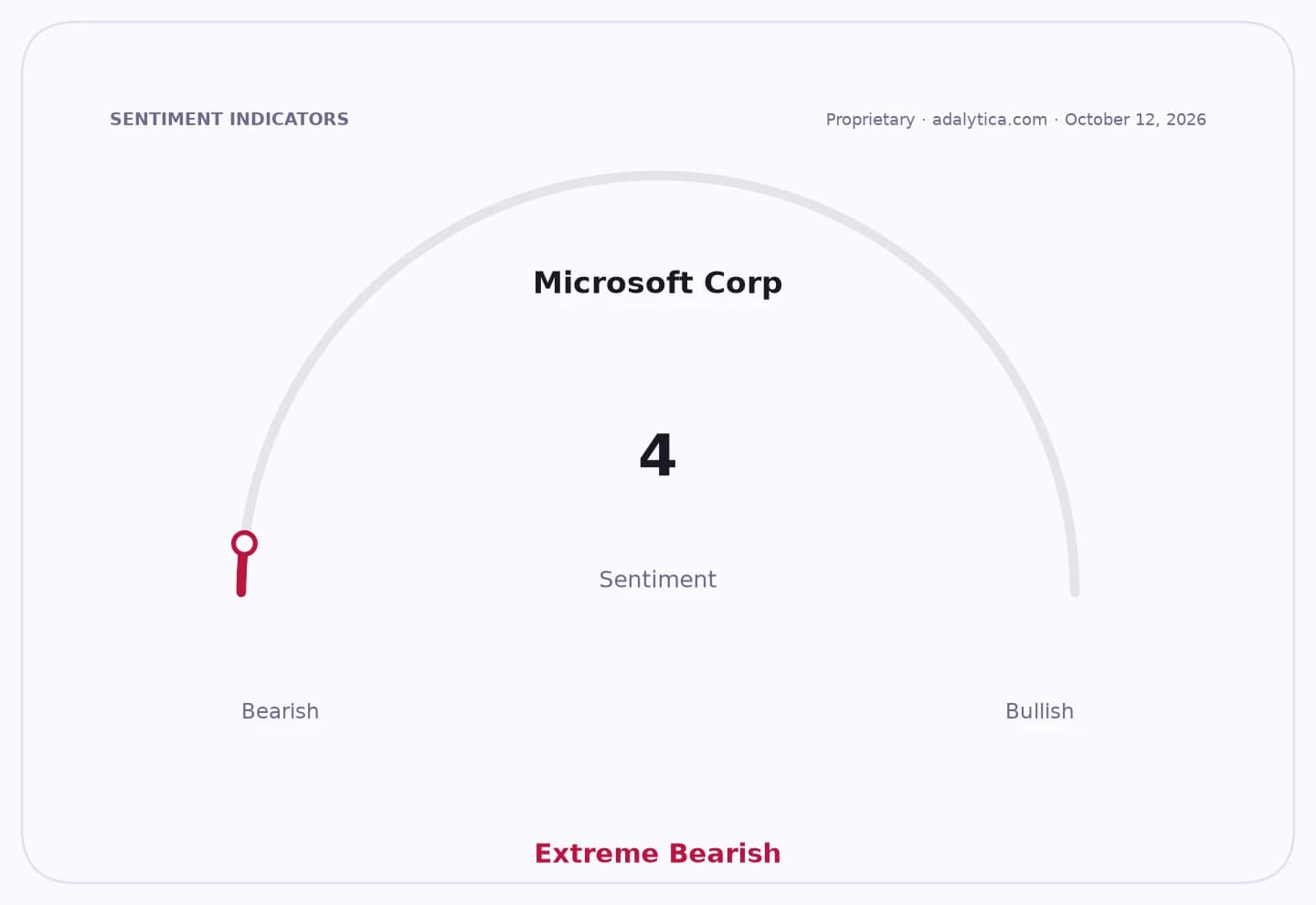
Microsoft is still the market’s pricier bet on AI cloud, even after a bruising pullback and a sharp reset in sentiment, while Alphabet is trading at a lower valuation despite its own heavy capital spending on data centers and AI infrastructure.
Microsoft vs Alphabet AI Cloud Valuation Gap

That gap matters because the AI boom is no longer just about growth. It is now about how much investors are paying for that growth after both companies have taken margins and cash flow hit from the race to build compute capacity, power infrastructure and frontier-model capability.
Sentiment IndicatorsⓘProprietary · adalytica.com · October 12, 2026
This is a snapshot — live sentiment, awareness and momentum for 130+ markets update continuously in the dashboard.Open AlphaPulse

Microsoft shares closed at $539.59 on Oct. 12, with the stock rebounding above its 50-day moving average and holding well above its 200-day average of $432.98. Alphabet finished at $351.70, also above its 50-day and 200-day averages of $346.05 and $339.86, respectively. By that yardstick both stocks still look technically firm, but Microsoft’s valuation remains the richer one.
On a simple price-to-sales basis, Microsoft trades at about 13.1 times revenue, using a market capitalization of roughly $4.01 trillion and trailing revenue of $281.7 billion. Alphabet trades at roughly 7.0 times sales, based on a market value near $2.14 trillion and trailing revenue of $307.4 billion. That makes Alphabet the cheaper AI cloud play on sales, even though Microsoft’s Azure and Copilot ecosystem still commands a premium from investors betting it can convert AI demand into faster earnings growth.

The spending burden is the main reason the comparison has sharpened. Microsoft has said continued investment in AI infrastructure and growing AI product usage are weighing on gross margin percentage, while Alphabet’s filings point to heavy capital outlays for technical infrastructure, servers, network equipment and data center build-outs. The two companies are effectively pre-paying for future AI demand, and investors are trying to judge which one can monetize it faster.
The market has not been subtle about the risk. Microsoft’s Adalytica earnings sentiment snapshot has slumped to “Extreme Fear,” while Alphabet’s stock has held up better, helped by a calmer technical profile and a lower valuation starting point. Microsoft’s recent volatility also leaves the stock vulnerable if earnings do not show that AI spending is translating into cloud acceleration and margin recovery.
For investors, the decision is becoming less about who spends more and more about who earns back that spending quickest. Microsoft still looks like the higher-quality compounder, but Alphabet is the cheaper entry point if the AI capex cycle stays intense and cloud growth broadens beyond Microsoft’s premium multiple. The next read on both names will come from quarterly cloud growth, capital expenditure guidance and any sign that AI infrastructure spend is slowing.
| Entity | Gains | Losses |
|---|---|---|
| Alphabet | ▲Lower sales multiple | ▼Premium-growth narrative |
| Microsoft | ▲AI leadership premium | ▼Valuation cushion |
| Value-focused investors | ▲Cheaper entry point | ▼Less certainty on winner |
| AI cloud rivals | ▲Bigger infrastructure demand | ▼Heavier capital burden |