Microsoft’s China business is under mounting pressure as rising U.S.-China tensions and regional security risks make one of the world’s most important technology markets harder to sell into, harder to operate in and harder to forecast.
Microsoft China business faces geopolitical pressure
That matters because China was never just another foreign market for Microsoft. It has been a strategic customer base for enterprise software, cloud services and developer tools, while also sitting inside a broader Asian supply chain and regulatory web that now looks increasingly exposed to politics. When geopolitics forces a company to narrow product offerings, rethink partnerships or accept slower growth in a market as large as China, the effect reaches beyond revenue: it alters margin structure, capital allocation and the long-term addressable market investors use to value the business.
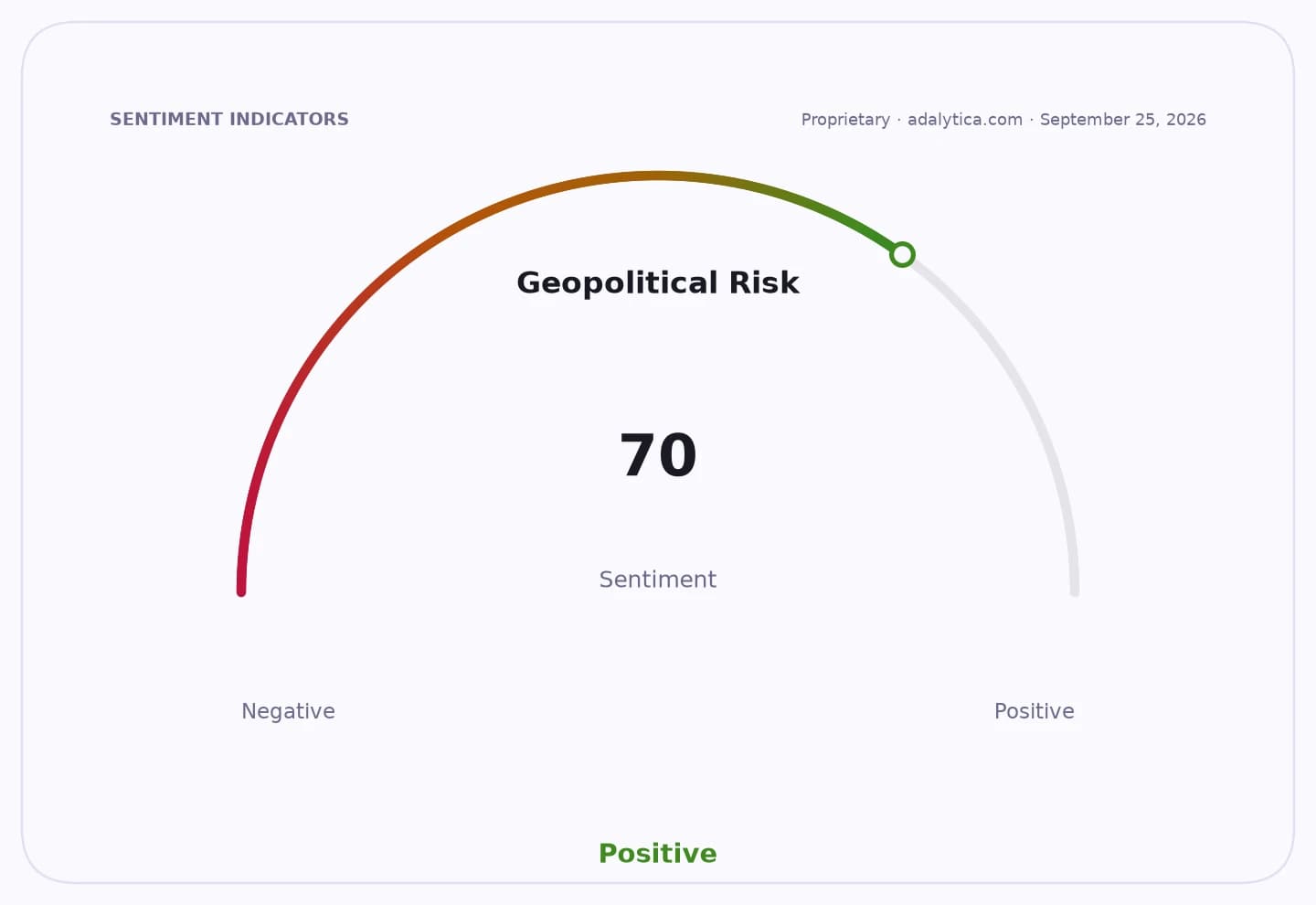
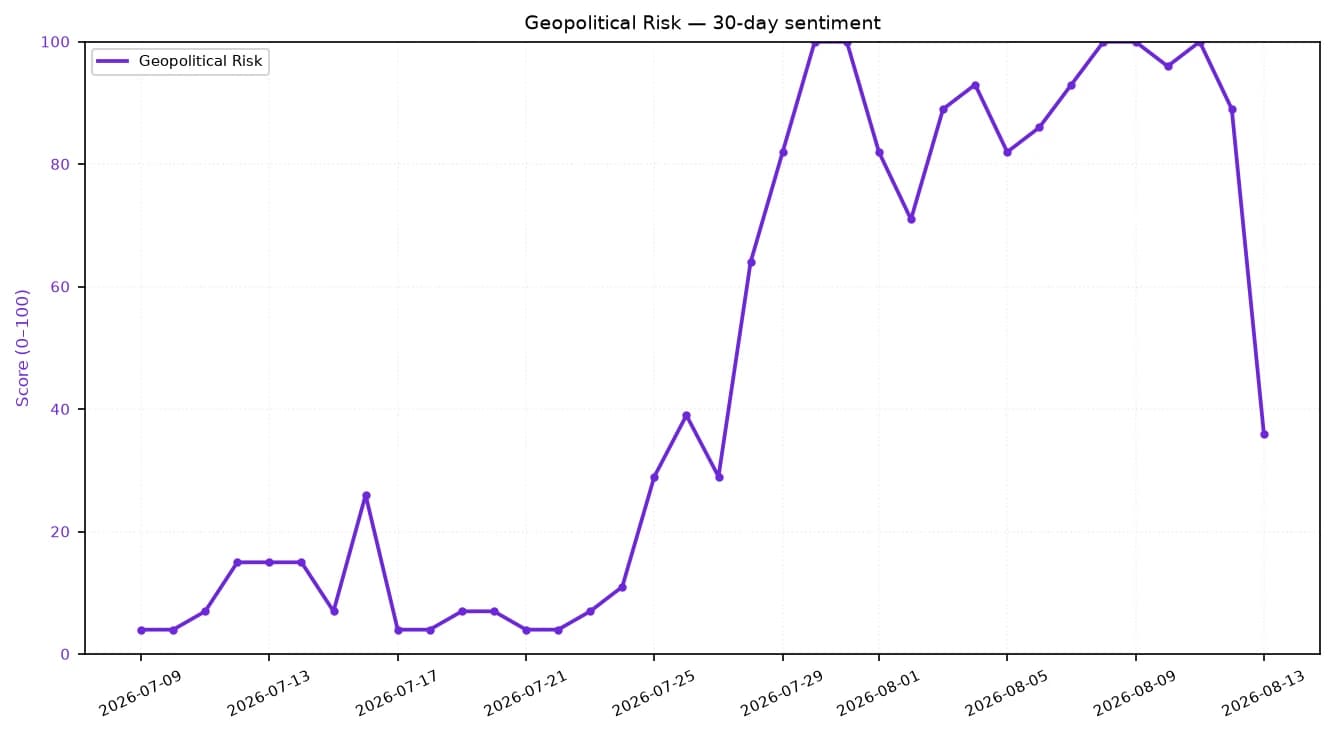
Sentiment IndicatorsⓘProprietary · adalytica.com · August 13, 2026
This is a snapshot — live sentiment, awareness and momentum for 130+ markets update continuously in the dashboard.Open AlphaPulse
The pressure comes as military and diplomatic friction across Asia has intensified, including Taiwan’s stepped-up readiness against a possible blockade scenario and wider regional disputes involving China, the Philippines and India. For U.S. technology groups, the result is a more volatile operating environment marked by export controls, scrutiny over data handling and a greater risk that commercial ties become collateral damage in strategic competition.
Microsoft’s own filings underscore that risk. The company has warned that conflict, abrupt political change and U.S. import controls can disrupt operations, raise costs and complicate supply chains. Those risks are not theoretical for a business whose products depend on cross-border software distribution, data infrastructure and enterprise relationships in markets where regulators are increasingly willing to pull technology decisions into national security debates.
For investors, the issue is not only near-term sales in China. It is whether the market should assign a lower growth multiple to Microsoft’s international enterprise franchise if China becomes a persistently constrained opportunity rather than a cyclical one. That is particularly relevant after a volatile run in the shares, with Microsoft’s stock showing sharp swings around geopolitical risk and still trading well below recent highs even after a powerful rebound, while technical readings such as the relative strength index have been elevated, suggesting the market has already priced in a lot of optimism.
The bull case is that Microsoft can offset a softer China contribution through stronger U.S. cloud demand, AI spending and enterprise subscriptions elsewhere. The bear case is that China was never fully replaceable: even modest losses there matter for a company of Microsoft’s scale, and geopolitical fragmentation can gradually erode both revenue growth and operating leverage.
The broader message for global technology is that China exposure is no longer just a question of market size. It is a question of strategic survivability. If tensions continue to harden, multinationals from software to semiconductors may face a slower, more expensive and more politically constrained presence in the world’s second-largest economy — and investors will have to decide how much of that decoupling is already in the price.
| Entity | Gains | Losses |
|---|---|---|
| U.S. tech rivals outside China | ▲More domestic demand share | ▼Less China diversification |
| Microsoft shareholders with AI exposure | ▲U.S. growth offsets | ▼China revenue optionality |
| Chinese buyers and partners | ▲Local substitutes gain | ▼Access to Microsoft products |
| Geopolitical-risk hedges | ▲Higher demand | ▼Long-duration growth stocks |