A new Microsoft Research and MIT model that learns from forecast errors could make the awkward middle ground of weather prediction far more useful for energy traders, farmers and disaster planners.
Microsoft Research MIT weather model improves forecasts

That matters because forecasts beyond about two weeks have long been unreliable enough to blunt real economic decisions. The new system, described in Nature, improves subseasonal forecasts — the two- to six-week window that sits between day-to-day weather and seasonal outlooks — by teaching artificial intelligence to correct the predictable biases in existing models rather than trying to replace them outright.
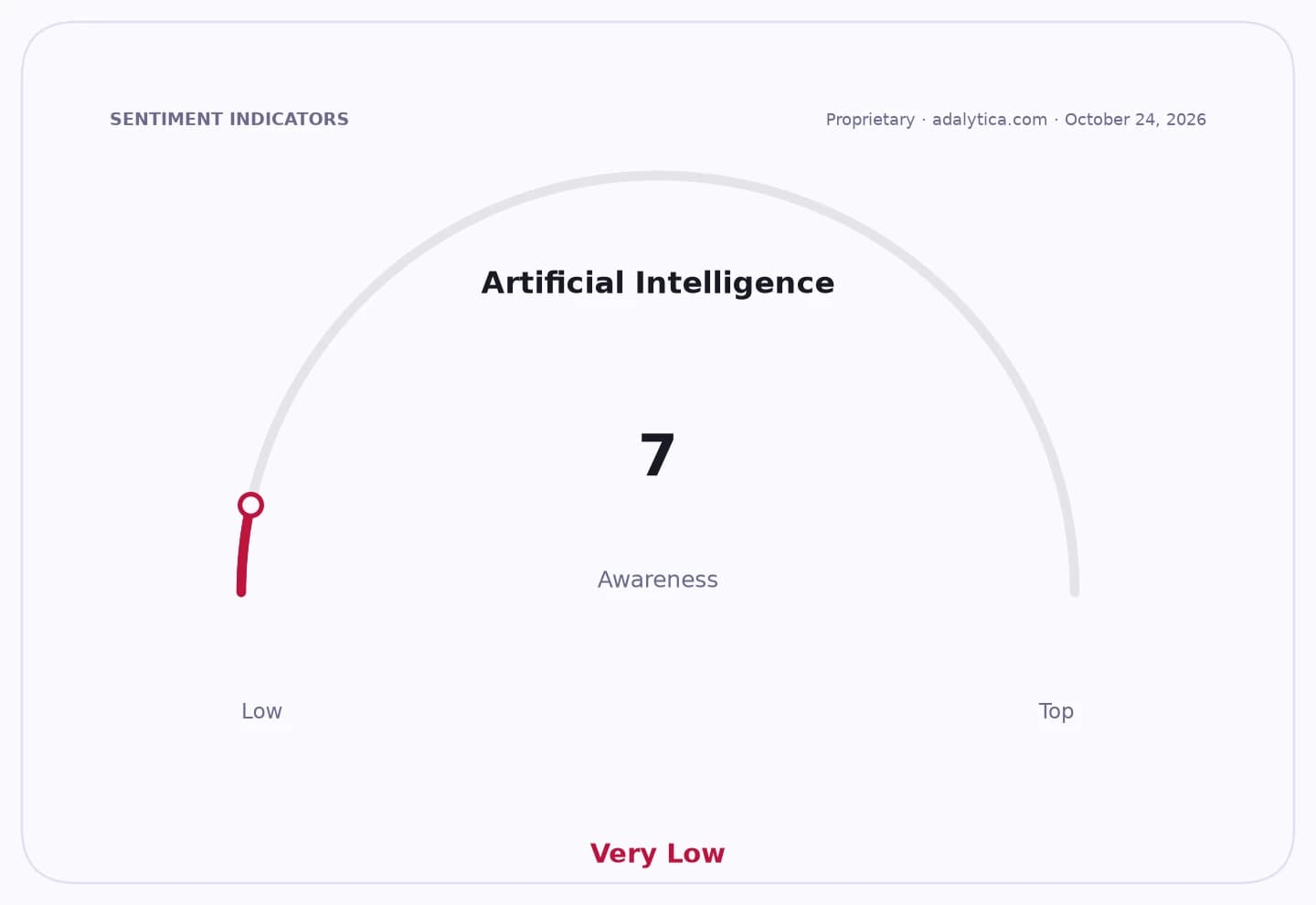
Sentiment IndicatorsⓘProprietary · adalytica.com · October 16, 2026
This is a snapshot — live sentiment, awareness and momentum for 130+ markets update continuously in the dashboard.Open AlphaPulse
The practical payoff could be large. Better long-range guidance on rainfall, temperature and pressure helps utilities manage power demand, farmers time planting and harvesting, and emergency managers prepare for extreme weather. In a world where climate swings are making volatility more expensive, even modest gains in forecast quality can translate into better capital allocation and lower operating risk.
The researchers said the technique, called probabilistic bias correction, doubled the accuracy of predictions over that period when layered onto a benchmark system. In tests submitted to the European Centre for Medium-Range Weather Forecasts, it improved the operational subseasonal model in 98% of precipitation cases, 92% of temperature cases and 91% of pressure cases. It also doubled the accuracy of the center’s own AI forecast system.
Just as importantly, the model beat climatology — the long-term average that forecasters have often relied on when longer-range predictions become too noisy. That is a meaningful threshold. If an AI system can consistently outperform historical averages at this horizon, it moves weather forecasting from a rough guide toward a decision tool.
Investors should care because weather risk shows up everywhere in the economy. Power demand, crop yields, shipping schedules, insurance claims and even municipal budgets all swing with the forecast. More reliable two- to six-week outlooks could improve pricing and planning for energy producers, agriculture companies and catastrophe-exposed businesses, while also sharpening the earnings visibility of firms that live or die by weather patterns.
The work also reinforces a broader investment theme: Microsoft is not just selling AI software, it is helping build the infrastructure and applied science that make AI commercially useful. For long-term holders, that matters more than any single demo. Practical AI that reduces uncertainty in a huge, recurring real-world market has a better chance of compounding into durable value than flashy models that impress only in a lab.
The stock market may focus on chips, cloud revenue and chatbot adoption, but this is the sort of quiet breakthrough that can expand the addressable market for AI over time. Better forecasting does not just make tomorrow’s weather report nicer — it can make entire industries more efficient. Investors would do well to keep this one on the watchlist.
| Entity | Gains | Losses |
|---|---|---|
| Microsoft Research | ▲Applied AI credibility | ▼Traditional forecast vendors |
| MIT | ▲Research prestige | ▼Climatology-only methods |
| Energy and agriculture users | ▲Better planning | ▼Weather-sensitive volatility |
| Insurers and emergency planners | ▲Earlier risk signals | ▼Models with large forecast errors |