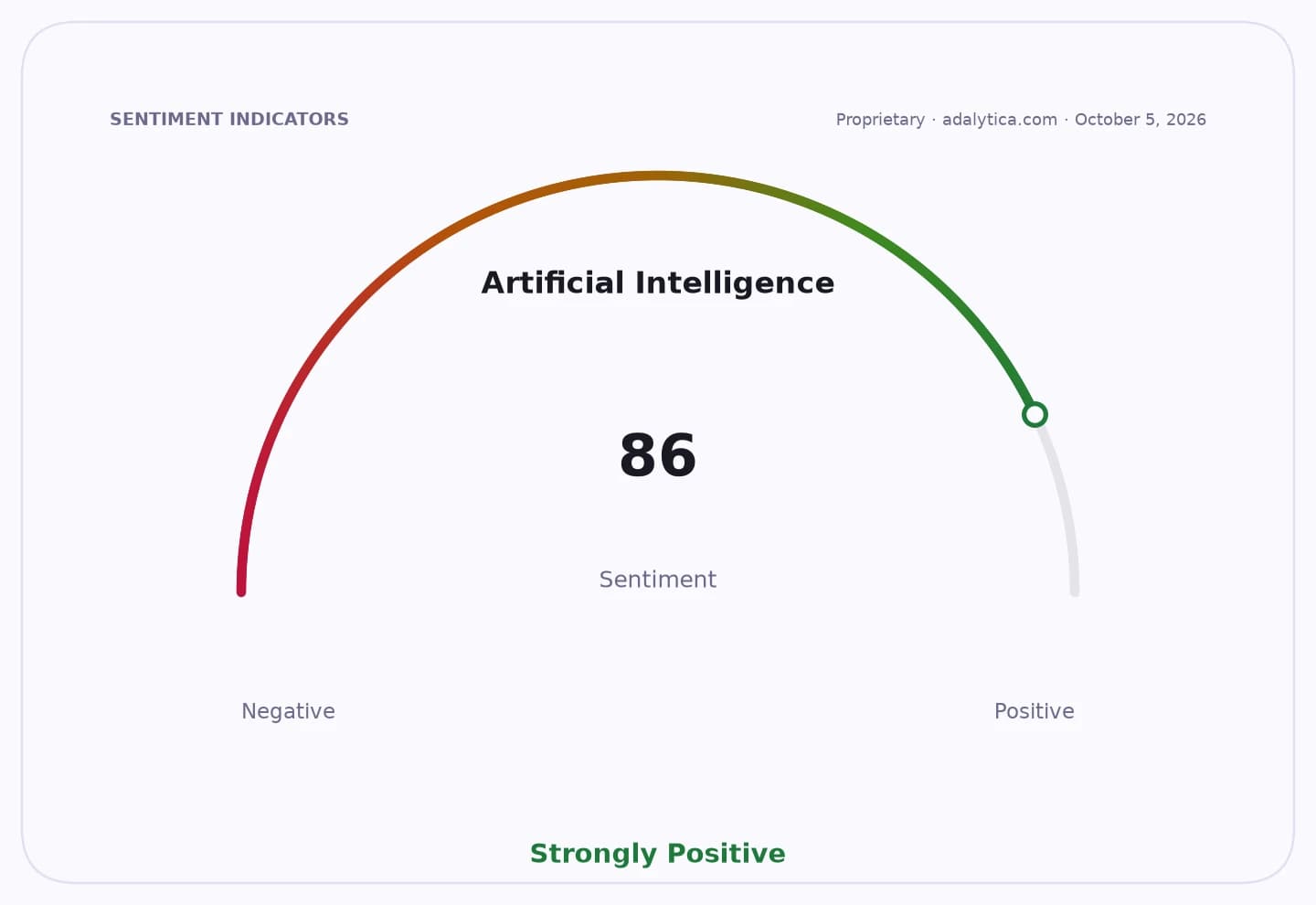
AI governance is moving toward a test of whether the industry can police itself before a major safety failure forces tougher rules, with Microsoft, Nvidia and Alphabet all exposed to rising compliance costs and slower product rollout if governments decide voluntary guardrails are not enough.
Microsoft Nvidia Alphabet face AI regulation risk

The warning from Forrest that policymakers should not be pushed into action by a “human catastrophe” lands at a delicate moment for the sector. The biggest beneficiaries of the AI boom have spent heavily to scale models and infrastructure, but the regulatory risk is no longer theoretical: Microsoft has already flagged that the EU’s AI Act and other government restrictions could increase costs and limit the development, deployment and cross-border access of advanced AI models. Nvidia and Alphabet have made similar disclosures, underscoring that frontier AI is becoming a policy issue as much as a technology race.
Sentiment IndicatorsⓘProprietary · adalytica.com · September 30, 2026
This is a snapshot — live sentiment, awareness and momentum for 130+ markets update continuously in the dashboard.Open AlphaPulse

That matters economically because AI remains one of the main drivers of capital spending across large-cap tech and, by extension, a growing share of cloud, chips and software demand. A more restrictive rulebook would not just add legal overhead; it could reshape the economics of training and deploying models, slow the pace of product launches and raise the cost of compliance across the supply chain. For Microsoft, which has leaned on AI to justify premium valuation and sustained investment in data centers, the stakes are especially high. The stock has regained ground and trades near $509, above its 50-day and 200-day moving averages, but its latest move has come alongside technical signs of consolidation rather than outright momentum.
Investors are also being asked to price a less visible risk: that a voluntary framework may delay the kind of formal regulation that could eventually create clearer rules of the road. The current arrangement can be read two ways. Bulls argue self-regulation gives the industry time to innovate, preserves U.S. competitiveness and avoids a blunt policy response that could choke off productivity gains. Bears say it leaves the market vulnerable to a sudden regulatory reset if a major safety incident, privacy breach or misuse event forces governments to act under political pressure.
Artificial Intelligence — 30-day sentimentadalytica.com
Explore this data interactively — full history, time series and cross-market comparisons.Open AlphaPulse
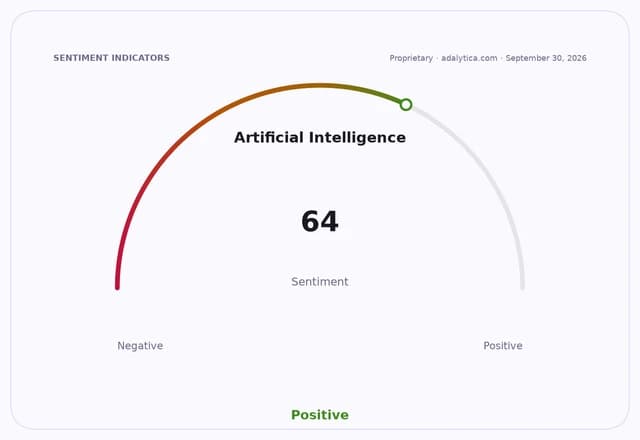
The market backdrop shows why that tension matters now. Microsoft’s latest earnings sentiment reading from Adalytica sits at 86, described as “Extreme Greed,” suggesting expectations for AI-linked growth remain elevated even after a sharp run-up in the shares. Nvidia’s stock, meanwhile, remains well above its longer-term trend and is still being treated as the purest proxy for AI infrastructure demand. Alphabet has recovered alongside the broader AI trade, but it too faces the same policy overhang as regulators scrutinize data use, model safety and competitive conduct.
For investors, the key question is not whether AI regulation comes, but how abrupt and expensive it becomes. A slow, industry-led process would likely favor the biggest platforms and chipmakers, which have the legal and financial scale to absorb compliance. A sharper response after a “human catastrophe,” by contrast, could hit the entire AI complex at once through tighter model controls, more disclosure requirements and new limits on deployment. That asymmetry is why policy risk is now part of the valuation debate for the sector, not a side issue.
| Entity | Gains | Losses |
|---|---|---|
| Big Tech self-regulators | ▲More time to innovate | ▼Stricter immediate rules |
| Microsoft, Nvidia, Alphabet | ▲Frameworks they can influence | ▼Sudden post-crisis regulation |
| Governments and regulators | ▲Lower near-term political pressure | ▼Less direct control for now |
| AI skeptics and safety advocates | ▲Stronger oversight after incidents | ▼Delayed binding safeguards |