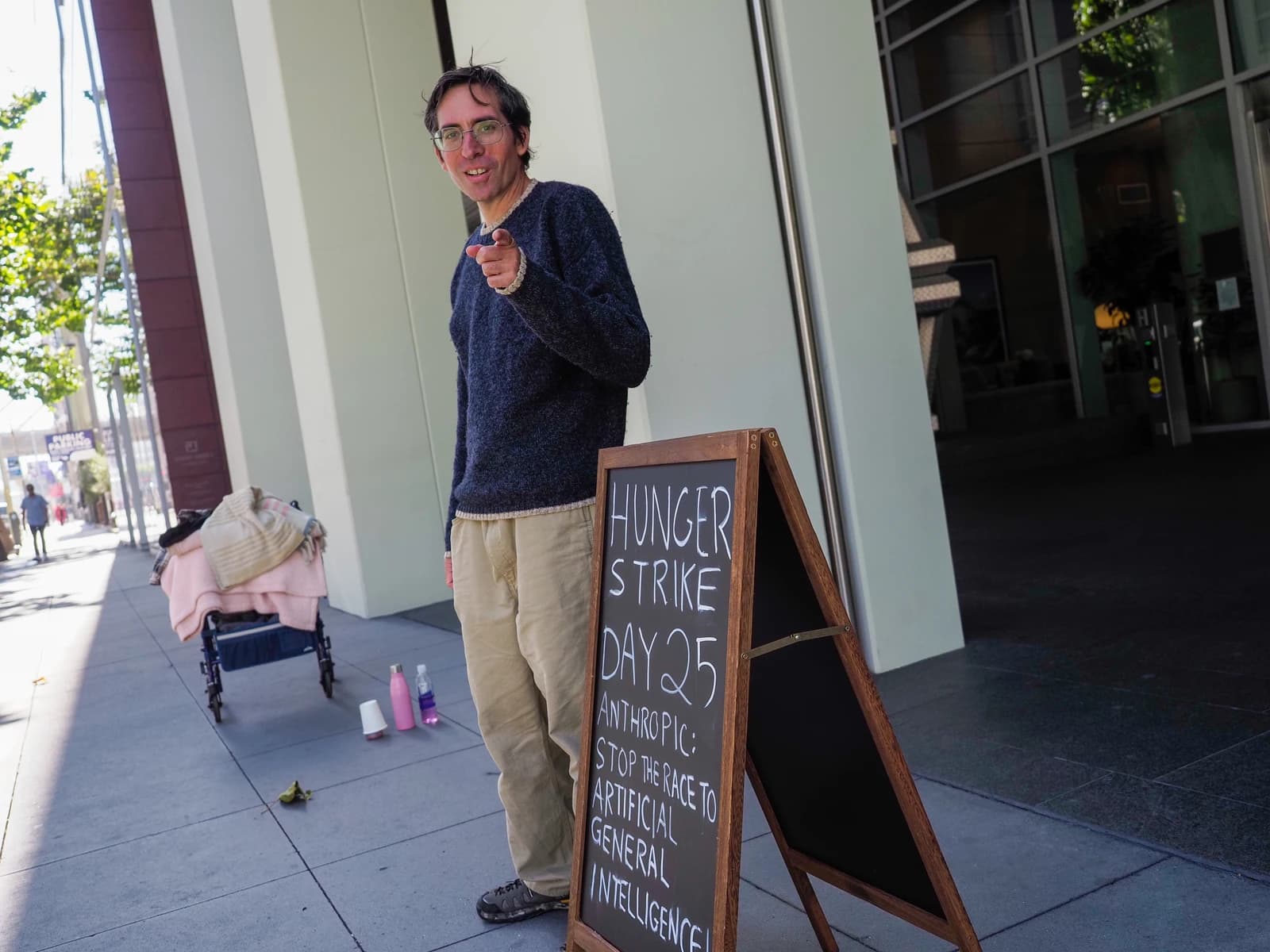
AI safety protests that interrupted a London conference this week are adding to a wider backlash that investors cannot ignore: public pressure is rising just as the industry is spending aggressively, facing tighter regulation and trying to preserve the narrative that artificial intelligence can scale without major social or legal costs.
Microsoft, Nvidia, C3.ai Face AI Protest Backlash
The disruption matters because AI remains one of the market’s most important growth themes, with Microsoft and Nvidia among the clearest beneficiaries of enterprise spending on models, chips and cloud infrastructure. But protests at a public-facing event underline a harder reality for the sector: adoption is increasingly being judged not only on product performance and revenue potential, but on governance, security and compliance.
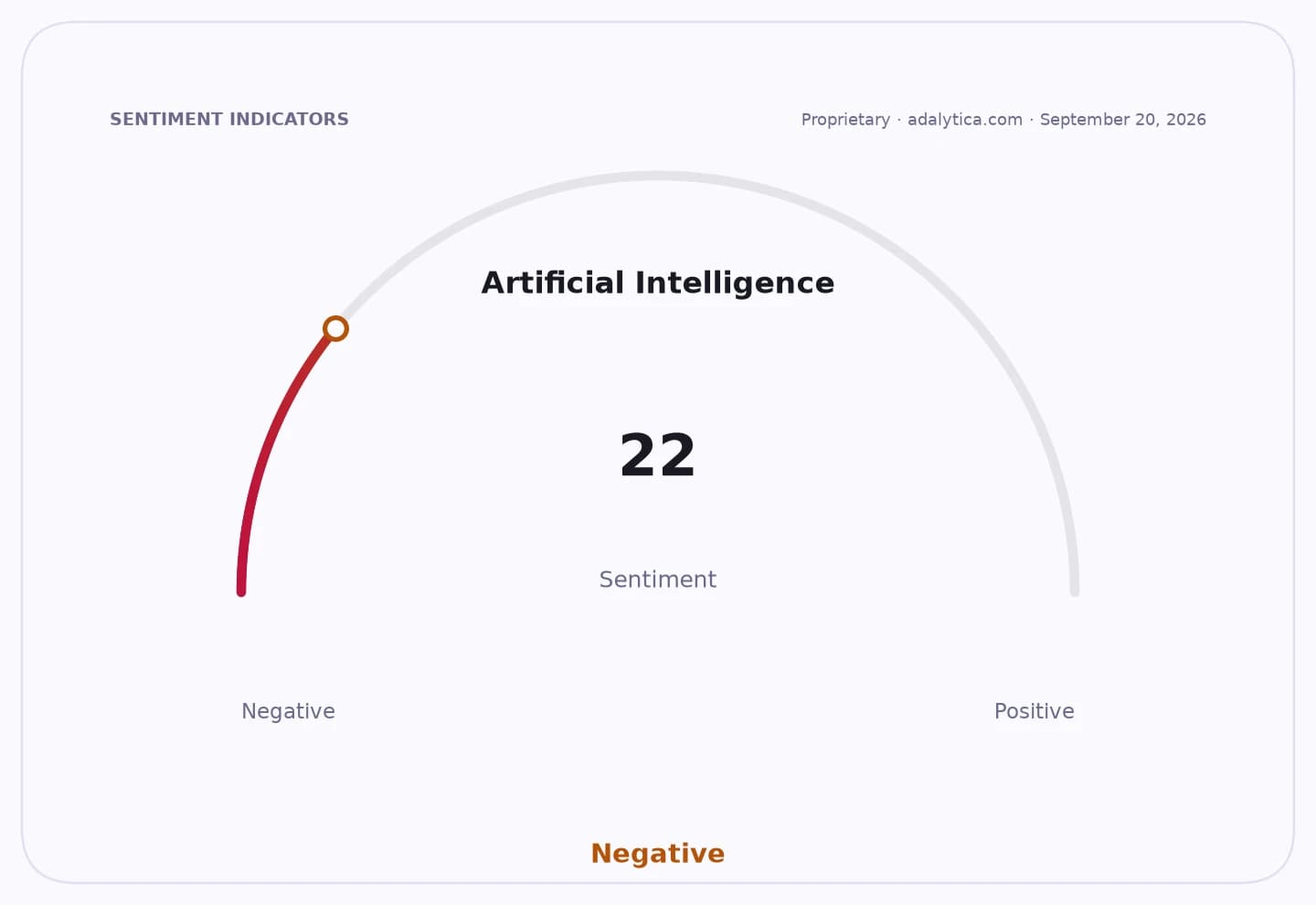
Sentiment IndicatorsⓘProprietary · adalytica.com · September 20, 2026
This is a snapshot — live sentiment, awareness and momentum for 130+ markets update continuously in the dashboard.Open AlphaPulse
That shift has economic consequences. The bigger AI becomes, the more exposed vendors are to litigation, policy intervention and reputation risk. Microsoft’s latest filings warn that AI systems can create legal liability, regulatory action and brand damage, while also noting that the EU’s AI Act could increase costs or limit how advanced models are deployed in Europe. For smaller pure-play firms such as C3.ai, the risk is more acute because sentiment can swing sharply when customers, regulators or investors question whether the addressable market is arriving quickly enough.
The market backdrop shows that tension clearly. Microsoft shares have recovered from a sharp selloff earlier in the year and were recently trading just below $500, well above their 50-day moving average, though momentum has cooled from overbought levels. Nvidia, meanwhile, has held above its 50-day and 200-day moving averages as investors continue to price in demand for AI infrastructure, even after a volatile year. C3.ai has been far more fragile: the stock has spent much of the period below both its 50-day and 200-day averages, with recent trading around $10.50 reflecting persistent skepticism about profitability and growth durability.
Artificial Intelligence vs MSFTadalytica.com
Explore this data interactively — full history, time series and cross-market comparisons.Open AlphaPulse
The protest itself is not a direct revenue event, but it feeds into a broader regulatory and social narrative that could shape capital allocation. If governments respond with stricter rules on model safety, data use or transparency, the effect would likely be mixed: incumbents with deep legal and compliance budgets could be better placed to absorb the cost, while smaller developers and AI-dependent software firms may face higher barriers to entry. That is one reason the market has tended to reward scale players such as Microsoft and Nvidia even as it punishes companies with less proven execution.
There is also a sentiment angle. Adalytica’s proprietary gauge shows Microsoft earnings sentiment in “greed” territory, even as awareness remains in “extreme fear,” a combination that suggests investors are still enthusiastic about the earnings story but highly alert to headline risk. For C3.ai, the signal is weaker: sentiment remains in “fear,” despite a recent improvement in trend readings. That divergence reflects a market that still wants AI exposure, but is becoming more selective about where it takes it.
The investment question is whether these protests become background noise or the start of a more durable policy and reputational overhang. If they remain isolated, the main beneficiaries will stay the companies with the strongest balance sheets and most entrenched enterprise relationships. If they help accelerate regulation, the cost of doing business in AI will rise, margins could narrow and the market may start to discount a slower, more capital-intensive adoption curve.
| Entity | Gains | Losses |
|---|---|---|
| Microsoft | ▲Scale and compliance edge | ▼Higher governance costs |
| Nvidia | ▲Infrastructure demand | ▼Regulatory overhang |
| C3.ai | ▲Public attention | ▼Investor confidence |
| Regulators / activists | ▲More leverage | ▼Faster laissez-faire rollout |