Artificial intelligence is becoming the clearest earnings driver in megacap technology, but the same surge is deepening worries that the gains will be unevenly shared and socially disruptive.
Microsoft and Nvidia Stay Above Key Technical Levels
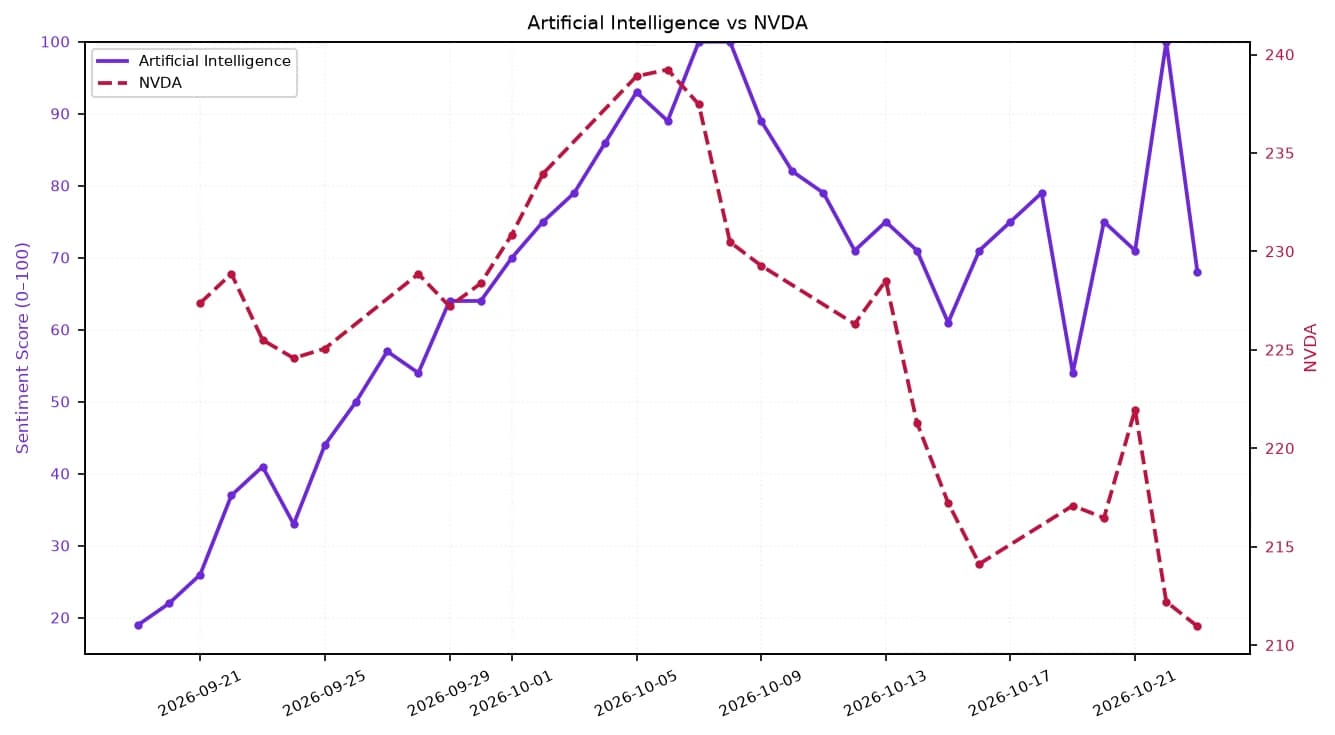
Microsoft and Nvidia both remain near or above key technical levels even after recent volatility, underscoring how central AI spending has become to market leadership. Microsoft closed at $524.51 on Oct. 23, above its 200-day moving average of $435.37, while Nvidia finished at $210.96, above its 200-day moving average of $203.36, though still below its 50-day average of $222.39. The divergence speaks to a market still rewarding the AI platform owners and hardware suppliers, even as investors question how durable the next leg of the rally will be.
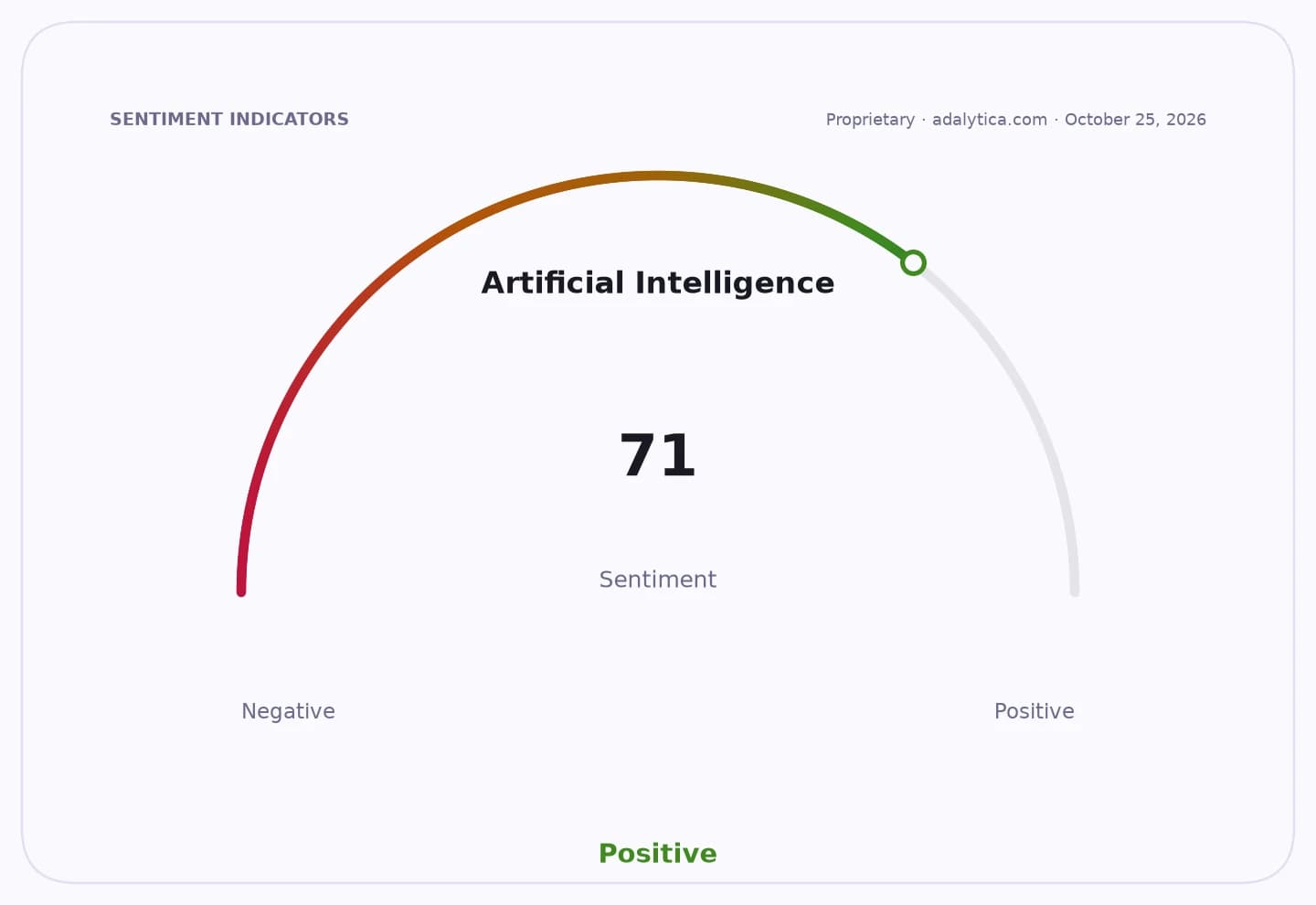
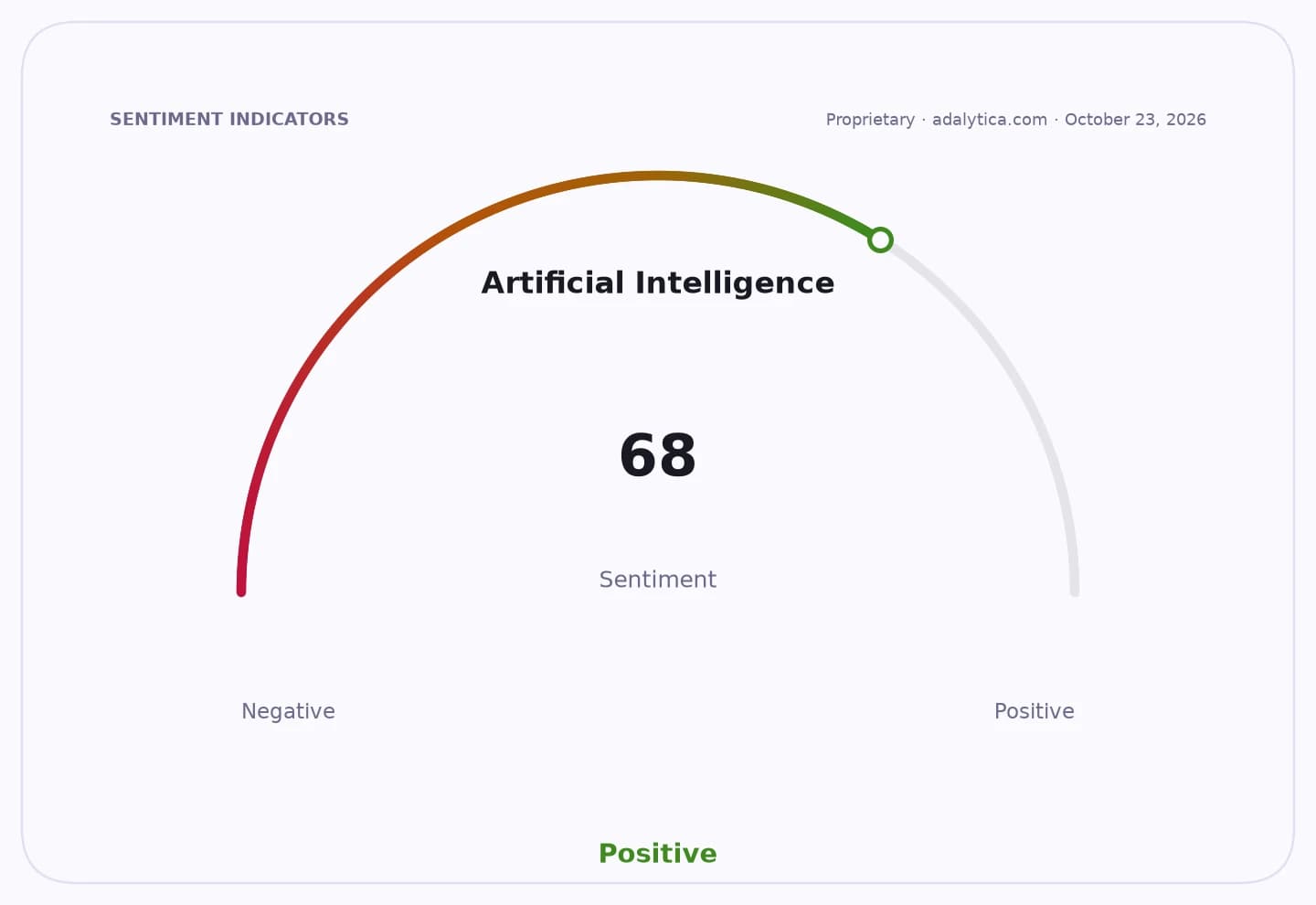
Sentiment IndicatorsⓘProprietary · adalytica.com · October 26, 2026
This is a snapshot — live sentiment, awareness and momentum for 130+ markets update continuously in the dashboard.Open AlphaPulse

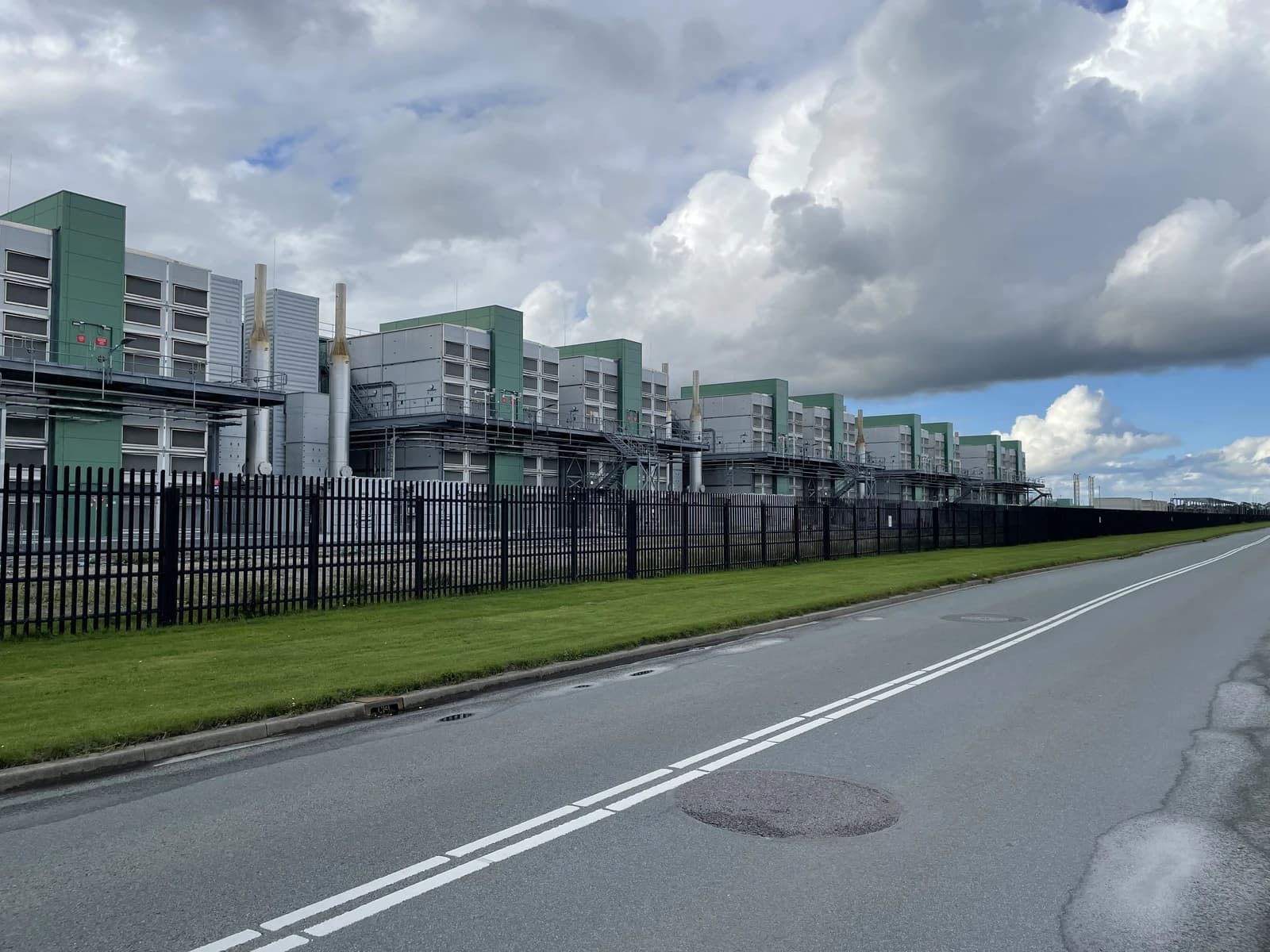
That tension mirrors the broader macro picture. The US economy is still expanding, with industrial production at 103.95 in September and unemployment at 4.2%, but the labor market is no longer in crisis, which gives companies room to keep spending on automation and computing capacity rather than labor. For companies such as Microsoft, the payoff is already visible: its fiscal 2026 operating income rose 20%, while research and development spending climbed 9% to $35.56 billion, much of it tied to AI infrastructure. Nvidia, meanwhile, sits at the center of the capex cycle that is powering data-center buildouts across the industry.
For investors, the immediate implication is that AI remains both a growth story and a concentration risk. Microsoft’s earnings sentiment on Adalytica is in “Extreme Greed,” while Nvidia’s stock has swung sharply from a May peak of $235.20 to a more recent pullback before stabilizing. That combination suggests enthusiasm is still high, but valuations will increasingly depend on whether AI monetization can keep outrunning the huge spending required to build it. The bull case is straightforward: AI tools such as Copilot and model-driven software can widen margins and open new revenue pools. The bear case is that the capex race compresses returns, while the social fallout from faster automation invites political pushback, regulation and a less hospitable climate for the sector.

The deeper narrative is that AI is moving from promise to profit, but not without frictions. As mathematicians and other knowledge workers confront machines that can solve problems once thought intractable, the economic question is no longer whether AI can produce value. It is who captures that value, how quickly, and whether the benefits are broad enough to preserve cohesion. That makes the next phase of the trade less about novelty and more about execution, pricing power and the durability of demand for the infrastructure behind the boom.
| Entity | Gains | Losses |
|---|---|---|
| Microsoft | ▲Copilot monetization, margin expansion | ▼Higher AI capex burden |
| Nvidia | ▲Data-center demand, chip pricing power | ▼Near-term volatility, multiple pressure |
| Knowledge workers | ▲Productivity tools | ▼Task displacement, weaker bargaining power |
| Regulators/policymakers | ▲New tax and oversight levers | ▼Pressure to manage disruption |